Segmented Transfer Coating Machine XN-RTCA-300-3
SKU: XN-RTCA-300-3
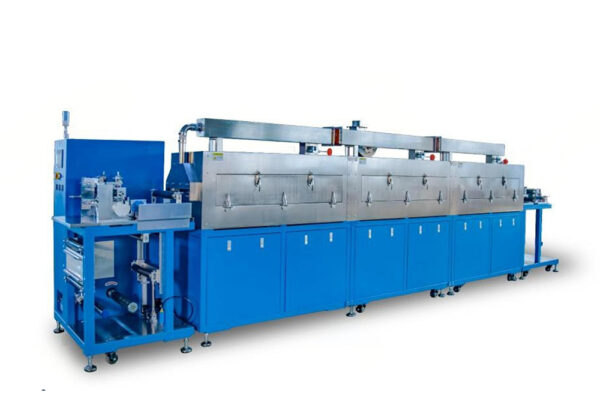
Segmented Transfer Coating Machine XN-RTCA-300-3 — pilot-scale slot-die continuous coating system with multiple independently controlled drying zones for staged drying profiles. 330 mm coating width (max 300 mm substrate, customizable), max 60 m/min line speed, ±0.3 °C per-zone temperature control, ambient–150 °C drying, dry film 0–300 μm, ±0.5 mm edge alignment. PLC + touchscreen control. 30 kW, ~2000 kg.
Need a bulk order or custom specification? Request a competitive quote today!
Name: Segmented Transfer Coating Machine XN-RTCA-300-3
Equipment Type: Pilot-Scale Slot-Die Continuous Transfer Coating Machine with Multiple Independently Controlled Drying Zones
Product Code: XN-RTCA-300-3
Product Introduction:
The Segmented Transfer Coating Machine XN-RTCA-300-3 is a pilot-scale continuous coating system designed for precision surface coating of various functional materials. It is especially suitable for lithium-ion battery electrode fabrication, enabling uniform slot-die slurry coating and controlled drying in a segmented, modular configuration. The system integrates coating, drying, and material transport into a single continuous process, offering high coating efficiency and excellent film quality. The XN-RTCA-300-3 is widely used in battery R&D, process development, and small-batch pilot production environments where staged drying profiles are required.
Main Features:
- Segmented modular drying zones with independent temperature control — each section independently controlled for optimized staged drying profiles (±0.3 °C per zone)
- Continuous roll-to-roll coating — stable transport and uniform film formation
- Slot-die transfer coating — high-precision deposition with excellent thickness uniformity
- Wide material compatibility — supports a wide range of coating materials and substrate types, suitable for different battery electrode formulations
- High coating precision — excellent thickness uniformity and surface consistency, ±0.5 mm edge alignment
- Hot-air circulation drying — efficient solvent evaporation and stable drying performance, ambient–150 °C
- Flexible configuration — customizable coating width, drying length, and process parameters
- High line speed — max 60 m/min adjustable
- PLC + touchscreen control — intuitive operation and real-time monitoring
- Robust mechanical structure — long-term stable operation in pilot-scale production
Main Specifications:
| Parameter | Value |
|---|---|
| Equipment Type | Pilot-scale segmented transfer coating machine |
| Coating Type | Continuous segmented transfer coating |
| Coating Mode | Slot-die transfer coating with continuous operation |
| Drying Zones | Multiple independently controlled heating zones (customizable length) |
| Temperature Control Accuracy | ±0.3 °C per zone |
| Drying Temperature Range | Ambient to 150 °C adjustable |
| Drying Method | Forced hot-air circulation drying |
| Effective Coating Width | 330 mm |
| Maximum Substrate Width | 300 mm (coating width customizable) |
| Coating Thickness Control | Wet thickness adjustable (typical minimum 5 μm) |
| Dry Film Thickness Range | Approx. 0–300 μm |
| Unwinding and Rewinding Diameter | Max. 250 mm |
| Edge Alignment Accuracy | ±0.5 mm |
| Line Speed | Max. 60 m/min adjustable |
| Drying Residual Moisture Content | ≤1 μm |
| Compressed Air Supply | 0.5 – 0.7 MPa |
| Control System | PLC + touchscreen HMI |
| Power Supply | Configurable according to local electrical standards |
| Total Power Consumption | 30 kW |
| Overall Dimensions (L × W × H) | Approx. L6440 × W1200 × H1960 mm |
| Net Weight | Approx. 2000 kg |
Values measured by Xnergy. Typical values for reference; not guaranteed unless otherwise specified.
Application Areas:
- Lithium-ion battery electrode fabrication — slot-die continuous transfer coating with staged drying profiles for cathode and anode formulations (NCM, LFP, LCO, LMO, graphite, Si-C)
- Pilot-scale battery R&D and process development — process scale-up studies and small-batch pilot production
- Supercapacitor electrode coating — pilot-scale uniform coating with multi-zone drying
- Solid-state battery and sodium-ion battery research — staged drying for advanced electrolyte films and electrode formulations
- Functional thin-film materials — pilot-scale coating where staged drying profiles improve coating quality, adhesion, and process stability
- Process development for transition from laboratory-scale to production-scale coating
Recommended Operating Procedure:
1. Install the XN-RTCA-300-3 on a stable pilot-scale production floor in a clean, dry environment; connect the equipment to a compressed air supply (0.5–0.7 MPa) and to a power supply matching local electrical standards (30 kW total). 2. Power on the unit and verify that the PLC + touchscreen HMI, slot-die coating station, multiple independent drying zones, hot-air circulation system, line speed drive, edge alignment system, and unwind/rewind drives are all operating normally. 3. Mount the substrate roll on the unwind side (max. Φ250 mm) and thread the substrate through the slot-die coating station, the multiple drying zones (independently controlled), and onto the rewind shaft (max. Φ250 mm). 4. Configure the edge alignment setpoint on the touchscreen HMI for ±0.5 mm accuracy. 5. Set the target coating thickness (wet thickness adjustable, typical minimum 5 μm; dry film 0–300 μm). 6. Set the target line speed (within max 60 m/min). 7. Set the target temperature for each drying zone independently on the touchscreen HMI (within ambient–150 °C, ±0.3 °C per zone) to define the optimized staged drying profile for the slurry chemistry being coated. 8. Allow the drying zones to reach setpoints and stabilize. 9. Load the coating slurry, then initiate the run; the substrate advances continuously through the slot-die coating station and the multiple drying zones, with finished material rewound on the rewinding shaft. 10. Monitor coating thickness, uniformity, edge alignment, drying residual moisture (≤1 μm target), and line speed during the run. 11. After the run, allow the heating zones to cool, then remove the rewound roll. Clean all wetted surfaces with appropriate solvent (water or NMP, depending on the slurry system used) and dry thoroughly before the next run.
Maintenance:
- Frequently wipe the machine with a soft cloth dampened with alcohol to keep it clean
- Lubricate moving parts with oil to keep movement smooth
- If the machine will not be used for an extended period, wipe down the surface of moving components and apply a protective rust-prevention oil
- Periodically inspect screws, nuts, pins, and other fasteners across all parts of the machine to prevent loosening
- Periodically clean the drying zone nozzles and inspect the chambers for residue buildup that could affect drying uniformity
- Periodically inspect the slot-die coating head and slit opening for wear or contamination affecting coating thickness
- Periodically inspect the tension control system, edge alignment system, unwind/rewind drives, and air-expanding shafts
Packaging & Storage:
The XN-RTCA-300-3 ships fully assembled with the slot-die coating station, multiple independent drying zones with hot-air circulation, edge alignment system, tension control system, unwind and rewind drives (max. Φ250 mm), PLC + touchscreen HMI control panel, and pilot-scale frame (~L6440 × W1200 × H1960 mm, ~2000 kg net). Install on a stable pilot-scale production floor in a clean, dry environment, away from heat sources, direct sunlight, and corrosive atmospheres. Connect the equipment to a compressed air supply (0.5–0.7 MPa) and to a power supply matching local electrical standards (30 kW). Disconnect the power supply and isolate the compressed air supply when the equipment is not in active use. After each use, clean all wetted-surface components, dry thoroughly, and store the equipment in a clean, dry environment.
Safety:
For research and industrial use only. During operation, do not insert hands or any other body parts into the slot-die coating station, rotating tension rollers, unwind/rewind drives, hot-air drying zones, or any other moving or hazardous working areas to prevent personal injury. Operation by two or more persons simultaneously is not allowed to avoid accidental injury. External (third-party) technical personnel and unauthorized persons must not disassemble the equipment under any circumstances. Do not touch the heated drying zones, coated substrate, or hot-air ducts during operation — surface temperatures up to 150 °C can cause severe burns. Always wear appropriate PPE (safety glasses, chemical-resistant gloves, lab coat, safety shoes) when handling slurries, solvents, and coated electrodes. When working with NMP-based slurries or other regulated solvents, ensure adequate ventilation and exhaust extraction; pair the XN-RTCA-300-3 with an NMP solvent recovery system, and follow local regulations on solvent use, recovery, and emission — NMP and similar aprotic solvents have specific exposure limits under OSHA, EU REACH, and other regional safety frameworks. Disconnect the power supply and isolate the compressed air supply before any cleaning, maintenance, or component replacement. Allow all heating zones to cool to room temperature before any cleaning or sample-handling operations. Refer to the included user manual for complete safety and operating instructions.
Note: Specifications listed above are typical and for reference only. Actual performance depends on the specific slurry chemistry, viscosity, coating thickness, drying temperature setpoints in each zone, drying length, substrate type, and ambient operating conditions — consult published literature and our technical team for guidance on specific segmented transfer coating-and-drying protocols. The XN-RTCA-300-3 is the pilot-scale multi-zone segmented member of Xnergy’s transfer coating lineup, with the highest line speed (60 m/min) and total power (30 kW). For the smaller single-drying-zone laboratory version, see the Laboratory Transfer Coating Machine XN-RTCA-300. For the dual-zone pilot-scale version (1500 mm/min, two independent zones, recipe management), see the Dual-Zone Transfer Coating Machine XN-RTCA-500. For comma-blade continuous coating with single-zone drying, see the Comma-Blade Continuous Coating Machine XN-KD200. For compact roll-to-roll coating with infrared drying, see the Continuous Roll-to-Roll Coating Machine XN-LVC-200. For slot-die coating, see the Slot-Die Coating System XN-SDC, Slot-Die Extrusion Film Applicator XN-FAS-100, and Extrusion Feeding Pump XN-EFP. For benchtop film coating (non-roll-to-roll), see the Automatic Film Coater XN-VC-300, Automatic Film Coater XN-VC-800, Glove-Box-Compatible Film Coating & Drying Machine XN-VCH-200, Automatic Film Coater with Integrated Drying System XN-VCH-300, Automatic Film Coating & Drying Machine Plus XN-VCH-800, Bottom-Heated Film Coating Machine XN-VCHB, and Adjustable Film Applicator XN-FAT-100. For NMP solvent recovery and treatment (recommended pairing for production-scale NMP-based coating), see the Two-Stage NMP Solvent Recovery System XN-NMP-2 and Three-Stage NMP Processor XN-NMP-3. For upstream slurry preparation and downstream drying, see the Planetary Vacuum Mixer for Mixing Electrode Powders and Three-Door Vacuum Drying Oven (XN-DVO-3). For downstream calendering, see the laboratory CRP / CRPE / CRPE-W / HRPE / HRPH series, the pilot-scale Hydraulic-Balance Motorized Roller Press XN-HPRP-300 & Heated Hydraulic-Balance Roller Press XN-SHPRP-300, and the Roll-to-Roll Continuous Hydraulic Calendering Machine XN-HRPER-300. For downstream supercapacitor cell assembly, see the Supercapacitor Cell Packaging Line XN-RKGCFK. For full equipment categories, see the Coating equipment category, Pilot-Scale Coating equipment category, Drying equipment category, Calendering equipment category, Pilot-Scale Calendering equipment category, Slitting & Die Cutting equipment category, and NMP Solvent Recovery equipment category. For complete electrode formulation systems, see also Cathode Materials, Anode Materials, Binders, and Current Collectors.