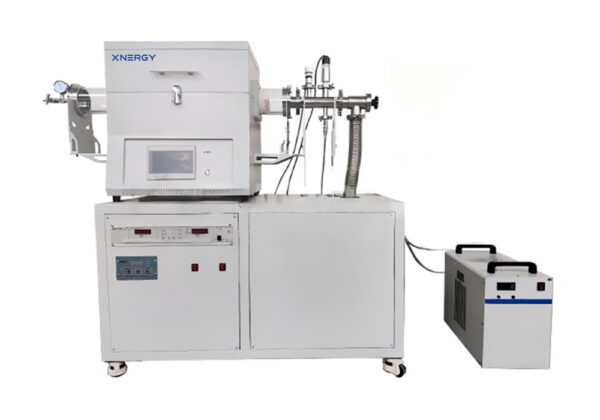
Molecular Pump Tube Furnace XN-TG600-S120CK1
SKU: XN-TG600-S120CK1
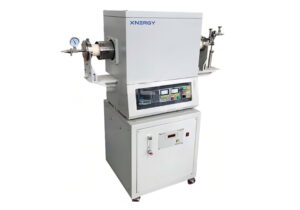
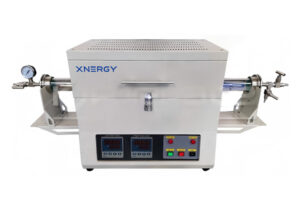
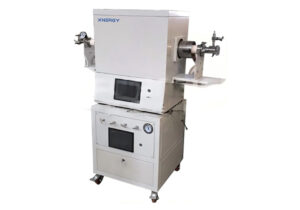
Molecular Pump Tube Furnace XN-TG600-S120CK1 — laboratory atmosphere/vacuum tube furnace with integrated high-vacuum molecular pump group for precision low-temperature high-vacuum heat treatment. Max 600 °C / 500 °C working, ±1 °C accuracy, 0–20 °C/min heating rate, multi-stage PID with LCD touch screen, quartz tube Φ120 × 1000 mm, 440 mm heating zone. Ultimate vacuum 6.67×10⁻³ Pa (cold state) via molecular pump group, KF25 quick connection, water-cooled pump protection. Alumina polycrystalline fiber insulation, double-layer shell with cooling fan.
Need a bulk order or custom specification? Request a competitive quote today!
Name: Molecular Pump Tube Furnace XN-TG600-S120CK1
Equipment Type: Laboratory 600 °C Atmosphere/Vacuum Tube Furnace with Integrated High-Vacuum Molecular Pump Group
Product Code: XN-TG600-S120CK1
Product Introduction:
The Molecular Pump Tube Furnace XN-TG600-S120CK1 is an atmosphere tube furnace that adopts a quartz tube as the furnace tube. The working temperature range is 450–500 °C, with molybdenum-containing resistance wire as the heating element. The system uses a double-layer shell structure with an intelligent program temperature control system, phase-shift trigger, and SCR control. The furnace insulation material is alumina polycrystalline fiber, and an air-cooling system is installed between the double-layer furnace shells. The furnace tube can be evacuated through the atmosphere connections. The XN-TG600 has the advantages of a balanced temperature field, low surface temperature, and energy-saving operation.
The control system is internationally advanced, featuring safety, reliability, simple operation, high temperature-control accuracy, good heat preservation, and high furnace temperature uniformity. The system can be evacuated and filled with various protective or destructive gases. As a result, the XN-TG600 is widely used in experiments and small-batch production in colleges, universities, scientific research institutes, and industrial and mining enterprises.
Main Features:
- High-quality resistance wire heating element with polycrystalline fiber insulation — excellent thermal insulation performance, durable, high tensile strength, no miscellaneous balls, high purity, energy-saving performance
- Double-layer liner structure with air gap isolation — even at high internal furnace temperatures, the furnace body surface remains safe to touch
- Quartz furnace tube — long-term service temperature up to 1100 °C
- LCD touch-screen temperature control with artificial-intelligence adjustment, PID adjustment, self-tuning, and 30-stage temperature-program compilation; heating curve data can be stored and output
- Over-temperature alarm protection — safe and reliable operation
- Integrated high-vacuum molecular pump group — ultimate vacuum 6.67 × 10⁻³ Pa (cold state); KF25 quick connection, stainless steel bellows, manual flapper valve, composite digital vacuum gauge
- Water cooler for molecular pump protection — prevents overheating damage to the molecular pump
- Air inlet/outlet ports and vacuum pump interface reserved on the tube — supports connection to additional external vacuum equipment
- In-house development and manufacturing — lifetime parts replacement and upgrade services
Main Technical Parameters:
| Parameter | Value |
|---|---|
| Product Name | Molecular Pump Tube Furnace |
| Model | XN-TG600-S120CK1 |
| Furnace Tube Size | Φ120 × 1000 mm (other specifications can be customized upon request) |
| Furnace Tube Material | Quartz furnace tube (a furnace plug is placed on each side; the furnace plug blocks heat radiation in the center of the furnace tube and must be placed in the correct position before heating) |
| Heating Zone Length | 440 mm |
| Working Temperature | 500 °C |
| Maximum Temperature | 600 °C |
| Heating Method | High-quality alloy heating wire, heating wire ring inlaid on the surface of the furnace |
| Chamber Material | Alumina polycrystalline fiber, good thermal insulation performance |
| Temperature Control Method | Multi-stage PID intelligent program temperature control |
| Control Method | LCD touch screen, intelligent multi-segment PID programmable control with self-tuning; over-temperature protection automatically cuts off heating circuit |
| Temperature Control Accuracy | ±1 °C |
| Heating Rate | 0 – 20 °C/min (recommended 10 °C/min, freely adjustable per process) |
| Furnace Structure | Double-layer shell structure with internal cooling fan; integrated furnace body and temperature control |
| Flange Joint | Two stainless steel vacuum flanges with installed mechanical pressure gauge and stainless steel shut-off valves |
| Sealing System | Silicone O-ring squeeze-sealing; 304 stainless steel metal flanges with high-temperature fluorine-rubber gaskets; air inlets/outlets at both flange ends; precision needle valves for gas flow adjustment; supports argon, nitrogen, and other protective gases |
| Power Supply | Configurable according to local electrical standards |
| After-Sales | One-year warranty plus lifetime maintenance (heating elements and furnace tube are consumables, not covered) |
Vacuum System:
| Parameter | Value |
|---|---|
| Vacuum Pump Type | High-vacuum molecular pump group |
| Ultimate Vacuum (Cold State) | 6.67 × 10⁻³ Pa |
| Vacuum Connection | KF25 quick connection, stainless steel bellows, manual flapper valve connecting flange and vacuum pump |
| Vacuum Gauge | Composite digital vacuum gauge display |
| Cooling System | Water cooler protects the molecular pump from overheating damage |
Values measured by Xnergy. Typical values for reference; not guaranteed unless otherwise specified.
Application Areas:
- Low-temperature high-vacuum heat treatment requiring vacuum levels in the 10⁻³ Pa range
- Atmosphere-controlled experiments under argon, nitrogen, or other protective gases at temperatures up to 500 °C (working) / 600 °C (max)
- Thin-film annealing and surface treatment requiring clean high-vacuum environment
- Battery material drying and degassing under high vacuum
- Organic and polymer material thermal processing in vacuum or controlled atmosphere
- Semiconductor and electronic material annealing at moderate temperatures
- University, research-institute, and industrial laboratory experiments and small-batch production
Recommended Operating Procedure:
1. Verify all electrical, gas, vacuum, and cooling-water connections are properly installed before powering on the XN-TG600. Verify the water cooler is operating to protect the molecular pump. 2. Power on the furnace and the LCD touch-screen controller. Verify the pressure gauge, vacuum gauge, over-temperature alarm, cooling fan, and molecular pump readiness signals are all normal. 3. Place the quartz furnace plugs in the correct position at both ends of the furnace tube before heating — this is required to block heat radiation from the tube interior. 4. Place the sample in a suitable holder, then insert into the quartz tube (Φ120 × 1000 mm) within the 440 mm heating zone. 5. Close and seal both stainless steel vacuum flanges with their shut-off valves. 6. If operating under vacuum: open the manual flapper valve and start the molecular pump group; monitor the composite digital vacuum gauge as the system pumps down to the target vacuum level (ultimate 6.67 × 10⁻³ Pa cold state). 7. If operating under controlled atmosphere: install a pressure-reducing valve on the gas cylinder (recommended range 0.01–0.1 MPa) and introduce the protective gas (Ar, N₂, or other) through the precision needle valve. Keep gas flow rate below 200 SCCM to avoid thermal shock to the heated quartz tube. Furnace tube internal pressure must not exceed 0.02 MPa. 8. On the LCD touch screen, program the target temperature profile (up to 30 stages), including heating rate (0–20 °C/min, recommended 10 °C/min), hold temperatures (up to 500 °C working / 600 °C maximum), hold times, and cooling rate. 9. Initiate the program; PID + self-tuning control manages the temperature profile with ±1 °C accuracy. 10. Monitor the temperature, vacuum/pressure gauge, and gas flow throughout the run. 11. After the program completes, allow the furnace to cool to a safe handling temperature, vent the system back to atmospheric pressure (or stop the vacuum pump), then open the flanges and remove the sample. 12. After the run, clean the tube and sample area as appropriate; inspect the heating wires, quartz tube, sealing gaskets, molecular pump, and water cooler periodically for wear.
Important Operating Notices:
- Furnace tube internal pressure must not exceed 0.02 MPa
- Due to high internal gas-cylinder pressure, a pressure-reducing valve must be installed on the gas cylinder when feeding gas into the furnace tube; the recommended pressure-reducing-valve range is 0.01–0.1 MPa for accurate and safe operation
- Gas flow rate entering the furnace tube must be less than 200 SCCM to avoid cold-flow thermal-shock impact on the heated quartz tube
- The long-term service temperature of the quartz tube is less than 1100 °C
- For sample heating experiments, it is not recommended to close both the exhaust valve and inlet valve at the flange ends of the furnace tube. If you need to close the gas valves to heat the sample, you must continuously monitor the pressure gauge; if the pressure indication exceeds 0.02 MPa, immediately open the vent valve to prevent accidents such as furnace-tube rupture or flange flying out
- The water cooler must be operating during molecular-pump operation to prevent overheating damage to the pump
Packaging & Storage:
The XN-TG600-S120CK1 ships fully assembled with the quartz furnace tube (Φ120 × 1000 mm, customizable), two quartz furnace plugs, alloy-wire heating element ring-inlaid on the furnace surface, alumina polycrystalline fiber chamber, double-layer shell with internal cooling fan, LCD touch-screen multi-stage PID controller with self-tuning, over-temperature alarm, two 304 stainless steel vacuum flanges with mechanical pressure gauge and shut-off valves, silicone O-ring and fluorine-rubber gasket seals, precision needle valves for gas flow, high-vacuum molecular pump group, KF25 quick connections, stainless steel bellows, manual flapper valve, composite digital vacuum gauge, and water cooler for molecular pump protection. Install on a stable laboratory floor in a clean, dry environment, away from corrosive atmospheres, with adequate clearance for the cooling fan, molecular pump, water cooler, and operator access. Connect to a compressed-gas supply with a pressure-reducing valve (recommended range 0.01–0.1 MPa) and to a power supply matching local electrical standards. Disconnect power and isolate gas supplies when the equipment is not in active use. Inspect the heating element, quartz tube, sealing gaskets, molecular pump, water cooler, flapper valve, and PID controller periodically for wear, contamination, or signs of degradation.
Safety:
For research and industrial laboratory use only. Do not exceed the maximum temperature (600 °C) or sustain operation above the working temperature (500 °C) for extended periods — exceeding these limits may damage the heating wires, quartz tube, and furnace chamber. The furnace plugs MUST be placed in the correct position at both ends of the tube before heating to block heat radiation. The furnace tube internal pressure must not exceed 0.02 MPa — exceeding this limit may cause furnace-tube rupture or flange ejection. Always install a pressure-reducing valve on the gas cylinder (recommended 0.01–0.1 MPa range) before feeding gas. Keep gas flow rate below 200 SCCM to avoid thermal shock to the heated quartz tube. Always wear appropriate PPE (safety glasses, high-temperature gloves, lab coat) when loading or unloading samples, especially while the furnace is still hot. Allow the furnace to cool to a safe handling temperature before opening the flanges. Continuously monitor the pressure gauge during heating; if pressure exceeds 0.02 MPa, immediately open the vent valve. When operating with protective or reactive gases (Ar, N₂, H₂, etc.), follow standard laboratory protocols for gas handling, leak testing, and exhaust ventilation. The water cooler must be operating during molecular-pump operation to prevent overheating damage to the pump. Refer to the included user manual for complete safety and operating instructions.
Note: Specifications listed above are typical and for reference only. Actual performance depends on the specific sample material, atmosphere, heating profile, vacuum level, and ambient operating conditions — consult published literature and our technical team for guidance on specific molecular-pump tube furnace heat-treatment and vacuum-processing protocols. The XN-TG600 platform supports customization (tube size, heating zone length, vacuum pump options) to match specific research requirements. For researchers exploring related laboratory heat-treatment equipment, see also Xnergy’s tube furnace lineup: High Magnetic Field Annealing Tube Furnace XN-1200X-MH4 (300 °C, SS316L non-magnetic, for superconducting magnet bores), High Temperature High Pressure Tube Furnace XN-TH1000-H50LK (1100 °C, 4 MPa positive pressure), Mini Gas-Mixing CVD System XN-T1200-S5020-IC (1200 °C, 2-channel MFC gas mixing), Mini Rotary Tilting Tube Furnace XN-T1200-S25K1 (1200 °C, rotation 0–54 rpm, tilt 0–45°), Single-Zone Tube Furnace XN-T1200 (1200 °C standard atmosphere/vacuum), Dual Temperature Zone Tube Furnace XN-TG1100-S60LK2W (1200 °C dual-zone), Single-Zone Tube Furnace XN-TG1600-L60CB1W (1600 °C, LCD touch screen, MoSi₂), Touch Screen CVD Tube Furnace XN-T1600 (1600 °C, 3-channel MFC gas mixing), and Vacuum Tube Furnace XN-T1700-80(400mm) (1700 °C, MoSi₂, integrated vacuum pump). For the full Thermal Treatment Equipment category and Tube Furnace equipment category. For complete battery material research systems, see also Cathode Materials, Anode Materials, Solid-State Electrolytes, and Ball Milling equipment.