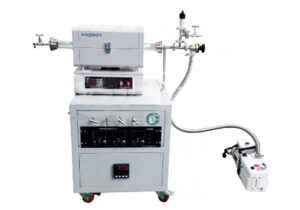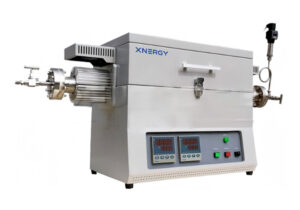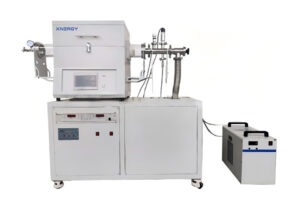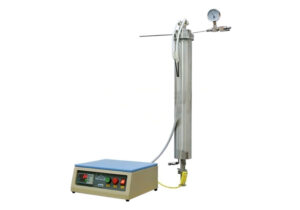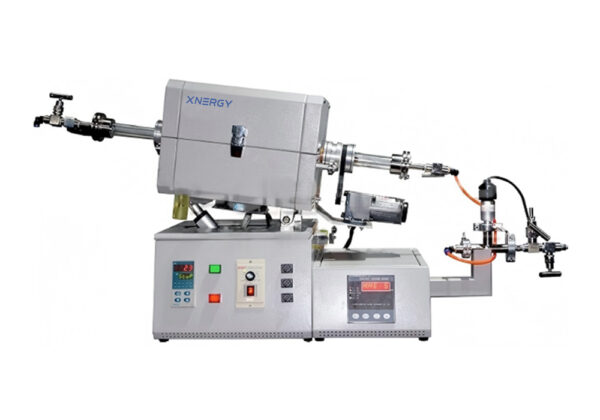
Mini Rotary Tilting Tube Furnace XN-T1200-S25K1
SKU: XN-T1200-S25K1
Mini Rotary Tilting Tube Furnace XN-T1200-S25K1 — compact laboratory tube furnace integrating rotation (0–54 rpm) and axial tilting (0–45°) for uniform mixing and high-temperature sintering of powders, granules, and small block materials. Quartz tube Φ25 mm (Φ30/Φ40/Φ50 mm options), 1200 °C max / 1100 °C continuous, ±1 °C PID accuracy, 0–20 °C/min heating rate, 200/300 mm heating zone (customizable). 0Cr27Al7Mo2 heating element, N-type thermocouple, high-purity alumina ceramic fiber insulation. Flange-sealed for vacuum or controlled atmosphere.
Need a bulk order or custom specification? Request a competitive quote today!
Name: Mini Rotary Tilting Tube Furnace XN-T1200-S Series
Equipment Type: Laboratory 1200 °C Mini Rotary Tilting Tube Furnace with Integrated Rotation and Axial Tilt Function
Product Code: XN-T1200-S25K1 / XN-T1200-S30K1 / XN-T1200-S40K1 / XN-T1200-S50K1
Product Description:
The Mini Rotary Tilting Tube Furnace XN-T1200-S Series is a compact tube furnace integrating rotation and axial tilting functions, specifically designed for the uniform mixing and high-temperature sintering of powders, granules, and small-sized block materials. The equipment uses a quartz tube as the working tube, and the furnace body can tilt 0–45° axially. The sample inside the tube rotates with the furnace tube at a speed of 0–54 rpm, ensuring that the material continuously tumbles and fully contacts the heat field during heating, effectively avoiding common problems in static sintering such as agglomeration, unevenness, or localized overheating.
The control system is internationally advanced, featuring safety, reliability, simple operation, high temperature-control accuracy, good heat preservation, and high furnace temperature uniformity. The XN-T1200-S series offers various furnace tube diameters (Φ25 / Φ30 / Φ40 / Φ50 mm), customizable heating zone lengths (200/300 mm), a maximum temperature of 1200 °C, and a continuous operating temperature ≤ 1100 °C. The furnace chamber is insulated with high-purity alumina ceramic fiber. The heating element is a 0Cr27Al7Mo2 resistance wire with N-type thermocouple temperature measurement. The equipment supports vacuum or protective atmosphere operation (vacuum pump or gas mixing system available as options). As a result, the XN-T1200-S is widely used in experiments and small-batch production in colleges, universities, scientific research institutes, and industrial and mining enterprises.
Main Functions and Features:
- Integrated rotation and axial tilt design — the furnace body tilts 0–45° axially while the tube rotates at 0–54 rpm, ensuring continuous tumbling of powder and granular materials for uniform heating and reaction, effectively avoiding agglomeration, unevenness, or localized overheating.
- Multiple tube diameter options — available in Φ25, Φ30, Φ40, and Φ50 mm; additional diameters and heating zone lengths (200/300 mm) customizable upon request.
- High-purity alumina ceramic fiber insulation — excellent thermal insulation performance, low thermal mass, fast response, and energy-efficient operation.
- 0Cr27Al7Mo2 resistance wire heating element — high-quality alloy wire with high tensile strength, high purity, and long service life up to 1200 °C maximum.
- Touch-screen temperature control with PID adjustment, self-tuning, and 30-stage temperature-program compilation; heating curve data can be stored and output.
- Over-temperature alarm protection — automatically cuts off the heating circuit for safe and reliable operation.
- Flange sealing supports vacuum or controlled atmosphere — compatible with argon, nitrogen, hydrogen, and other protective or reactive gases; optional vacuum pump or gas mixing system (mass flowmeters or float flowmeters) available.
- Split structure for easy operation and maintenance — convenient laboratory placement, sample loading, and long-term serviceability.
- In-house development and manufacturing — equipment supports lifetime parts replacement and upgrade services.
Main Technical Parameters:
| Parameter | XN-T1200-S25K1 | XN-T1200-S30K1 | XN-T1200-S40K1 | XN-T1200-S50K1 |
|---|---|---|---|---|
| Maximum Temperature | 1200 °C | |||
| Working Temperature | ≤ 1100 °C | |||
| Tube Material | Quartz tube | |||
| Tube Inner Diameter (Customizable) | Φ25 mm | Φ30 mm | Φ40 mm | Φ50 mm |
| Heating Zone Length | 200 mm / 300 mm (customizable) | |||
| Rotation Speed | 0–54 rpm | |||
| Tilting Angle | 0–45° | |||
| Insulation Material | High-purity alumina ceramic fiber | |||
| Heating Rate | 0–20 °C/min | |||
| Temperature Control Accuracy | ±1 °C | |||
| Temperature Sensor | N-type thermocouple | |||
| Heating Element | 0Cr27Al7Mo2 resistance wire | |||
| Sealing | Flanges (vacuum or atmosphere compatible) | |||
| Structure | Split | |||
| Optional Accessories | Vacuum pump; gas mixing system with mass flowmeters or float flowmeters | |||
| Power Supply | Configurable according to local electrical standards | |||
| After-Sales | One-year warranty plus lifetime maintenance (heating elements and furnace tube are consumables, not covered) | |||
Values measured by Xnergy. Typical values for reference; not guaranteed unless otherwise specified.
Application Areas:
- Powder metallurgy and metal powder processing — reduction sintering of iron, copper, and tungsten powders under hydrogen or decomposed ammonia atmosphere; pre-alloying of mixed metal powders; uniform sintering of hard alloy powders such as tungsten carbide–cobalt
- Ceramics and refractory materials — pre-calcination or solid-state reaction of alumina, zirconia, silicon nitride, and silicon carbide powders; uniform heat treatment of granular refractory materials such as magnesia and bauxite
- New energy materials — rotational sintering of lithium iron phosphate and ternary cathode material precursors; carbon coating or graphitization of graphite and silicon–carbon composite anode materials; high-temperature synthesis of solid electrolyte powders such as LLZO and LATP
- Catalysts and chemical engineering — calcination and activation of supported catalysts (molecular sieves, metal oxides); high-temperature calcination of inorganic pigments such as titanium dioxide and iron oxide red
- Minerals and geology — simulating high-temperature geological processes on mineral powder or small-particle rock samples; high-temperature modification of industrial waste materials such as fly ash and red mud
- University, research-institute, and industrial laboratory experiments and small-batch production — dynamic high-temperature reaction platform for exploring new powder materials and optimizing sintering processes
Recommended Operating Procedure:
1. Verify all electrical, gas, and (if applicable) vacuum connections are properly installed before powering on the XN-T1200-S. If a vacuum pump or gas mixing system is connected, confirm all auxiliary equipment is ready. 2. Power on the furnace and the PID temperature controller. Verify the thermocouple signal, over-temperature alarm, and rotation drive readiness are all normal. 3. Load the powder or granular sample into a suitable sample boat or container, then insert into the quartz tube within the heating zone. Ensure the sample is evenly distributed and does not exceed the recommended fill volume for effective tumbling. 4. Install and tighten the flange seals at both ends of the quartz tube. Set the desired tilt angle (0–45°) using the tilt adjustment mechanism. 5. If operating under protective atmosphere: connect the gas supply (Ar, N₂, H₂, or other) with a pressure-reducing valve and introduce gas through the inlet port. Confirm the outlet flow before proceeding. 6. If operating under vacuum: start the vacuum pump and pump down to the target vacuum level before beginning the heating program. 7. Set the rotation speed (0–54 rpm) appropriate for the sample type and sintering process. 8. On the PID controller, program the target temperature profile (up to 30 stages), including heating rate (0–20 °C/min), hold temperatures (≤ 1100 °C working / 1200 °C maximum), hold times, and cooling rate. 9. Initiate the program; the PID self-tuning controller manages the temperature profile with ±1 °C accuracy. Monitor temperature, atmosphere/pressure, and rotation throughout the run. 10. After the program completes, allow the furnace to cool to a safe handling temperature before stopping the rotation, venting the system, and opening the flanges to remove the sample. 11. After each run, inspect the quartz tube, flange gaskets, heating element, and rotation drive for wear or contamination.
Important Operating Notices:
- Do not exceed the maximum temperature (1200 °C) or operate continuously above the working temperature (1100 °C) — sustained over-temperature operation will shorten the service life of the heating element and quartz tube.
- The long-term service temperature of the quartz tube is ≤ 1100 °C. Operating above this temperature for extended periods will cause deformation or failure.
- Always install a pressure-reducing valve on the gas cylinder when feeding gas into the furnace tube. Monitor the gas outlet to confirm flow before closing the system.
- Ensure the sample fill volume inside the tube is appropriate for effective tumbling — overfilling will reduce the mixing effect and may damage the tube or drive mechanism.
- When operating with hydrogen or other flammable/reactive gases, follow standard laboratory safety protocols including leak testing, adequate ventilation, and proper exhaust handling.
- Always wear appropriate PPE (safety glasses, high-temperature gloves, lab coat) when loading or unloading samples, especially while the furnace is still warm.
Packaging & Storage:
The XN-T1200-S series ships fully assembled in split configuration, including the quartz furnace tube (diameter per model selection, customizable), rotation drive unit with 0–54 rpm speed control, axial tilt mechanism (0–45°), high-purity alumina ceramic fiber insulated furnace chamber, 0Cr27Al7Mo2 resistance wire heating element, N-type thermocouple, 30-stage PID programmable temperature controller with self-tuning and over-temperature alarm, flange sealing system, and standard accessories. Optional vacuum pump or gas mixing system ships separately when ordered. Install on a stable laboratory bench or floor in a clean, dry environment, away from corrosive atmospheres, with adequate clearance for the tilt mechanism, rotation drive, and operator access. Connect to a power supply matching local electrical standards. Disconnect power and isolate gas supplies when the equipment is not in active use. Inspect the heating element, quartz tube, flange seals, and rotation drive periodically for wear or signs of degradation.
Safety:
For research and industrial laboratory use only. Do not exceed the maximum temperature (1200 °C) or sustain operation above the working temperature (1100 °C) for extended periods — exceeding these limits may damage the heating element, quartz tube, and furnace chamber. Always install a pressure-reducing valve on the gas cylinder before feeding gas into the tube. Ensure the tilt mechanism and rotation drive are properly secured before loading samples and before moving the furnace. Always wear appropriate PPE (safety glasses, high-temperature gloves, lab coat) when loading or unloading samples. Allow the furnace to cool to a safe handling temperature before opening the flanges. When operating with flammable or reactive gases (H₂, NH₃, etc.), follow standard laboratory protocols for gas handling, leak testing, and exhaust ventilation. Refer to the included user manual for complete safety and operating instructions.
Note: Specifications listed above are typical and for reference only. Actual performance depends on the specific sample material, powder characteristics, atmosphere, heating profile, rotation speed, tilt angle, and ambient operating conditions — consult published literature and our technical team for guidance on specific rotary sintering protocols. The XN-T1200-S platform supports customization (tube diameter, heating zone length, vacuum or gas mixing options) to match specific research requirements. For researchers exploring related laboratory heat-treatment equipment, see also Xnergy’s related products: Molecular Pump Tube Furnace XN-TG600-S120CK1 (600 °C, high vacuum 6.67×10⁻³ Pa), Dual Temperature Zone Tube Furnace XN-TG1100-S60LK2W (1200 °C dual-zone), Single-Zone Tube Furnace XN-TG1600-L60CB1W (1600 °C LCD touch-screen), Vacuum Tube Furnace XN-T1700-80 (1700 °C with rotary-vane vacuum pump), and Touch Screen CVD Tube Furnace XN-T1600 (1600 °C with 3-channel MFC gas mixing), and the full Thermal Treatment Equipment category. For complete battery material research systems, see also Cathode Materials, Anode Materials, Solid-State Electrolytes, and Ball Milling equipment.