Copper Foam Sheet XN-CuF – Porous Foam Copper, 5–130 PPI, Thickness 0.05–50 mm, 50%–98% Porosity, for Electrode, Thermal Management, EMI Shielding & Catalysis | Xnergy
SKU: XN-CuF
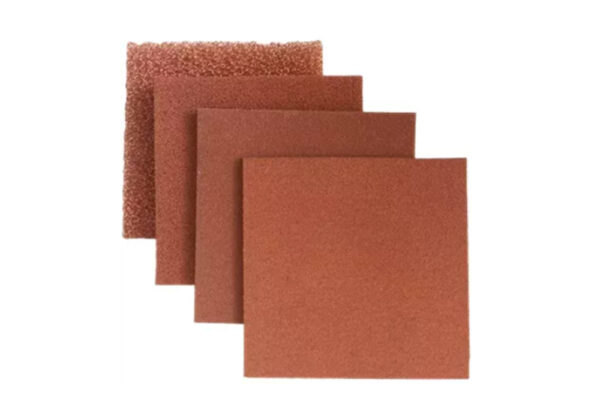
Copper Foam Sheet XN-CuF — high-purity porous foam copper sheet with open-cell three-dimensional network structure, available in pore sizes of 5–130 PPI, thickness 0.05–50 mm, porosity 50%–98%, bulk density 0.1–0.8 g/cm³, and flow-through rate ≥ 98%. Standard sheet size 100×100 mm and 200×300 mm; custom dimensions available upon request. Outstanding electrical conductivity, thermal conductivity, and surface area make XN-CuF ideal for battery electrode current collectors (nickel-zinc, lithium-ion, double-layer capacitors), electrolysis and electrodeposition, thermal management and heat dissipation, EMI shielding, catalyst supports, and filtration media. Supplied as-cut sheets; custom thicknesses, sheet sizes, and PPI values available to order.
Need a bulk order or custom specification? Request a competitive quote today!
Name: Copper Foam Sheet XN-CuF
Material Type: Porous Open-Cell Foam Copper (Three-Dimensional Reticulated Network Structure)
Product Code: XN-CuF
Product Description:
The Copper Foam Sheet XN-CuF is a high-purity porous foam copper material featuring an open-cell three-dimensional reticulated network structure with interconnected pores throughout the entire thickness. Available in pore densities from 5 to 130 PPI (pores per inch) and thicknesses from 0.05 to 50 mm, XN-CuF covers a wide range of porosity (50%–98%) and bulk density (0.1–0.8 g/cm³) to suit diverse research and industrial applications. The flow-through rate is ≥ 98%, confirming fully open-cell connectivity essential for filtration, electrochemical, and fluid-handling applications.
Copper foam combines the intrinsic advantages of copper — excellent electrical conductivity, high thermal conductivity, and near-silver-level electromagnetic shielding performance — with the structural benefits of a porous three-dimensional scaffold: high specific surface area, low density, and good mechanical compressibility. As a result, XN-CuF is widely used in battery electrode current collectors, electrolysis, electrodeposition, thermal management, EMI shielding, catalyst supports, acoustic damping, medical filtration, and fluid pressure buffering in universities, scientific research institutes, and industrial applications.
Standard sheet sizes are 100×100 mm and 200×300 mm. Custom dimensions, thicknesses, and PPI values are available upon request.
Main Characteristics and Features:
- Open-cell three-dimensional reticulated network — fully interconnected pore structure with flow-through rate ≥ 98%, providing unrestricted access for electrolytes, gases, fluids, and catalyst loading throughout the entire material volume.
- Wide PPI range (5–130 PPI) — fine-pore grades (95–130 PPI) for electrode current collectors and filtration; medium grades (40–60 PPI) for thermal management and EMI shielding; coarse grades (5–30 PPI) for fluid buffering, catalyst supports, and heat exchangers.
- Wide thickness range (0.05–50 mm) — ultra-thin foils (0.05–0.5 mm) for battery electrode lamination; standard sheets (1–5 mm) for electrochemical cells; thick blocks (5–50 mm) for thermal and acoustic applications.
- High porosity (50%–98%) and low bulk density (0.1–0.8 g/cm³) — high surface-area-to-volume ratio for enhanced electrochemical reaction sites, catalyst loading, and heat transfer efficiency.
- Excellent electrical conductivity — copper’s intrinsic conductivity enables XN-CuF to serve as a high-performance current collector for nickel-zinc batteries, double-layer capacitors, lithium-ion batteries, and electrolysis cells, with low ohmic resistance and uniform current distribution.
- High thermal conductivity — copper’s thermal conductivity makes XN-CuF an outstanding heat dissipation material for motors, electronics, and high-power device thermal management; the open-cell structure enhances convective heat transfer for heat pipe and heat sink applications.
- Electromagnetic shielding performance approaching silver — copper’s shielding effectiveness is second only to silver; XN-CuF provides broadband EMI shielding for sensitive electronics, aerospace, and defense applications.
- Customizable dimensions and specifications — sheet size, thickness, and PPI value are all customizable to match specific electrode cell dimensions, filtration requirements, or thermal management designs.
Main Technical Parameters:
| Parameter | Value |
|---|---|
| Product Name | Copper Foam Sheet |
| Model | XN-CuF |
| Material | High-purity copper (Cu) |
| Structure | Open-cell three-dimensional reticulated network |
| Pore Size Range | 5–130 PPI (pores per inch); pore diameter 0.1–10 mm |
| Porosity | 50%–98% |
| Flow-Through Rate | ≥ 98% |
| Bulk Density | 0.1–0.8 g/cm³ |
| Thickness Range | 0.05–50 mm (customizable) |
| Standard Sheet Sizes | 100×100 mm; 200×300 mm |
| Custom Dimensions | Available upon request |
| Supply Form | As-cut flat sheets |
Standard Size and PPI Selection Guide:
| Thickness | Sheet Size | Default PPI |
|---|---|---|
| 0.05 mm | 100×100 mm | 95 PPI |
| 0.1 mm | 100×100 mm | 130 PPI |
| 0.15 mm | 100×100 mm | 130 PPI |
| 0.2 mm | 100×100 mm | 130 PPI |
| 0.3 mm | 100×100 mm | 130 PPI |
| 0.5 mm | 100×100 mm | 130 PPI |
| 0.8 mm | 100×100 mm | 130 PPI |
| 1.0 mm | 100×100 mm | 130 PPI |
| 1.5 mm | 100×100 mm | 130 PPI |
| 1.8 mm | 100×100 mm | 130 PPI |
| 2.0 mm | 100×100 mm | 130 PPI |
| 3.0 mm | 100×100 mm | 95 PPI |
| 5.0 mm | 100×100 mm | 40 PPI |
| 8.0 mm | 100×100 mm | 60 PPI |
| 10 mm | 100×100 mm | 60 PPI |
| 15 mm | 100×100 mm | 30 PPI |
| 20 mm | 100×100 mm | 40 PPI |
| 1.0 mm | 200×300 mm | 130 PPI |
| 1.5 mm | 200×300 mm | 130 PPI |
| 1.8 mm | 200×300 mm | 130 PPI |
| 2.0 mm | 200×300 mm | 130 PPI |
| Other specifications | Custom | Custom |
Values are typical and for reference only. Actual porosity, bulk density, and pore size distribution may vary slightly by batch. Custom PPI values and sheet dimensions available upon request — contact our technical team for specifications outside the standard range.
Application Areas:
- Chemical power sources — current collector scaffold for nickel-zinc batteries, nickel-cadmium batteries, fuel cells, and double-layer capacitors; electrode skeleton material for next-generation lithium-ion batteries; promising candidate for double-layer capacitor electrode current collectors
- Electrochemical engineering — electrolysis electrode support for hydrogen production and industrial electrolysis; electrodeposition substrate for uniform metal deposition; electrochemical metallurgy and industrial electrochemical process media
- Thermal management and heat dissipation — high-performance thermal interface and heat dissipation material for motors, power electronics, and high-frequency devices; heat pipe core material and heat exchanger “chip” insert leveraging copper’s thermal conductivity and the open-cell convective enhancement
- Electromagnetic shielding — broadband EMI shielding panel and gasket material for sensitive electronics, communications equipment, aerospace, and defense applications, with shielding effectiveness approaching silver
- Catalysis — high-surface-area support replacing punched copper plate as a chemical reaction catalyst carrier; photocatalytic air purification carrier with demonstrated successful industrial applications
- Acoustic damping and vibration absorption — diffuse sound reflection and micro-pore acoustic absorption via membrane vibration mechanism; vibration-damping and buffer material for mechanical systems
- Filtration and purification — biocompatible medical filtration media; water purification filter substrate; industrial off-gas treatment carrier in exhaust purification systems
- Fluid pressure buffering — pressure-reducing and flow-damping insert for various pressure instruments and fluid handling systems
Handling and Storage:
XN-CuF copper foam sheets are supplied as-cut flat sheets. Handle with clean gloves to avoid contamination of the porous surface with oils, moisture, or particulates. For electrochemical applications, clean the foam surface with dilute acid (e.g., dilute HCl or H₂SO₄) followed by deionized water rinse and vacuum or inert-atmosphere drying immediately before use, to remove native copper oxide from the pore surfaces. Store in a sealed, dry environment away from humidity, corrosive vapors, and direct contact with ferrous metals to prevent oxidation and galvanic corrosion. For long-term storage, seal in a nitrogen or argon atmosphere bag. Cut to size using sharp scissors, a blade, or laser cutting; avoid mechanical crushing that would collapse the open-cell pore structure. Custom dimensions are available to minimize cutting waste — contact our team to specify your required sheet size and thickness before ordering.
Safety:
For research and industrial laboratory use only. Copper foam dust and fine particles generated during cutting may be an inhalation hazard — always cut in a well-ventilated area and wear a dust mask, safety glasses, and gloves. Copper is harmful to aquatic organisms; dispose of copper-containing waste, rinse solutions, and cutting debris in accordance with local regulations for heavy metal waste. Do not incinerate copper foam. When used as an electrode in electrochemical cells with corrosive electrolytes, ensure adequate containment and electrolyte handling protocols are in place. Refer to the relevant material safety data sheet (MSDS) for copper for complete handling and disposal guidance.
Note: Specifications listed above are typical and for reference only. Actual electrochemical performance, thermal conductivity, and shielding effectiveness depend on the specific PPI, thickness, porosity, surface condition, and application configuration — consult published literature and our technical team for guidance on selecting the optimal XN-CuF specification for your application. Custom dimensions, PPI values, and bulk quantities are available upon request. For researchers building complete electrochemical cell systems, see also Xnergy’s related products: Anode Materials, Cathode Materials, Current Collectors, Binders, and Solid-State Electrolytes. For thermal treatment of electrode materials, see the full Thermal Treatment Equipment category.