
How to Choose a Tube Furnace for Battery Materials Research
A practical decision guide for researchers, lab managers, and pilot-line engineers. We compare 11 Xnergy tube furnace configurations across temperature, atmosphere, vacuum, and process requirements — with concrete recommendations for cathode synthesis, anode coating, electrolyte sintering, and beyond.
Three questions decide your tube furnace.
1. What's your peak temperature? Cathode sintering needs 800–1000°C, hard carbon pyrolysis 1200–1400°C, oxide solid electrolytes 1100–1300°C, MoSi₂ ceramics 1600°C+.
2. What atmosphere do you need? Inert (Ar/N₂), reducing (H₂/Ar), reactive (CVD gas mixing), high vacuum, or high pressure — each adds specific hardware.
3. Is your sample static or moving? Powders that need uniform thermal exposure require a rotary tilting tube; films and bulk pellets sit fine in a static horizontal tube.
Why Tube Furnaces Sit at the Center of Battery Research
Walk into any battery materials lab and you'll find a tube furnace doing the actual chemistry. Cathode active materials — NCM, LFP, LCO — emerge from a tube furnace. Hard carbon and graphite are graphitized in one. Solid electrolytes like LLZO and LATP need precise atmosphere control during sintering, and they get it from a tube furnace. So do silicon-carbon anodes coated by CVD.
The reason is simple: a tube furnace gives you three independent variables that almost no other equipment can deliver simultaneously — precise temperature profiles, controlled gas atmosphere, and a sealed reaction environment. Get one of those wrong and your material's crystallinity, particle morphology, or electrochemical performance shifts. Get all three right and you have reproducible synthesis.
That's also why choosing the wrong tube furnace is one of the most expensive mistakes a battery lab can make. A furnace that tops out at 1200°C can't sinter Li₇La₃Zr₂O₁₂ (LLZO) to full density. A furnace without proper gas sealing will oxidize your reduced graphene oxide. A static horizontal tube will give you a temperature gradient across a powder bed that you'll spend weeks trying to debug.
This guide walks through the decision logic — first the four questions you need to answer, then the eleven Xnergy configurations that map to specific research needs.
The Four Questions That Determine Your Configuration
1. Peak Temperature: What's Your Process Ceiling?
This is the question that filters out 80% of options immediately. A tube furnace's maximum continuous operating temperature determines its heating element technology, tube material, and price.
- Up to 1200°C — Kanthal A1 (FeCrAl) resistive wire heating, quartz tubes. Covers most cathode synthesis (NCM, LFP), hard carbon pyrolysis, and general lab work. The economical workhorse.
- 1400–1600°C — Silicon carbide (SiC) or molybdenum disilicide (MoSi₂) heating elements, alumina tubes. Required for oxide solid electrolyte sintering (LLZO ~1230°C with ~24 hr soak), advanced ceramics, and some high-nickel cathode densification.
- 1600–1800°C — MoSi₂ only, alumina tubes. Required for refractory ceramics, full LLZO densification studies, and SOFC research. Be aware: above 1500°C, alumina tubes have a finite life (typically 1000–2000 hours) and consumable cost matters.
A common mistake is buying "1200°C max" furnaces and operating continuously at 1200°C. Always derate by 50–100°C for sustained use. If your process target is 1100°C, a 1200°C furnace is the floor — a 1400°C furnace gives you headroom and longer element life.
2. Atmosphere: What Reactive Environment Do You Need?
Battery materials almost never get processed in air. The atmosphere choice cascades into hardware requirements:
| Atmosphere | Typical Use | Hardware Required |
|---|---|---|
| Inert (Ar, N₂) | Cathode lithiation, sulfide handling, oxidation-sensitive materials | Gas-tight tube, MFC for gas inlet, oil bubbler or check valve for outlet |
| Reducing (H₂/Ar mix, NH₃) | Metal reduction, nitride synthesis, oxygen vacancy generation | Hydrogen-rated tube seals, flame arrestor, safety interlocks |
| Reactive / CVD | Carbon coating (CH₄, C₂H₂), Si CVD (SiH₄), graphene growth | Multi-channel MFC gas mixing (2–3 channels typical), heated lines for liquid precursors |
| Oxidizing (O₂, air) | NCM annealing, LCO synthesis, calcination of nitrate precursors | Standard tube, but elements rated for oxygen exposure |
| High vacuum | Degassing, oxide reduction, MOCVD precursor processes | Mechanical pump + turbo or molecular pump, KF flanges, vacuum gauges |
| High pressure | Pressure-assisted sintering, hydrothermal-equivalent processes | Nickel alloy or Inconel tube, pressure relief, certified pressure vessel |
3. Sample Geometry: Powders, Pellets, Films, or Continuous Feed?
Static horizontal tube furnaces — by far the most common — work beautifully for pellets, foils, and thin films. They struggle with thick powder beds, where the top surface heats faster than the buried particles and you end up with non-uniform crystallinity.
Three solutions exist:
- Reduce batch size — spread powder thinner in the crucible. Works for R&D scale, useless for pilot.
- Rotary tilting tube — the entire tube rotates and tilts during the run, continuously tumbling the powder. Gives uniform thermal exposure and is the standard for catalyst calcination, single-crystal cathode synthesis, and uniform carbon coating.
- Multi-zone temperature control — independent heated zones along the tube length, useful for chemical transport reactions and temperature gradient experiments.
4. Programming and Accuracy: How Tight Does Your Profile Need to Be?
Cathode synthesis is unforgiving on temperature accuracy. A 5°C deviation during the lithiation step of NCM can shift the cation mixing ratio and degrade first-cycle Coulombic efficiency. A 10°C deviation during LLZO sintering can flip you from cubic (conductive) to tetragonal (insulating) phase.
All Xnergy tube furnaces are specified at ±1°C accuracy with 30-step PID programmable ramps. That's not a marketing line — it's the floor for any furnace you should consider for active electrochemistry work. Below that, you're characterizing your furnace instead of your material.
The Eleven Xnergy Configurations: At a Glance
Before diving into individual products, here's the full product matrix mapped against the four selection criteria above. Use this to narrow down which two or three configurations fit your research, then read those product cards in detail below.
| Model | Max Temp | Key Capability | Best For |
|---|---|---|---|
XN-TG1100-S60LK2W |
1200°C | Dual independent temperature zones | Chemical transport, gradient experiments |
XN-1200X-MH4 |
300°C | High magnetic field annealing, 10⁻⁵ Torr vacuum | Magnetic materials, spintronics research |
XN-TH1000-H50LK |
1100°C | 4 MPa positive pressure, nickel alloy tube | Pressure-assisted sintering, hydrothermal alternatives |
XN-T1200-S5020-IC |
1200°C | 2-channel MFC gas mixing CVD | Carbon coating, basic CVD, graphene |
XN-T1200-S25K1 |
1200°C | Rotary tilting, 0–54 rpm, 0–45° tilt | Powder calcination, uniform coating |
XN-TG600-S120CK1 |
600°C | Molecular pump, 6.67×10⁻³ Pa, Φ120mm tube | Low-temp degassing, alloy annealing |
XN-T1200 |
1200°C | Single-zone, PID 30-step, quartz tube | General-purpose lab workhorse |
XN-TG1600-L60CB1W |
1600°C | MoSi₂ heating, LCD touchscreen, alumina tube | Oxide solid electrolytes, high-T ceramics |
XN-T1600 |
1600°C | 3-channel MFC gas mixing, touchscreen CVD | Advanced CVD, complex atmospheres |
XN-T1700-80(400mm) |
1700°C | MoSi₂, 400mm heating zone, integrated vacuum | Extreme temperature research, SOFC |
All units include ±1°C accuracy, 30-step PID controllers, and gas-tight sealing as standard.
Mapping Tube Furnaces to Battery Research Applications
If you'd rather start from your research target than the equipment specs, this decision matrix maps common battery materials work to the configurations that fit. Each row is a real workflow we see across labs ordering from us.
Application → Recommended Configuration
- NCM / LFP Cathode SynthesisSingle-zone 1200°C with O₂ or air atmosphere. The
XN-T1200is the standard pick. Add gas mixing if you're doing controlled-atmosphere lithiation studies. - Hard Carbon Pyrolysis (sodium-ion anode)Single-zone 1200°C or 1600°C with inert atmosphere. The
XN-TG1600-L60CB1Wif you're chasing higher graphitization degree; theXN-T1200for standard hard carbon work. - Si/C Anode Coating (CVD)The
XN-T1200-S5020-ICfor basic carbon coating with 2-channel gas mixing. TheXN-T1600if you need higher temperatures or three reactive gases. - LLZO / LATP / LLZTO Solid Electrolyte SinteringThe
XN-TG1600-L60CB1Wis the right answer. LLZO needs ~1230°C with long soak times; the MoSi₂ elements and alumina tube handle this without issue. For full densification studies, consider theXN-T1700-80. - Single-Crystal NCM SynthesisThe
XN-T1200-S25K1rotary tilting. Static furnaces give you agglomerated polycrystalline particles; rotation gives the uniform thermal history that single-crystal morphology demands. - Sulfide Solid Electrolyte (Li₆PS₅Cl, Li₃PS₄)The
XN-T1200with strict inert atmosphere control. Sulfides are extremely moisture-sensitive — pair the furnace with a glove box and ensure all gas lines are leak-checked. - Pressure-Assisted DensificationThe
XN-TH1000-H50LKis one of the few lab-scale tube furnaces that handles 4 MPa positive pressure. Useful for replacing autoclave work or for densifying porous green bodies. - Magnetic Material AnnealingThe
XN-1200X-MH4— the niche-but-essential option. Most labs don't need this, but for research on magnetic cathode materials or spintronic batteries, the near-zero magnetic permeability tube is irreplaceable. - Catalyst Reduction & TPR/TPO StudiesThe
XN-T1200-S25K1rotary or theXN-T1200-S5020-ICCVD system. Both handle the controlled gas environments and uniform sample exposure these studies need. - Large-Volume Sample AnnealingThe
XN-TG600-S120CK1has the largest tube diameter (Φ120mm) in the lineup. Pair with the molecular pump for high-vacuum applications where sample volume matters.
The Full Lineup: Eleven Tube Furnaces Detailed
What follows is a detailed look at each configuration — the specs that matter, the typical applications, and when to pick it over the alternatives. Click through any model name to view the full product page and request a quote.
Single-Zone Tube Furnace — 1200°C
The workhorse. If you're starting a battery materials lab and can only afford one furnace, this is it.
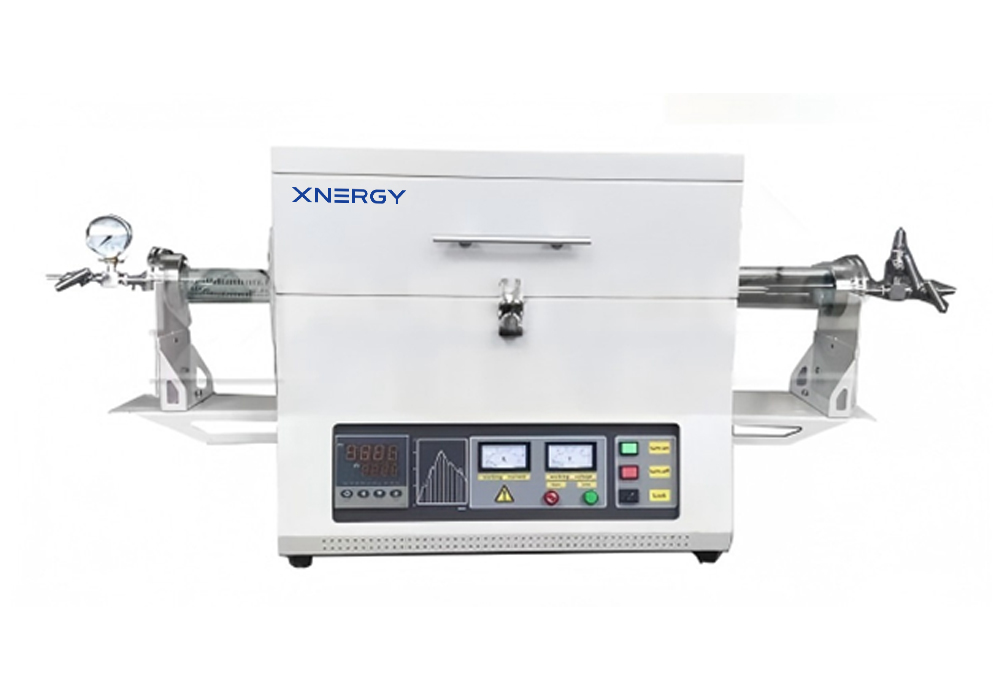
- Max Temp1200°C continuous
- HeatingKanthal A1 resistive wire
- TubeQuartz, gas-tight
- ControlPID 30-step programmable
- Accuracy±1°C
- Best ForCathode synthesis, calcination, general thermal work
Dual Temperature Zone Tube Furnace — 1200°C
Two independently controlled heating zones in a single tube. Essential for chemical transport reactions and temperature gradient studies.
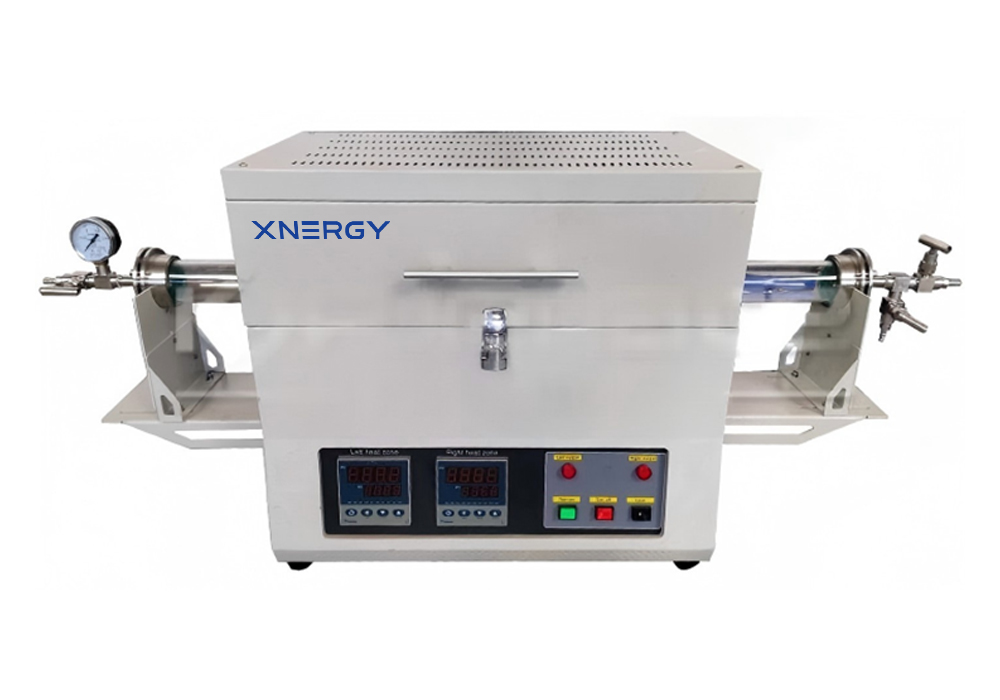
- Max Temp1200°C per zone
- Zones2 independent
- Control30-step PID per zone
- Accuracy±1°C
- Best ForChemical vapor transport, gradient sintering, dual-temperature experiments
High Magnetic Field Annealing Tube Furnace — 300°C
A specialty configuration: SS316L near-zero magnetic permeability construction, three-layer tube, vacuum to 10⁻⁵ Torr. For research where the sample's magnetic environment matters.
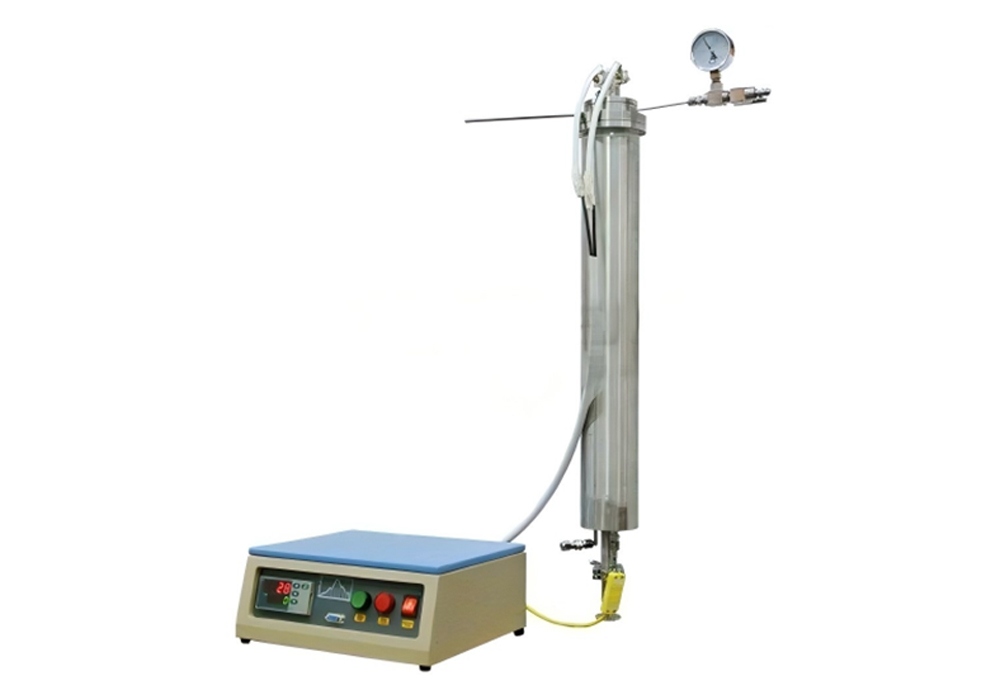
- Max Temp300°C
- Vacuum10⁻⁵ Torr
- MaterialSS316L, near-zero μ
- TubeThree-layer
- Best ForMagnetic material annealing, spintronics, magnetic phase studies
High Temperature High Pressure Tube Furnace — 1100°C
4 MPa positive pressure capability — rare in lab-scale tube furnaces. The nickel alloy tube and certified pressure system replace much autoclave work.
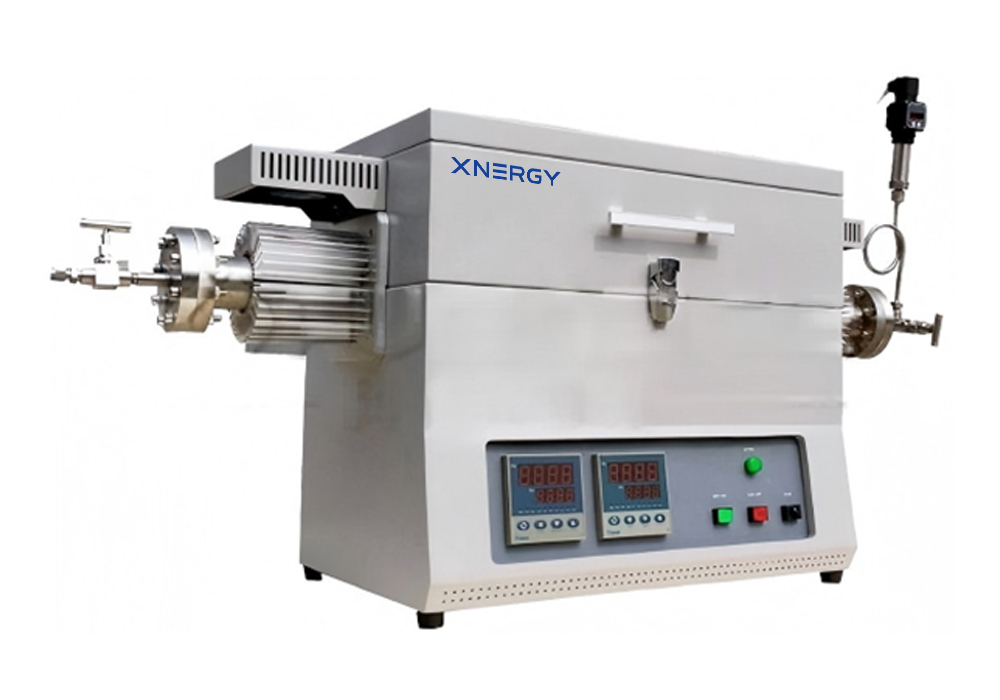
- Max Temp1100°C
- Max Pressure4 MPa positive
- TubeNickel alloy, Φ50mm
- Accuracy±1°C
- Best ForPressure-assisted sintering, hydrothermal-equivalent synthesis
Mini Gas-Mixing CVD System — 1200°C
Compact CVD with 2-channel MFC gas mixing — the right tool for carbon coating on Si/C anodes, basic graphene work, and reactive gas atmosphere studies.
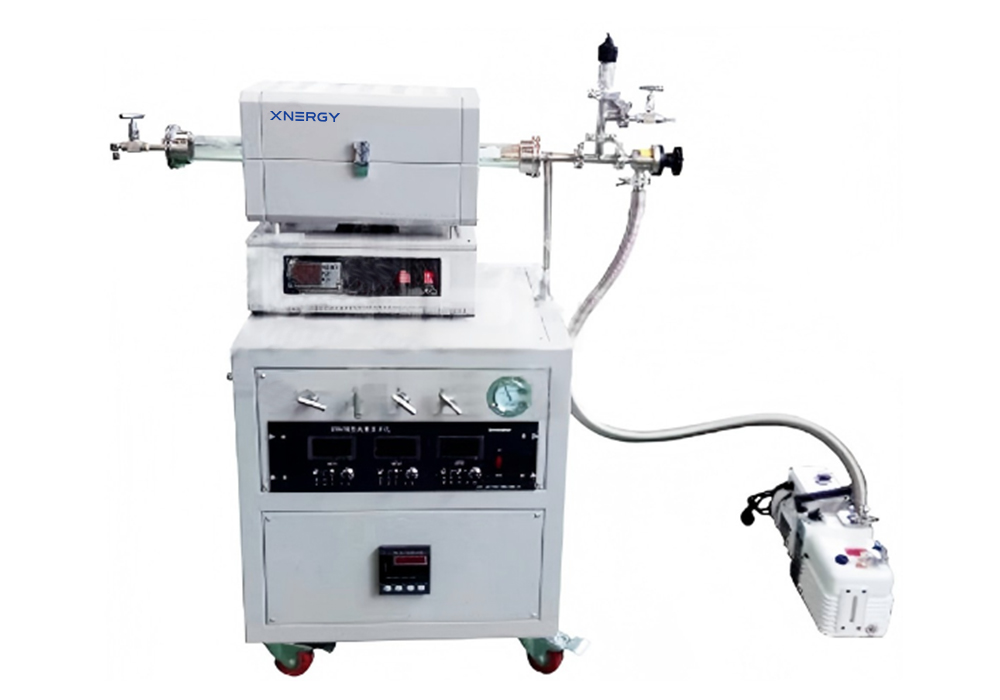
- Max Temp1200°C
- Gas Channels2 (MFC controlled)
- TubeQuartz, Φ50mm
- Accuracy±1°C
- Best ForCarbon coating, basic graphene CVD, catalyst studies
Mini Rotary Tilting Tube Furnace — 1200°C
The tube rotates (0–54 rpm) and tilts (0–45°) during operation. The standard solution for uniform powder calcination, single-crystal cathode work, and uniform coating.
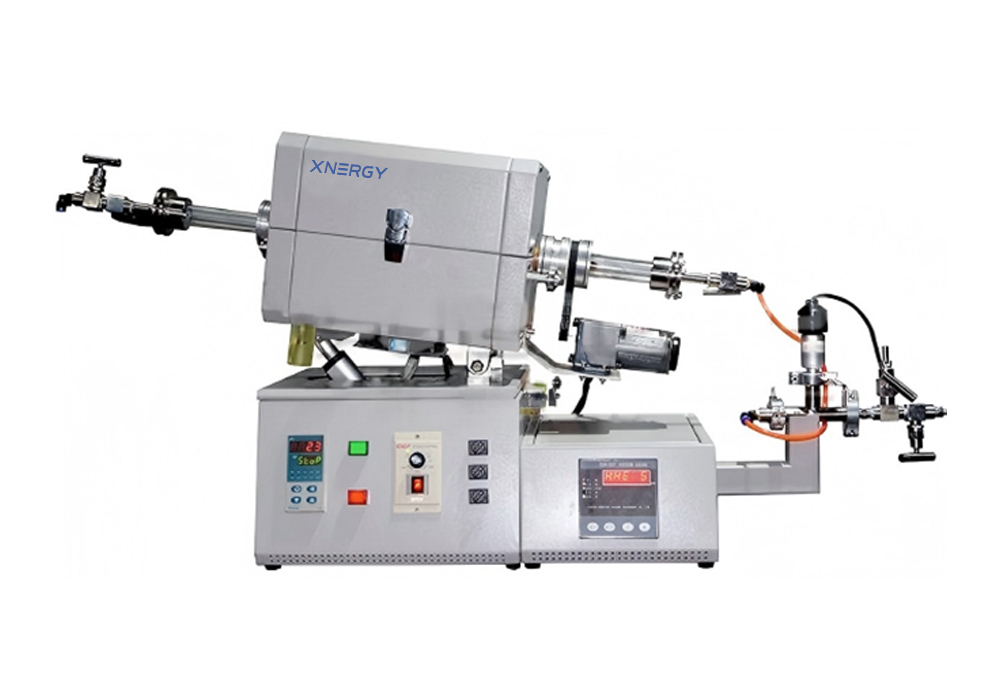
- Max Temp1200°C
- Rotation0–54 rpm
- Tilt0–45°
- TubeQuartz, Φ25mm
- Best ForPowder calcination, single-crystal NCM, catalyst reduction
Molecular Pump Tube Furnace — 600°C
High vacuum (6.67×10⁻³ Pa) with the largest tube diameter in the lineup (Φ120mm). Ideal for low-temperature degassing of larger sample volumes and oxide reduction.
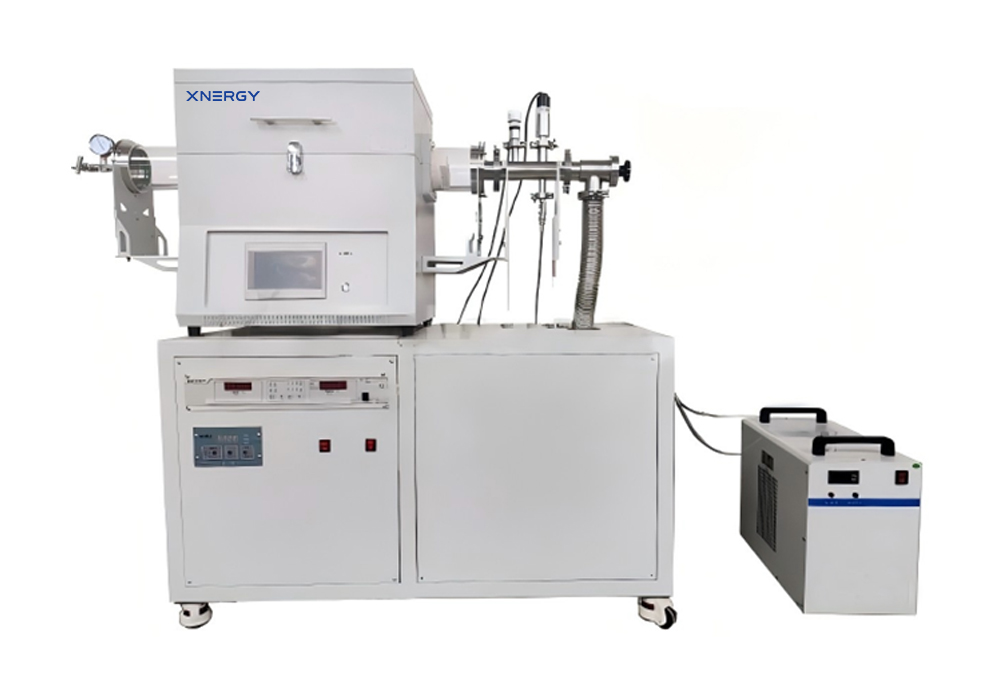
- Max Temp600°C
- Vacuum6.67×10⁻³ Pa
- TubeQuartz, Φ120mm
- PumpMolecular pump integrated
- Best ForHigh-vacuum degassing, alloy annealing, large samples
Single-Zone Tube Furnace — 1600°C MoSi₂
MoSi₂ heating elements and an alumina tube push the ceiling to 1600°C. The right configuration for LLZO, LATP, and other oxide solid electrolyte sintering.
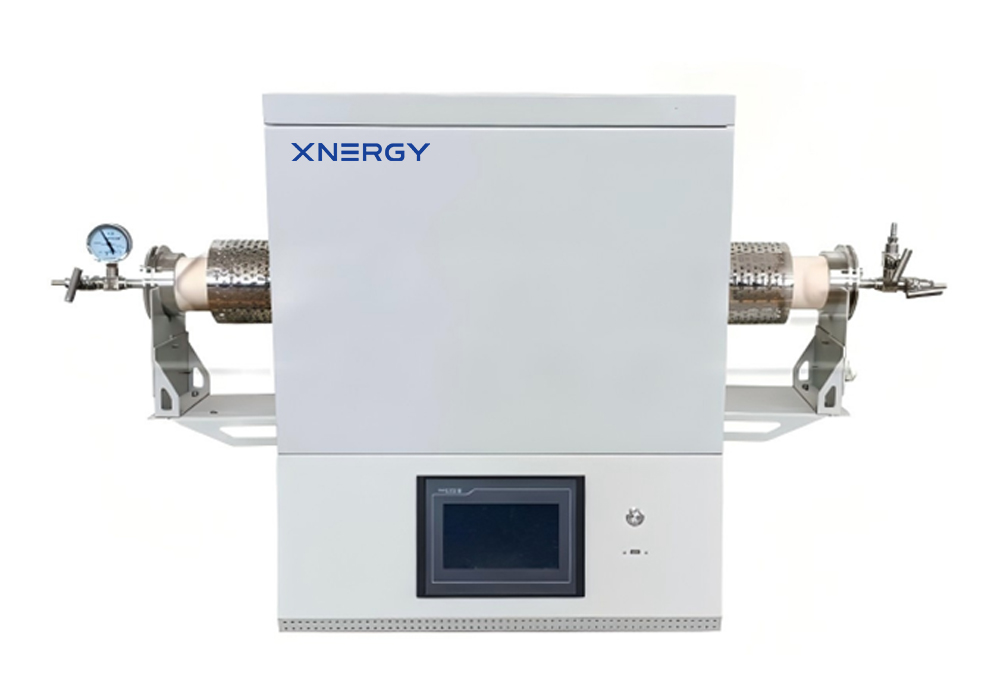
- Max Temp1600°C
- HeatingMoSi₂ elements
- TubeAlumina
- ControlLCD touchscreen
- Best ForOxide solid electrolyte sintering (LLZO, LATP), high-T ceramics
Touch Screen CVD Tube Furnace — 1600°C
High-temperature CVD with 3-channel MFC gas mixing and touchscreen control. Built for complex reactive atmospheres at temperatures where standard CVD systems can't go.
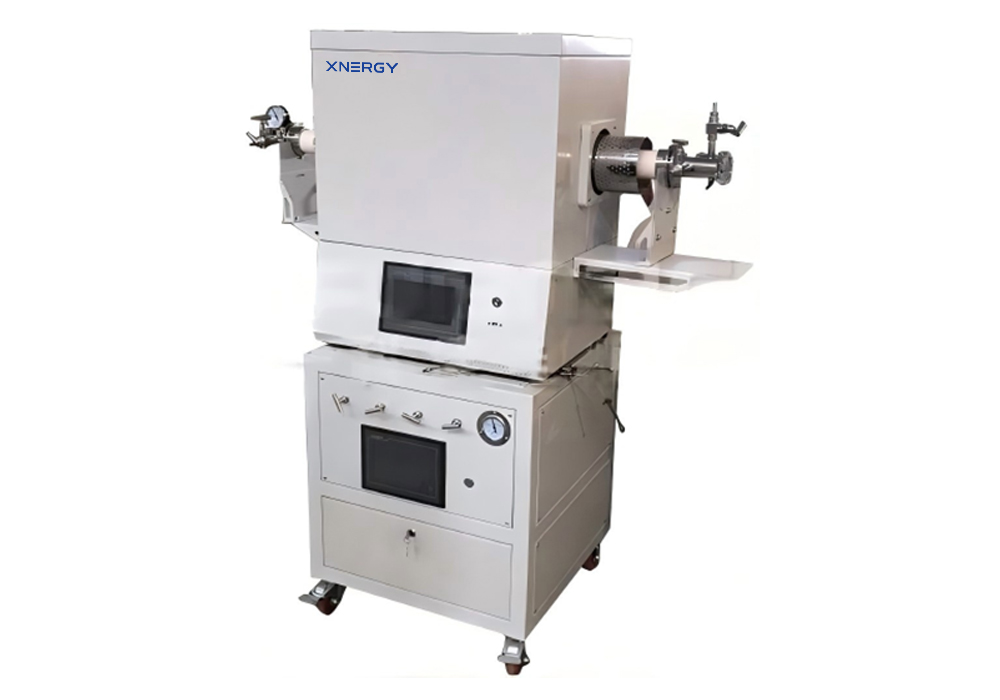
- Max Temp1600°C
- HeatingMoSi₂
- Gas Channels3 (MFC controlled)
- InterfaceTouchscreen
- Best ForAdvanced CVD, three-gas processes, high-T thin films
Vacuum Tube Furnace — 1700°C with 400mm Heating Zone
The top of the lineup: 1700°C continuous, MoSi₂ elements, 400mm heating zone for longer samples, and integrated vacuum pump with gas flowmeter. Built for the hardest synthesis challenges.
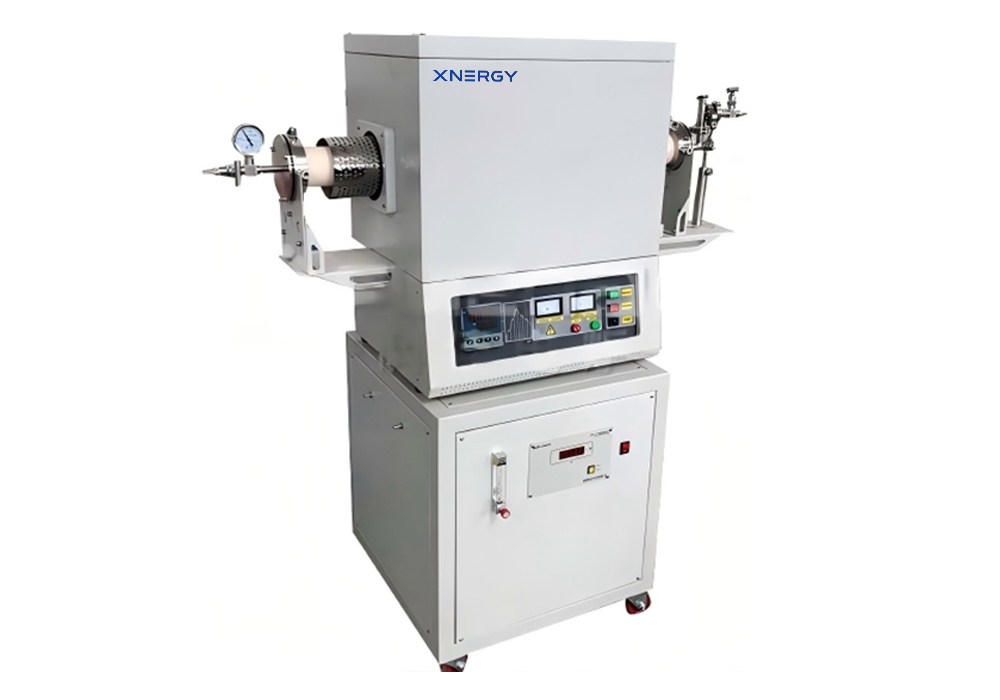
- Max Temp1700°C
- Heating Zone400mm
- Heating ElementMoSi₂
- VacuumIntegrated pump + flowmeter
- Best ForRefractory ceramics, SOFC research, extreme-T studies
More Configurations Available
Beyond the ten configurations above, Xnergy maintains additional specialty tube furnaces for niche research applications. For custom tube diameters, heating zone lengths, or atmosphere combinations not listed, our engineering team designs to your specification.
- Custom SpecsTube diameter, heating zone, atmosphere
- Lead TimeStandard 4–8 weeks
- ServiceEngineering consultation included
Practical Considerations Beyond the Spec Sheet
Tube Material: Quartz vs. Alumina vs. Metal
The reaction tube itself is a consumable. Choosing the wrong material — even if the rest of the furnace is perfect — leads to contamination, tube failure, or wasted budget on replacements.
- Quartz (fused silica) — Standard up to 1200°C. Transparent (you can see the sample), inexpensive, chemically inert to most processes. Devitrifies above 1200°C and becomes brittle. The default for 90% of battery work.
- Alumina (Al₂O₃) — Required above 1200°C. Opaque, more expensive, more brittle to thermal shock. Reacts with strong reducing atmospheres at extreme temperatures. The only option for MoSi₂ furnaces.
- Nickel alloy / Inconel — For pressure-rated work or aggressive reducing atmospheres. Available in the high-pressure XN-TH1000-H50LK. Expensive but necessary for pressure work.
Sealing and Gas Tightness
A furnace is only as good as its seals. The standard configuration uses water-cooled stainless steel end flanges with Viton O-rings — gas-tight to roughly 10⁻³ Torr without modification. For higher vacuum (10⁻⁵ Torr or better), you need either KF fittings with a turbo pump or all-metal seals. For high-temperature work where the end flanges sit close to the heated zone, water cooling becomes essential.
Ramp Rate and Cooling
Most published battery synthesis protocols specify ramp rates like "5°C/min to 800°C, dwell 12 hours, cool at 2°C/min." Slower cooling rates matter enormously for crystallinity — especially for cathode materials where you want ordered cation arrangement. Standard Xnergy controllers handle 30 programmed segments, more than enough for any published protocol.
For natural cooling below 200°C, expect 4–8 hours for a 1200°C run. If your workflow needs faster turnaround, ask about forced air cooling options.
Safety and Compliance
Battery materials work often involves hydrogen, ammonia, silane, or other flammable/toxic gases. Beyond the furnace itself, plan for:
- Gas cabinet ventilation and exhaust scrubbing
- Flammable gas detection and interlock systems
- Oxygen depletion alarms in inert-atmosphere rooms
- Pressure relief valves and rupture disks on high-pressure systems
- Personal protective equipment for sample loading/unloading
A furnace is the centerpiece of a material synthesis setup, but it isn't the whole setup. Budget realistically for gas handling, cooling, sample preparation, and characterization — typically another 50–100% on top of the furnace itself for a fully operational installation.
Frequently Asked Questions
What's the difference between a tube furnace and a box (muffle) furnace?
A tube furnace heats samples inside a sealed tube, allowing atmosphere control (vacuum, inert gas, reactive gas, pressure). A box furnace heats samples in an open chamber — you can use cover gas, but you can't pull vacuum or run reactive chemistry. For battery materials work that requires oxidation-sensitive or atmosphere-dependent synthesis (which is most of it), tube furnaces are the standard.
How long does a quartz tube last?
For continuous operation at 1100°C in inert atmosphere, expect 6–12 months. Frequent thermal cycling shortens lifetime; operating above 1200°C accelerates devitrification dramatically. Quartz tubes are consumables — keep at least one spare on hand. Alumina tubes in MoSi₂ furnaces typically last 1000–2000 hours at 1600°C.
Can I use one furnace for both oxidation and reduction processes?
Yes, but with care. The heating elements need to tolerate both atmospheres. Kanthal A1 (standard up to 1200°C) handles oxidizing and mildly reducing atmospheres well, but degrades faster under wet H₂. MoSi₂ elements require an oxidizing environment to maintain their protective silica layer — running them in heavy reducing atmospheres for extended periods damages them. Always check element compatibility with your specific process.
What ramp rate should I use for cathode synthesis?
It depends on the chemistry, but general guidelines: 2–5°C/min for heating, 1–3°C/min for cooling. For NCM lithiation, slow cooling (1°C/min through the 700–500°C range) significantly improves cation ordering. For LFP, faster cooling is acceptable because the phase is stable. Always follow the published protocol for your specific material; if developing a new protocol, vary the cooling rate first — it has the biggest impact on microstructure.
Do I need a rotary tube furnace, or can I use a static one with smaller batches?
For R&D-scale work (below 5g per batch), a static tube is usually fine if you spread the powder thin in a wide crucible. For batches above 20g, or for materials where uniform thermal exposure is critical (single-crystal cathodes, uniform carbon coating, catalyst reduction), a rotary tilting configuration becomes essential. The XN-T1200-S25K1 handles both R&D and small pilot work.
What temperature accuracy do I actually need?
For cathode synthesis where phase purity matters (NCM, LFP, LCO): ±2°C or better. For solid electrolyte sintering where phase boundaries are sharp (LLZO cubic/tetragonal transition): ±1°C is the floor. For carbon pyrolysis where the target is structural rather than phase-specific: ±5°C is workable but ±1°C still improves reproducibility. All Xnergy furnaces are rated at ±1°C, which is suitable for any battery research application.
Can I do CVD in a regular tube furnace?
Technically yes, but you'll fight the equipment. A CVD-configured furnace has MFC-controlled gas inlets, properly sized exhaust paths, deposition zones engineered for uniformity, and atmosphere recovery after runs. The XN-T1200-S5020-IC and XN-T1600 are purpose-built for CVD work and will give you reproducible thin films. Retrofitting a basic tube furnace for CVD usually costs more than buying the right configuration upfront.
What's the lead time and warranty?
Standard configurations typically ship in 4–6 weeks; custom configurations in 6–10 weeks. All Xnergy tube furnaces carry a 1-year warranty on the furnace body and 6 months on heating elements (consumable components). Tubes, crucibles, and other consumables are warranted against manufacturing defects only. Contact our team for current lead times and shipping arrangements.
Pairing Your Furnace with the Right Materials
A tube furnace is a means to an end — the end being synthesized battery materials. If you're setting up a complete research workflow, the Xnergy catalog also includes the precursors and characterization-ready materials these furnaces are typically used to process:
- Cathode materials — Pre-synthesized NCM (523/622/811/90), LFP, LCO, LMFP, and LMO for comparison studies, plus precursors for in-house synthesis. Browse cathode materials →
- Anode materials — Hard carbon, graphite, silicon-carbon composites, and lithium metal for full-cell assembly. Browse anode materials →
- Solid electrolytes — Sulfide (LPSCl, LGPS, Li₂S-based), oxide (LLZO, LATP, LAGP, LLZTO), and halide (LZC, LIC, LYC) systems for solid-state battery research. Browse solid electrolytes →
- Coin cell and pouch cell hardware — For testing the materials you synthesize. Browse cell hardware →
Pairing a furnace with the corresponding materials matters more than it sounds. Many of our customers buy a reference batch of pre-synthesized material from us alongside their furnace — using it as a benchmark while developing their own synthesis. It shortcuts the debug cycle when something is off in their process.
Ready to specify your tube furnace?
Our engineering team helps battery researchers translate their synthesis goals into the right furnace configuration. No sales pitch — just a technical conversation about your process, atmosphere, and accuracy requirements.
Request a Quote →