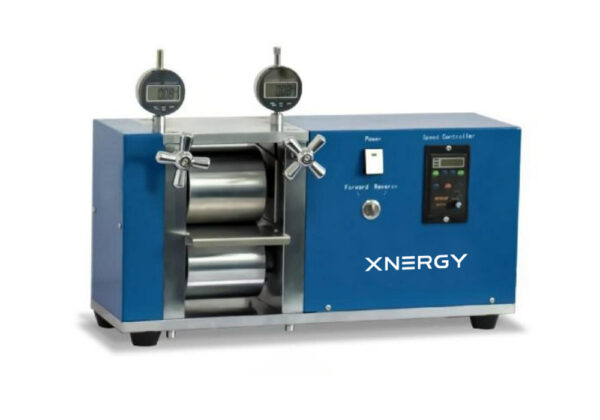
Motorized Vertical Roller Press XN-CRPE-250
SKU: XN-CRPE-250
Motorized Vertical Roller Press XN-CRPE-250 — laboratory calender with Φ96 mm hard-chrome rollers (HRC62), forward/reverse motorized operation, 0–250 mm sheet width, and wedge-block gap adjustment with digital readout. 0.2 kW, ambient temperature.
Need a bulk order or custom specification? Request a competitive quote today!
Name: Motorized Vertical Roller Press XN-CRPE-250
Equipment Type: Laboratory Motorized Vertical Gear-Driven Roller Press with Forward/Reverse Operation for Battery Electrode Calendering (250 mm Sheet Width)
Product Code: XN-CRPE-250
Product Introduction:
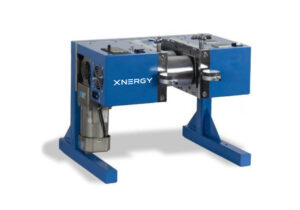
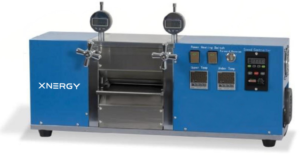
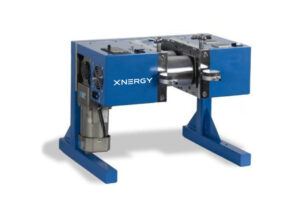
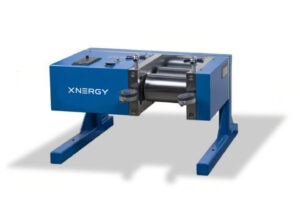
The Motorized Vertical Roller Press XN-CRPE-250 is designed for motorized rolling of battery materials, small quantities of precious metals (gold, silver), and non-ferrous metals (copper, aluminum) in laboratory environments. It is particularly suitable for the thinning and densification of clean-energy material lithium-ion battery electrode sheets. The XN-CRPE-250 uses a gear-drive mechanism powered by an electric motor to achieve precise roller compression, with adjustable rolling thickness and convenient operation. The XN-CRPE-250 supports the widest sheet width in Xnergy’s motorized CRPE series — up to 250 mm — making it well-suited for laboratory work with wider electrode sheets and small-batch electrode preparation while retaining the motorized drive’s repeatability and forward/reverse capability.
Main Features:
- Hard rollers with chrome-plated surface — hardness up to HRC62, with rust-resistant chrome plating
- Wedge-block gap adjustment — excellent self-locking performance, high adjustment precision, with intuitive digital readout
- High rolling precision — roller cylindricity ≤ ±2 μm
- Vertical roller layout — convenient feeding of strip and sheet materials
- Digital display of sheet thickness and speed — precise and intuitive parameter readout
- Motorized operation with forward/reverse — enables automated rolling and sample retrieval
- Compact footprint — easy and flexible operation for laboratory benchtop use
Operating Process:
- Rolling operation: Place the material on the feed plate between the two rollers, toggle the forward/reverse switch to the forward position, then press the start button. The motor starts and drives the gear mesh, rotating both rollers to perform paired-roller compression.
- Roller gap adjustment: Wedge-block adjustment mechanism with self-locking design — rotate the left/right adjustment hand wheels to adjust the gap; the digital display provides intuitive and convenient gap readout.
Technical Parameters:
| Parameter | Value |
|---|---|
| Equipment Type | Motorized vertical roller press (calender) |
| Roller Diameter | Φ96 mm |
| Roller Cylindricity | ≤ ±2 μm |
| Roller Hardness | HRC62 (with hard-chrome-plated rust-resistant surface) |
| Roller Surface Finish | Ra 0.4 μm |
| Roller Orientation | Vertical layout |
| Rolling Thickness | 0 – 2 mm (gap adjustable) |
| Sheet Width | 0 – 250 mm |
| Gear Grade | Ground-grade gear (precision-ground) |
| Operation Mode | Motorized (electric, with forward/reverse switch and push-button start) |
| Feed Speed | 0 – 40 mm/s |
| Speed Display | Digital speed display and adjustment |
| Gap Adjustment Display | Wedge-block adjustment with self-locking; digital display |
| Power Supply | Configurable according to local electrical standards |
| Power Consumption | 0.2 kW |
| Overall Dimensions (L × W × H) | L670 × W220 × H350 mm |
| Net Weight | 80 kg |
Values measured by Xnergy. Typical values for reference; not guaranteed unless otherwise specified.
Application Areas:
- Lithium-ion battery electrode sheet thinning and densification — motorized rolling at sheet widths up to 250 mm
- Clean-energy battery material laboratory rolling experiments
- Coin-cell, pouch-cell, and prismatic-cell laboratory electrode preparation — final calendering step before slitting/punching
- Small-quantity precious metal rolling — gold, silver, and similar precious metals
- Non-ferrous metal rolling — copper, aluminum, and similar non-ferrous strip materials
- Laboratory benchtop calendering where motorized drive and forward/reverse operation are required for the widest sheets and small-batch repeatable production
Recommended Operating Procedure:
1. Place the XN-CRPE-250 on a stable laboratory benchtop with adequate working space and good lighting; connect the power supply per local electrical standards. 2. Power on the unit and verify the motor, gear-drive mechanism, forward/reverse switch, push-button start, wedge-block gap adjustment, and digital displays for gap and speed are all in good condition and operating normally. 3. Set the target roller gap by rotating the left/right gap-adjustment hand wheels; read the gap value on the digital display (target range 0–2 mm). The wedge-block mechanism self-locks at the configured gap. 4. Set the target feed speed on the digital speed-control panel (within 0–40 mm/s). 5. Place the electrode sheet (or other strip material, ≤ 250 mm wide) on the feed plate between the two vertical rollers. 6. Toggle the forward/reverse switch to the forward position, then press the start button; the motor drives the gear mesh and rotates both rollers at the configured feed speed. 7. As the calendered material exits the rollers, support it gently to avoid wrinkling or bending. 8. If the material needs to be retrieved from the entry side, toggle the forward/reverse switch to the reverse position and press start; the motor will rotate the rollers in reverse direction. 9. If multiple calendering passes are required to reach the target final thickness, gradually reduce the roller gap between passes and repeat the procedure. 10. After use, power off the unit, then clean the roller surfaces with a soft, clean cloth to remove any residual electrode material. Inspect the roller surface, gears, motor, and gap-adjustment mechanism periodically.
Maintenance:
- Frequently wipe the machine with a soft cloth dampened with alcohol to keep it clean
- Lubricate moving parts with oil to keep movement smooth
- If the machine will not be used for an extended period, wipe down the surface of moving components and apply a protective rust-prevention oil
- Periodically inspect screws, nuts, pins, and other fasteners across all parts of the machine to prevent loosening, avoiding equipment-quality issues and personal-safety incidents
Packaging & Storage:
The XN-CRPE-250 ships fully assembled with the Φ96 mm hard-chrome-plated rollers, ground-grade gears, electric motor, forward/reverse switch, push-button start, wedge-block gap-adjustment mechanism with self-locking, digital displays for gap and speed, feed plate, and frame. Store on a stable laboratory benchtop or shelf in a clean, dry environment, away from corrosive atmospheres and moisture. Disconnect the power supply when the equipment is not in active use. After each use, clean the roller surfaces, gears, and frame; apply rust-prevention oil to the roller surfaces if the machine will not be used for an extended period. Inspect the rollers, gears, motor, forward/reverse switch, push-button start, gap-adjustment mechanism, and digital displays periodically for wear, contamination, or signs of degradation.
Safety:
For research and industrial laboratory use only. During operation, do not insert hands or any other body parts into the roller-engagement area, the feed plate, or any moving components to prevent personal injury. Operation by two or more persons simultaneously is not allowed to avoid accidental injury. External (third-party) technical personnel and unauthorized persons must not disassemble the equipment under any circumstances. Always wear appropriate PPE (safety glasses, lab coat, close-fitting sleeves) when operating the roller press. Keep loose clothing, hair, and jewelry away from the rotating rollers, gears, and motor. When handling battery electrode sheets that may have absorbed solvent residues or contain reactive materials, wear chemical-resistant gloves and operate in a well-ventilated area. Press the emergency stop or power off the unit immediately if any binding, unusual resistance, abnormal motor sound, or damage to the material is observed; inspect the machine before resuming operation. Disconnect the power supply before any cleaning, maintenance, or component replacement. Refer to the included user manual for complete safety and operating instructions.
Note: Specifications listed above are typical and for reference only. Actual performance depends on the specific electrode formulation, coated film thickness, target final thickness, target electrode density, feed speed, and operator technique — consult published literature and our technical team for guidance on specific electrode calendering protocols. The XN-CRPE-250 is a motorized calendering platform for laboratory-scale electrode densification supporting sheets up to 250 mm wide. For researchers requiring narrower motorized vertical rolling, see the Motorized Vertical Roller Press XN-CRPE-100 (100 mm sheet width), XN-CRPE-150 (150 mm sheet width), and XN-CRPE-200 (200 mm sheet width). For researchers preferring a horizontal roller layout, see Xnergy’s motorized horizontal CRPE-W series: XN-CRPE-100W, XN-CRPE-150W, XN-CRPE-200W, and XN-CRPE-250W. For researchers requiring heated vertical rolling with dual-zone independent heating (up to 130 °C), see the Heated Vertical Roller Press XN-HRPE-100, XN-HRPE-150, XN-HRPE-200, and XN-HRPE-250. For researchers requiring heated horizontal rolling, see the Heated Horizontal Roller Press XN-HRPH-100, XN-HRPH-150, XN-HRPH-200, and XN-HRPH-250. For researchers requiring manual operation without an electric motor, see the Manual Vertical Roller Press XN-CRP-100, XN-CRP-150, XN-CRP-200, and XN-CRP-250. For researchers requiring pilot-scale motorized calendering, contact our team for the appropriate equipment recommendation. For researchers exploring complete lithium-ion battery electrode preparation workflows, see also Xnergy’s related products: Automatic Film Coater XN-VC-300, Automatic Film Coater XN-VC-800, Glove-Box-Compatible Film Coating & Drying Machine XN-VCH-200, Automatic Film Coater with Integrated Drying System XN-VCH-300, Slot-Die Coating System XN-SDC, Laboratory Transfer Coating Machine XN-RTCA-300, Comma-Blade Continuous Coating Machine XN-KD200, Planetary Vacuum Mixer for Mixing Electrode Powders, Three-Door Vacuum Drying Oven (XN-DVO-3), and the full Calendering equipment category, Coating equipment category, Drying equipment category, and Slitting & Die Cutting equipment category. For complete electrode formulation systems, see also Cathode Materials, Anode Materials, Binders, and Current Collectors.