
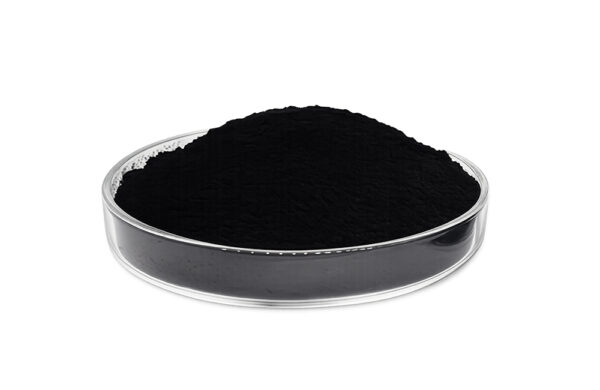
BTR M1-S2 Cathode Material 1kg
SKU: M1-S2
Free Shipping$482.00
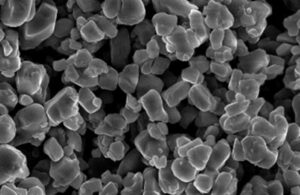
BTR M1-S2 Cathode Material — D50 3.8 μm, tap density ≥ 2.0 g/cm³, S.S.A 0.5 m²/g, low surface lithium residues (OH⁻ ≤ 0.2 wt%, CO₃²⁻ ≤ 0.2 wt%).
Half-cell testing at 0.1C, 3.0–4.3 V delivers capacity ≥ 180 mAh/g with ≥ 90% first-cycle efficiency.
Need a bulk order or custom specification? Request a competitive quote today!
Name: BTR M1-S2 Cathode Material
Material Type: Lithium-Ion Battery Cathode Material
Product Code: M1-S2
Brand: BTR
Product Introduction:
The BTR M1-S2 is a lithium-ion battery cathode material supplied by BTR (Shenzhen). The material is characterized by D50 3.8 μm, tap density ≥ 2.0 g/cm³, specific surface area 0.5 m²/g, and low surface lithium residues, with half-cell capacity ≥ 180 mAh/g and ≥ 90% first-cycle efficiency in the 3.0–4.3 V window.
Key Features:
Particle size distribution — D10 2.5 ± 2.0 μm / D50 3.8 ± 2.0 μm / D90 7.0 ± 4.0 μm
High tap density ≥ 2.0 g/cm³ — supports high electrode loading and energy density
Specific surface area 0.5 ± 0.5 m²/g
Low surface lithium residues — OH⁻ ≤ 0.2 wt%, CO₃²⁻ ≤ 0.2 wt%
Low moisture content ≤ 600 ppm
Half-cell capacity ≥ 180 mAh/g at 0.1C, 3.0–4.3 V vs Li⁺/Li
First-cycle efficiency ≥ 90%
Physical & Chemical Properties:
| Item | Specification |
|---|---|
| D10 (μm) | 2.5 ± 2.0 |
| D50 (μm) | 3.8 ± 2.0 |
| D90 (μm) | 7.0 ± 4.0 |
| Moisture (ppm) | ≤ 600 |
| Tap Density (g/cm³) | ≥ 2.0 |
| Specific Surface Area (m²/g) | 0.5 ± 0.5 |
| pH | ≤ 11.7 |
| Residual OH⁻ (wt%) | ≤ 0.2 |
| Residual CO₃²⁻ (wt%) | ≤ 0.2 |
Electrochemical Performance (Half-Cell, 0.1C/0.1C, 3.0–4.3 V vs Li⁺/Li):
| Parameter | Specification |
|---|---|
| Capacity (mAh/g) | ≥ 180 |
| First-Cycle Efficiency (%) | ≥ 90 |
Values measured by Xnergy. Typical values for reference; not guaranteed unless otherwise specified.
Packaging & Storage:
Store in a sealed container in a cool, dry environment away from heat sources, direct sunlight, acidic vapors, and reducing atmospheres. Once opened, reseal the inner moisture-barrier bag promptly. Prolonged exposure to ambient humidity can increase surface lithium residues and degrade electrochemical performance.
Safety:
For research and industrial use only. Wear appropriate PPE (chemical-resistant gloves, safety glasses, lab coat, dust mask or respirator) when handling M1-S2 powder, especially during weighing, transfer, and slurry preparation. Avoid generating dust; transfer powders in a fume hood or with local exhaust ventilation. Avoid contact with skin and eyes; in case of contact, flush with water and seek medical attention. Refer to the included Safety Data Sheet (SDS) for complete safety information.
Note: Specifications listed above are typical and for reference only. Actual electrochemical performance depends on the specific cell architecture, electrolyte formulation, binder/conductive-additive composition, coating thickness, calendering parameters, formation protocol, and testing conditions. For complete lithium-ion battery electrode preparation workflows, see also Xnergy’s related products in the Cathode Materials category, Anode Materials category, Binders category, and Current Collectors category. For electrode-coating equipment, see the Coating equipment category including Automatic Film Coater XN-VC-300, XN-VCH-300, and Slot-Die Coating System XN-SDC. For electrode calendering, see the Calendering equipment category. For mixing and drying, see Planetary Vacuum Mixer and Three-Door Vacuum Drying Oven (XN-DVO-3). See also Xnergy’s other BTR cathode product: BTR M2-S Single-Crystal Ni83 NCM Cathode.
Related products
-
Sulfur Powder
Free Shipping Price range: $682.00 through $1,015.00Select options This product has multiple variants. The options may be chosen on the product page -
Zhenhua E-Chem NCM613 Cathode Material 1kg
Free Shipping$515.00 -
Ronbay Skyland LMFP73 Cathode Material 1kg
Free Shipping$398.00 -
Zhenhua E-Chem NCM9000 Cathode Material 1kg
Free Shipping$482.00