
Here is the failure mode that quietly kills early battery projects: a team spends months optimizing around a cathode powder, publishes promising numbers, then can’t reproduce them at the next scale — because the powder they validated on never existed at production scale to begin with. The data was real. It just didn’t transfer.
Sourcing cathode materials for battery research is usually framed as a quantity problem: how do I buy grams instead of tonnes? That part is largely solved — several lab suppliers will sell you 250–500 g. The harder, more expensive question is whether the exact grade you optimize on is a grade you can later buy by the tonne. That is where most research-stage sourcing quietly goes wrong.
The real risk isn’t quantity — it’s whether your data transfers
Buying small is no longer the edge it once was; the bottleneck has moved. When you build a cell around a generic or in-house lab powder, you’re optimizing against a target you can’t purchase again at volume. Coating, morphology, and surface chemistry are particular to that lot — change the source at scale-up and a good part of your formulation work resets.
Production-grade cathode active material — the kind that actually feeds cell lines — is specified, documented, and orderable again. Starting there means your coin-cell and pouch data describe a material you can keep buying as the program grows.
“Production-grade” vs “lab-grade” cathode powder: what actually differs
Two powders both labeled “NMC811” can be far apart. The properties that move your results the most:
- Particle morphology — single-crystal vs polycrystalline changes cycling and cracking behavior.
- Particle-size distribution — drives slurry rheology, coating, and calendered density.
- Surface coating & residual lithium — affect first-cycle efficiency, gassing, and high-voltage stability.
- Lot-to-lot consistency — production CAM is controlled batch to batch; ad-hoc lab powder often isn’t.
A production grade carries a real specification and a named manufacturer behind it. A generic lab powder may perform fine on the bench, but you’re then characterizing a material no factory will ever run — a pattern we repeatedly see slow research teams down when they move toward a pilot line.
Source the grades that scale, not lab-only generics
This is where our cathode material powder catalog differs from a typical lab-chemicals shop. We supply from the same top-tier manufacturers that feed the industry — Ronbay, BTR, EASPRING, Dynanonic, Hunan Yuneng, Zhenhua, Shanshan — in research quantities. Every powder ships identified by maker and grade, so your lab notebook records exactly what went into the cell.
As a battery supply-chain company rather than a reseller of unbranded powder, we can do the part most lab suppliers can’t: take you from a research order to pilot and production volumes on the identical grade. The material you prove your design on is the material you scale with.
The cathode chemistries we stock (in research quantities)
Across 10 material groups and 27 product types, spanning lithium-ion, sodium-ion, and lithium-sulfur:
| Chemistry | Where it fits | Forms in stock |
|---|---|---|
| NMC / NCM | High energy density cells | Polycrystalline & single-crystal grades |
| LFP | Safety, long cycle life, cost | Multiple LFP grades |
| NCA | Very high nickel, high energy | High-Ni NCA (from 500 g) |
| LMFP | More energy than LFP, similar safety | Several LMFP grades |
| LMO | Low cost, high rate, blends | LMO powder |
| Sodium-ion | Low cost, low-temperature, abundant inputs | NFM, NVP, NVPF, NFPP |
| Lithium-sulfur | Next-generation energy density | Sulfur, SPAN, SSPN (>79% S) |
Most powders ship by the kilogram, NCA from 500 g, with smaller research quantities available on request; pricing is per-kilogram and research-friendly. Need the material already cast? We also carry matched Li-ion and sodium-ion cathode electrode sheets for early screening without coating in-house.
Featured grades in stock — a representative pick across chemistries; the full range is in the catalog:
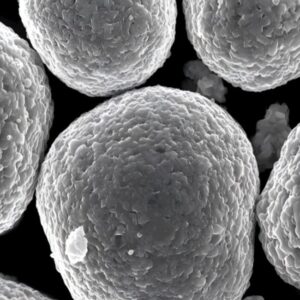 NMC811 · PolyRonbay S85E Polycrystalline NCM811
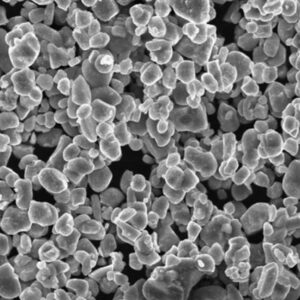 NCM622 · Single-crystalRonbay S76L Single-Crystal NCM622
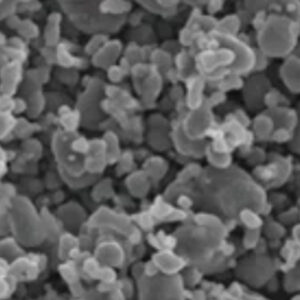 LFPDynanonic DY-X2 LFP Cathode
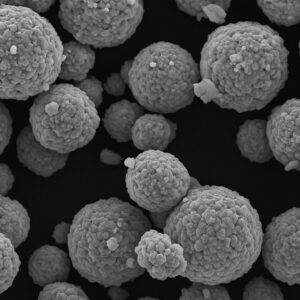 NCA · from 500 gHigh-Nickel NCA Cathode Powder
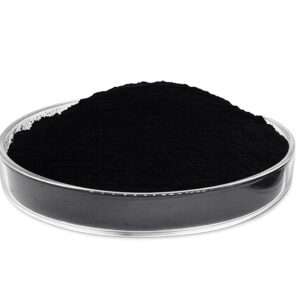 Sodium-ion · NFMBTR BN-P2C Sodium-Ion NFM
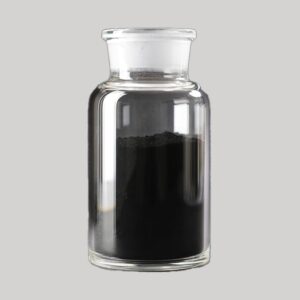 Lithium-sulfurSSPN Composite Cathode (Li–S)
Single-crystal vs polycrystalline NMC: how to choose
For high-nickel NMC, morphology is one of the first calls you make. Polycrystalline secondary particles tend to give higher initial capacity and rate, but their grain boundaries crack under repeated expansion — which shows up later as capacity fade and gassing at high voltage or temperature. Single-crystal particles give up a little early capacity for mechanical durability. In one independent pouch-cell study, graphite / single-crystal NMC622 cells held roughly 83% capacity after 3,000 cycles — a margin polycrystalline material struggles to match at high loading.
The trade-off isn’t universal: as a 2024 review notes, at very high nickel with high cutoff voltages the single-crystal advantage can narrow, so test at your own target voltage rather than trusting a datasheet. A sensible default: if you’re chasing peak energy and early-cycle numbers, start polycrystalline; if cycle life, high-voltage operation, or fast charge is the goal, evaluate single-crystal early rather than discovering the durability gap at the pilot stage. We stock both for the main NMC grades, so you can run that comparison under your own conditions.
Matching chemistry to your program
Lead with the metric that defines success. Maximum energy density points to high-nickel NMC or NCA. Safety, cost, and long cycle life favor LFP — or LMFP when you want more energy at similar safety. Cost, resource independence, or low-temperature behavior make sodium-ion (NFM, NVPF) worth a serious look. And pushing the theoretical energy ceiling is where lithium-sulfur (SPAN, SSPN) earns its place. Whichever you choose, fix the source before the experiment starts and stay on that grade through the project.
From research quantity to pilot and production
The costly version of scale-up is re-sourcing: validating on one material, then qualifying a different one for volume. Sourcing your research and pilot quantities from the same manufacturer and grade removes that reset — move from a 1 kg research order toward pilot volumes on the identical material and your earlier data still holds. If you already know roughly where you’re heading on volume, our team can map a grade that’s available in grams now to the quantities you’ll need later.
Frequently asked questions
Where can I buy cathode materials for battery research in small quantities?
Xnergy supplies cathode material powders by the kilogram, with NCA from 500 g and smaller research quantities on request. Unlike generic lab powders, these come from top-tier manufacturers and are the same production grades you can later order at pilot and production volume.
What is the difference between production-grade and lab-grade cathode powder?
Production-grade cathode active material is specified, documented, controlled lot-to-lot, and available again at volume from a named maker. Lab-grade or relabeled powder may test fine on the bench but often can’t be re-purchased at scale, so data built on it does not transfer cleanly to a production line.
Do you sell single-crystal and polycrystalline NMC811?
Yes. We stock both single-crystal and polycrystalline NMC grades, including high-nickel chemistries, so you can compare morphology under your own test conditions. Polycrystalline favors initial capacity and rate; single-crystal favors cycle life and high-voltage durability.
Can I scale from research quantities to production on the same grade?
Yes. Because Xnergy is a battery supply-chain company sourcing from industrial cathode makers, you can validate on a research quantity and then scale to pilot and production volumes on the identical grade — no re-sourcing or re-qualification, so your validation data stays valid.
Which cathode chemistries do you stock?
Our catalog spans 10 material groups and 27 product types: NMC/NCM (polycrystalline and single-crystal), LFP, NCA, LMFP, LMO, sodium-ion (NFM, NVP, NVPF, NFPP), and lithium-sulfur (sulfur, SPAN, SSPN). This covers lithium-ion, sodium-ion, and next-generation research programs.
Do you offer sodium-ion and lithium-sulfur cathode materials?
Yes. Sodium-ion options include NFM, NVP, NVPF, and NFPP cathodes; lithium-sulfur options include sulfur powder, SPAN, and SSPN composite with over 79% sulfur content — all available in research quantities alongside the full lithium-ion range.
Build on a material you can buy again
Production-grade cathode materials in research quantities today, from the makers that supply the industry — with a clear path to volume when your design is ready.