
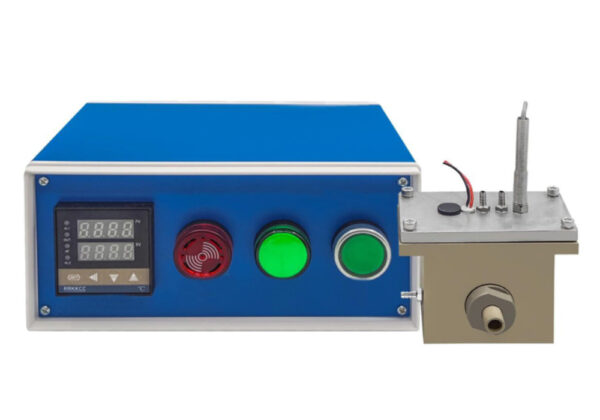
In-situ Observation Mold for Heated Liquid Flow – YL04 CG
SKU: XN-BM-YL04CG
Free Shipping$1,699.00
YL04 CG In-Situ Observation Mold for Heated Liquid Electrochemistry — heated liquid electrochemical cell with transparent observation window and PID intelligent temperature controller for in-situ reaction observation up to ≤ 80 °C. 120 mm sleeve width, 100 mm assembly height, 2 electrode columns. Built with stainless steel and PEEK. Single-electrolyte design — not a flow battery; ideal for temperature-controlled electrochemical observation studies.
Need a bulk order or custom specification? Request a competitive quote today!
Name: YL04 CG In-Situ Observation Mold for Heated Liquid Electrochemistry (with PID Temperature Controller)
Mold Type: Heated Liquid Electrochemical Cell with Transparent Observation Window
Product Code: XN-BM-YL04CG
Description:
The YL04 CG is an in-situ liquid electrochemical observation cell with integrated heating function — engineered for laboratory research that requires real-time visual observation of electrochemical reactions under controlled temperature conditions. The principle of the YL04 CG differs fundamentally from Xnergy’s flow battery products (YL01, YL02 CG, YL03 CG): this is not a flow battery. Instead, the YL04 CG holds a single type of electrolyte in a sealed cell with a transparent observation window, allowing researchers to observe the electrochemical reaction process directly through the window while controlling cell temperature. As a result, the YL04 CG is the ideal platform for studying electrolyte-electrode interface phenomena, reaction kinetics, and temperature-dependent electrochemical behavior in liquid systems. The cell features 2 electrode columns, supports operating temperatures up to ≤ 80 °C via an integrated PID intelligent temperature controller, and is constructed primarily from stainless steel and PEEK. Customization of material and size is available on request.
Application:
The YL04 CG mold is designed for in-situ liquid electrochemical research with controlled heating, including temperature-dependent electrochemical kinetic studies (Arrhenius analysis of redox reactions), real-time visual observation of electrodeposition, dissolution, and corrosion reactions through the transparent window, electrolyte-electrode interface visualization (gas evolution, dendrite growth, surface deposit formation), heated electrolyte studies of organic redox couples and polymer electrolytes near glass-transition temperatures, fundamental research into temperature effects on electrochemical reaction mechanisms, comparative studies of identical chemistry at room temperature vs. elevated temperature (up to 80 °C), and academic research into thermally activated electrochemical processes.
Specifications:
| Parameter | Value |
|---|---|
| Mold Type | In-situ heated liquid electrochemical observation cell |
| Sleeve Width | 120 mm |
| Assembly Height | 100 mm (excluding wiring) |
| Operating Temperature | ≤ 80 °C (PID-controlled) |
| Temperature Controller | Integrated PID intelligent temperature controller |
| Cell Architecture | Single-electrolyte cell (not a flow battery) |
| Electrode Columns | 2 electrode columns |
| Observation Window | Transparent window for direct in-situ visual observation |
| Frame Material | Stainless steel |
| Body Material | Polyether ether ketone (PEEK) |
| Customization | Available on request — alternative materials, dimensions, and electrode configurations |
| Application Environment | Laboratory benchtop with PID temperature controller |
| Compatibility | Liquid electrolyte electrochemical systems compatible with stainless steel and PEEK |
Values measured by Xnergy. Typical values for reference; not guaranteed unless otherwise specified.
How the YL04 CG Differs from YL01/YL02/YL03 Flow Battery Products:
| Feature | YL01 / YL02 CG / YL03 CG | YL04 CG |
|---|---|---|
| Cell Type | Flow battery (catholyte + anolyte) | Single-electrolyte observation cell |
| Electrolyte Circulation | Yes (peristaltic pumps) | No — static or stirred |
| Heating Capability | No (room temperature only) | Yes (≤ 80 °C, PID-controlled) |
| Observation Window | No | Yes — transparent window for direct visual observation |
| Best Use Case | Redox flow battery research | Temperature-dependent kinetics, in-situ visualization |
Characteristics:
Integrated PID intelligent temperature controller
The YL04 CG ships with an integrated PID intelligent temperature controller, enabling precise temperature regulation across the full 0–80 °C operating range. As a result, researchers can perform temperature-dependent kinetic studies (Arrhenius analysis), thermally activated reaction studies, and comparative experiments at multiple controlled temperature setpoints — without sourcing a separate temperature controller or custom heating fixture.
Transparent observation window for direct in-situ visualization
The defining feature of the YL04 CG is its transparent observation window, which provides direct visual access to the electrochemical reaction. Therefore, researchers can observe gas evolution, electrodeposition morphology, electrolyte color changes (in indicator-based reactions), and dendrite growth in real time during cycling — generating mechanistic data unavailable from non-observation cells.
Temperature control up to 80 °C for thermally activated electrochemistry
The 80 °C maximum operating temperature accommodates a wide range of thermally activated electrochemistry research — including warm-zone kinetics studies of organic redox couples, polymer electrolyte glass-transition characterization, and temperature-dependent corrosion studies. Consequently, this cell bridges the gap between room-temperature electrochemistry cells and high-temperature solid-state battery fixtures.
Single-electrolyte design (not a flow battery)
Unlike Xnergy’s flow battery products (YL01, YL02 CG, YL03 CG), the YL04 CG is a single-electrolyte observation cell — there is only one type of electrolyte in the cell, with no membrane separation or independent flow loops. As a result, this design simplifies experimental setup for fundamental electrochemistry studies that don’t require flow conditions, while providing the unique capabilities of integrated heating and visual observation.
Two-electrode column architecture
The YL04 CG features two electrode columns, supporting standard two-electrode electrochemistry (working + counter electrode) for cyclic voltammetry, chronoamperometry, and electrochemical impedance spectroscopy at controlled temperature. Furthermore, the configuration can be adapted with reference electrode add-ons for three-electrode measurements on customization request.
PEEK + stainless steel construction for chemical and thermal stability
The combination of PEEK body and stainless steel frame delivers excellent chemical stability against most laboratory electrolytes, mechanical rigidity at elevated temperature, and dimensional stability up to 80 °C. Therefore, the YL04 CG maintains structural integrity and dimensional precision throughout long-duration heated electrochemistry experiments.
Customization of material and size on request
The YL04 CG supports customization of material and size on request — including alternative body materials (PTFE for stronger chemical compatibility, glass for full optical access), modified observation window geometries, additional electrode columns, and specialized PID controller configurations. Therefore, researchers with non-standard observation electrochemistry requirements can obtain a tailored configuration to match their experimental needs.
Complementary to YL01/YL02 CG/YL03 CG in the Xnergy YL series
The YL04 CG (heated single-electrolyte observation cell) complements the YL01/YL02 CG/YL03 CG (flow battery cells) within Xnergy’s YL product line. As a result, advanced research labs can deploy the full YL01/YL02 CG/YL03 CG/YL04 CG set to evaluate liquid electrochemistry across cylindrical flow, membrane-cell flow, copper-electrode flow, and heated-observation architectures.
Recommended Operating Procedure:
1. Clean all wetted-surface components (mold body, electrode columns, transparent window) with deionized water followed by isopropyl alcohol; dry thoroughly before each use. Clean the observation window with optical-grade lens cleaner and a non-abrasive lint-free cloth. 2. Inspect the PEEK body and seals for damage; replace if necessary. 3. Assemble the mold with the two electrode columns in their designated positions. 4. Fill the cell with the appropriate electrolyte through the inlet port. 5. Connect the PID temperature controller to the cell heating element and the cell electrodes to the cycling tester or potentiostat. 6. Set the target temperature on the PID controller (do not exceed 80 °C). 7. Wait for the cell to equilibrate at the target temperature before beginning electrochemical measurements. 8. Perform simultaneous electrochemical and visual-observation measurements through the transparent window. 9. After testing, ramp down the temperature gradually, drain the electrolyte safely, rinse all wetted-surface components with deionized water followed by alcohol, dry thoroughly, and store in the original case.
Packaging & Storage:
Each YL04 CG ships fully assembled in a protective foam-lined case with all components, including the stainless steel/PEEK cell body, transparent observation window, two electrode columns, integrated PID temperature controller with cable assembly, sealing components, and assembly hardware. Therefore, store in a dry environment (15–25 °C, RH < 40 %) protected from dust and chemical exposure. After each use, drain electrolyte safely, rinse all wetted-surface components with deionized water and alcohol, gently clean the observation window with optical-grade lens cleaner, and store in the original case to prevent corrosion, contamination, and window scratching.
Safety:
For research and industrial laboratory use only. Do not exceed the maximum operating temperature (80 °C) — exceeding this limit may result in PEEK softening, seal failure, electrolyte leakage, or personal injury. Always wear appropriate PPE (safety glasses, chemical-resistant gloves, lab coat) when handling heated electrolytes — heated liquid electrolytes can cause severe burns. Keep the cell on a stable surface and ensure the PID controller is plugged into a properly grounded outlet. Inspect seals and the observation window regularly for signs of degradation. Power off the PID controller and allow the cell to cool to room temperature before any disassembly. Refer to the included user manual for complete safety and operating instructions.
Note: Specifications listed above are typical and for reference only. Actual performance and chemical compatibility depend on the specific electrolyte, temperature, and experimental conditions — consult published literature and electrolyte chemical-compatibility tables for guidance on PEEK and stainless steel compatibility with target electrochemistry systems. For researchers exploring complete liquid-electrochemistry research workflows, see also Xnergy’s related products: YL01 Laboratory Flow Battery Testing Cell System, YL02 CG Square Flow Battery Mold, YL03 CG Flow Battery Mold, YT06 Liquid Battery Mold, YT09 In-Situ Dendrite Observation Mold, GT06 In-Situ Raman Battery Test Cell, GT08 Microscopic Battery Test Mold, and GT14 Sealed Electrochemical Battery Test Bottle. Browse the full Battery Mold category for all configurations.
Related products
-
Three-Electrode Solid-State Battery Assembly Mold XN-GT04
Free Shipping$338.00 -
In-Situ Raman Battery Test Cell XN-GT06
Free Shipping$268.00 -
In-Situ Dendrite Observation Mold XN-YT09
Free Shipping Price range: $208.00 through $244.00Select options This product has multiple variants. The options may be chosen on the product page -
Swagelok Three-Electrode Battery Mold XN-YT02
Free Shipping Price range: $124.00 through $305.00Select options This product has multiple variants. The options may be chosen on the product page