


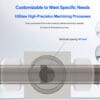
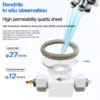
In-Situ Dendrite Observation Mold XN-YT09
SKU: XN-YT09
Free Shipping Price range: $208.00 through $244.00
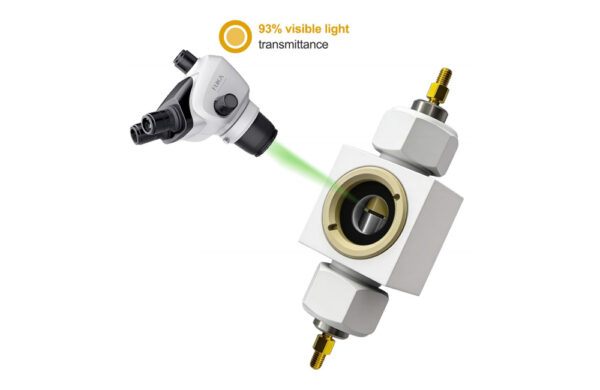
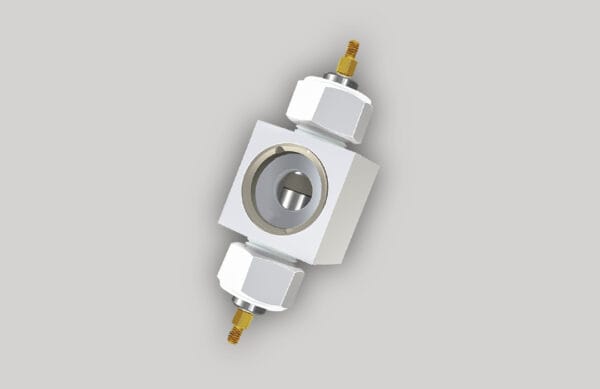
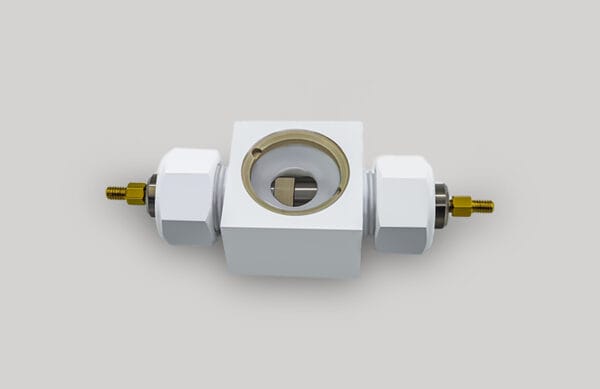
In-Situ Dendrite Observation Mold (XN-YT09) — a Swagelok-type cell for real-time observation of dendrite growth on metal anodes (lithium, sodium, zinc) during cycling. A high-transmittance quartz or sapphire window (93% visible transmittance) plus an included notched plate gives a clear visualization channel for microscope or Raman analysis. PTFE/copper body, titanium-alloy electrodes (Φ10/12/14/16 mm), FKM seal, ≤10 MPa.
Need a bulk order? Request a competitive quote today!
In-Situ Dendrite Observation Mold XN-YT09
Mold Type: In-Situ Dendrite Observation Mold (Swagelok-Type)
Product Code: XN-YT09
Brand: Xnergy
Product Introduction
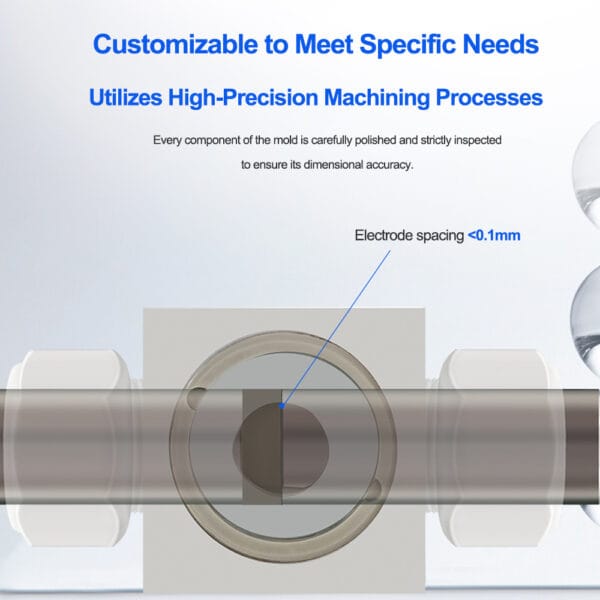
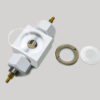
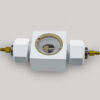
The XN-YT09 is a Swagelok-type in-situ dendrite observation mold for real-time observation of dendrite growth on metal anodes during charge and discharge. Through a high-transmittance observation window, it provides direct optical access for microscope or Raman analysis of dendrite formation and electrolyte/interface behavior.
Key Features
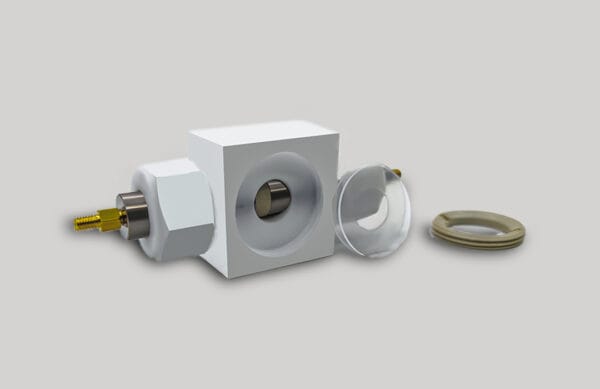
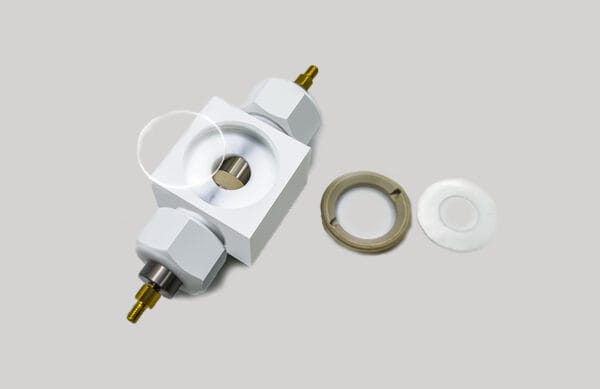
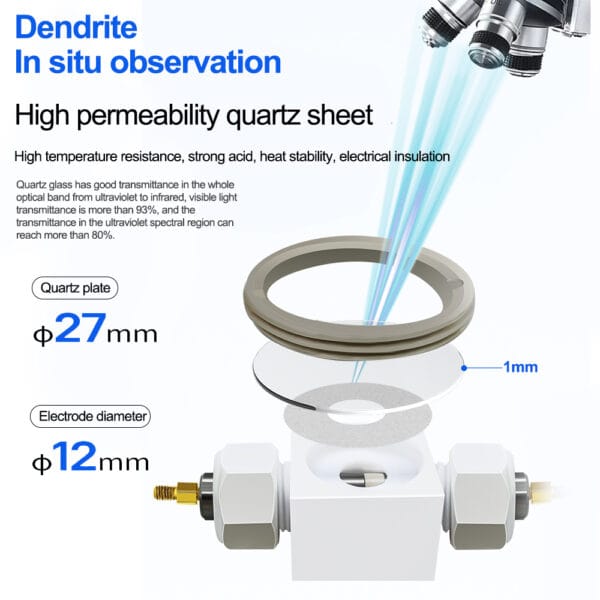
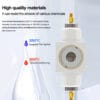
• High-transmittance observation window — 93% visible-light transmittance, with two window options: a quartz window, which excels in the UV band (especially deep UV below 200 nm) for systems demanding high optical purity; and a sapphire window, which excels in the mid-infrared (~3–5 μm) and withstands corrosive, high-pressure and high-temperature environments.
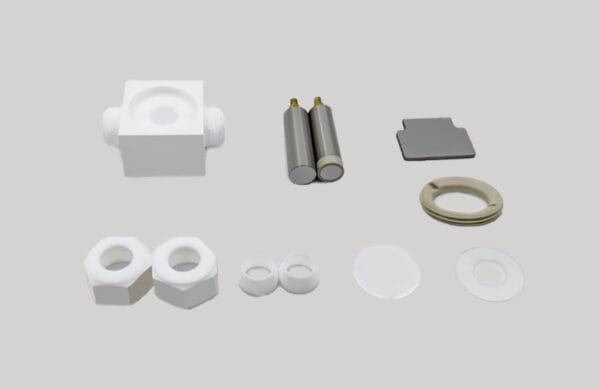
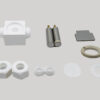
– Included notched plate — replaces the traditional separator and, while retaining basic isolation, opens a precise “visualization channel” for microscope or optical equipment. Available in φ10, φ12, φ14 and φ16 mm, with notch areas of 10.86, 18.85, 28.76 and 40.58 mm² respectively; its use is optional, per experimental needs.
– PEEK design — suppresses the tendency of dendrites to nucleate and grow along arc/transition surfaces, protecting the planar observation region and reducing the risk of edge short circuits or seal failure.
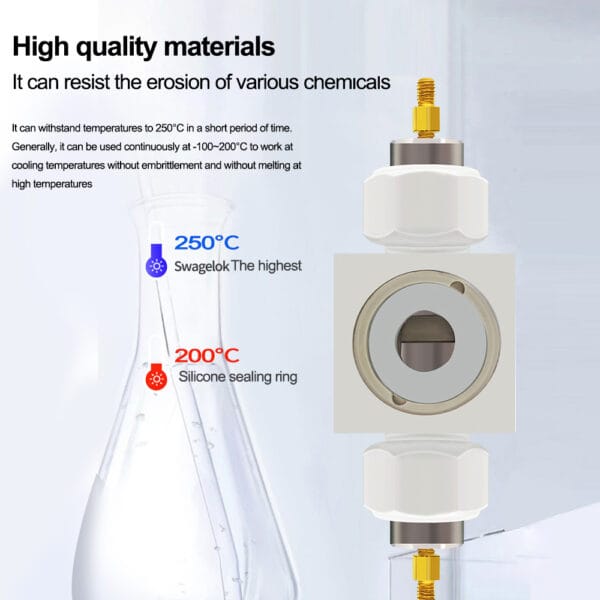
– High-quality, corrosion-resistant materials — the Swagelok body withstands up to 250 °C for short periods and -100 to 200 °C in continuous use, without becoming brittle when cold or melting when hot; the FKM sealing ring is rated to 200 °C.
Selected Materials
PTFE · Copper (body) · Titanium-alloy electrodes (default electrode post: pure titanium) · Fluoro rubber (FKM) sealing ring · Quartz or sapphire window
Specification
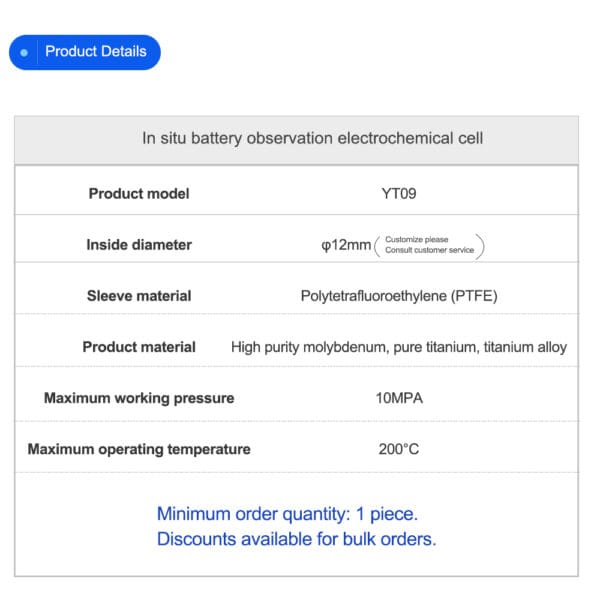
| Parameter | Specification |
|---|---|
| Model | XN-YT09 |
| Product Material | PTFE, Copper |
| Electrode Material | Titanium alloy |
| Electrode Diameter | Φ10 / 12 / 14 / 16 mm |
| Sealing Ring | Fluoro rubber (FKM) |
| Maximum Working Pressure | ≤10 MPa |
Applications
• Battery material research — widely used to study the dendrite behavior of various metal anodes (e.g. lithium, sodium, zinc) during charge and discharge.
– Basis for battery design — analyzing dendrite behavior provides key theoretical foundations and technical support for developing next-generation batteries with high safety and long cycle life.
– Electrolyte and interface research — combined with Raman spectroscopy, enables real-time analysis of chemical changes during dendrite growth.
Application Areas
• New Energy
– Lithium Battery Research
– Research Projects
– Electrochemistry
– Mold Customization
– Solid-State Battery
Customization
Customizable on request — the mold supports static-to-dynamic, single- to dual-chamber, and no-flow to flow experimental configurations. The electrode post is supplied by default in pure titanium; window type (quartz or sapphire) and electrode diameter can be selected to suit your experiment.
Note: For a Swagelok-type three-electrode cell, see the XN-YT02; for in-situ Raman testing, the XN-GT06; and for low-profile microscopic observation, the XN-GT08. Browse the full range under Battery Molds.
| XN-YT09 | Ø10mm Complete Set, Ø12mm Complete Set, Ø14mm Complete Set, Ø16mm Complete Set |
|---|
Related products
-
Ceramic Solid-State Battery Mold XN-GT01-TC
Free Shipping$248.00 -
Swagelok-Type Battery Test Cell XN-YT08
Free Shipping Price range: $138.00 through $306.00Select options This product has multiple variants. The options may be chosen on the product page -
GT14 Sealed Battery Test Bottle – Borosilicate Glass, 250–1000ml, 4 Sizes | Xnergy
-
Dual-Electrolyte Swagelok Battery Mold XN-YT05
Free Shipping Price range: $164.00 through $249.00Select options This product has multiple variants. The options may be chosen on the product page