



Swagelok Three-Electrode Battery Mold XN-YT02
SKU: XN-YT02
Free Shipping Price range: $124.00 through $305.00
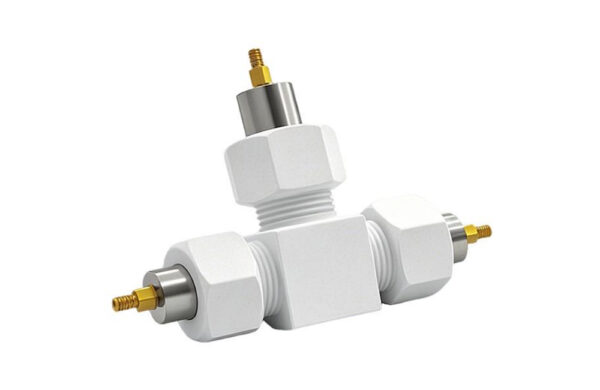
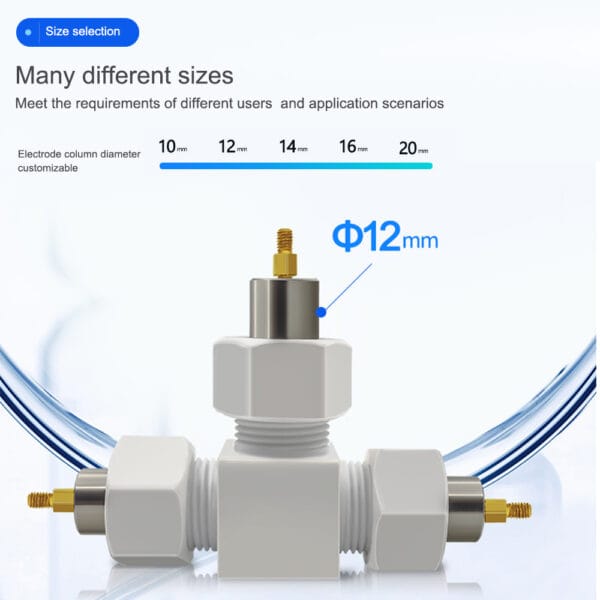
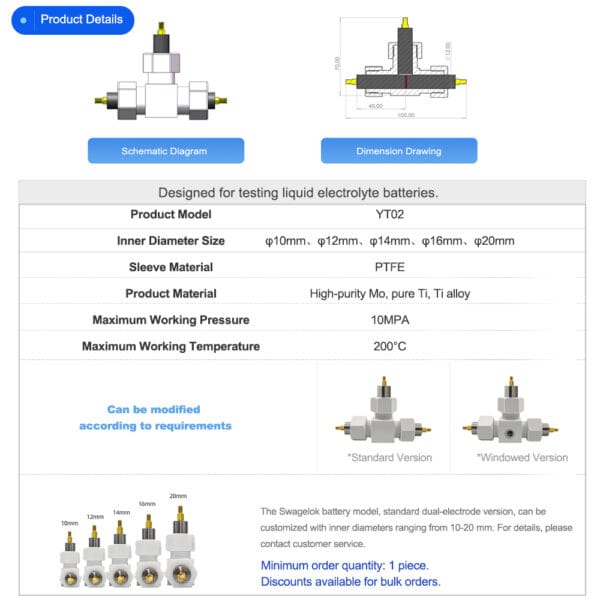
Swagelok Three-Electrode Battery Mold (XN-YT02) — a precision three-electrode Swagelok mold with an electrode spacing under 0.1 mm that closely simulates coin-cell and pouch-cell test environments. Available in standard and windowed versions, with Φ10/12/14/16/18/20 mm electrodes. Built from PTFE and copper, with electrode options of titanium alloy, pure titanium and high-purity molybdenum. Customized on demand.
Need a bulk order? Request a competitive quote today!
Swagelok Three-Electrode Battery Mold XN-YT02
Mold Type: Swagelok Three-Electrode Battery Mold
Product Code: XN-YT02
Brand: Xnergy
Product Introduction
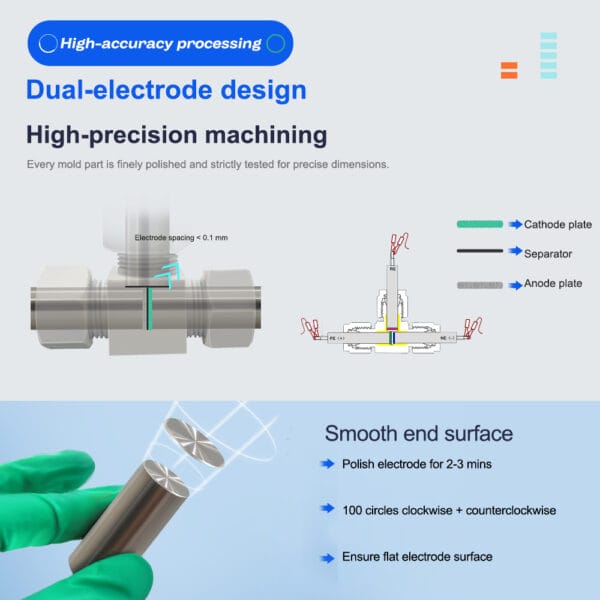
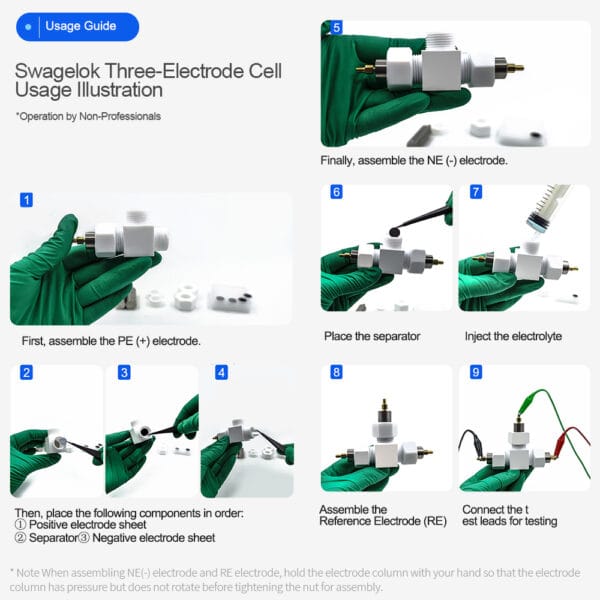
The XN-YT02 is a Swagelok-type three-electrode battery mold built with a high-precision machining process. Its three-electrode design (cathode, separator and anode) holds an electrode spacing of under 0.1 mm, closely simulating the test environment of coin-cell and pouch-cell batteries.
Key Features
• Three-electrode design — a cathode / separator / anode stack with an electrode spacing of <0.1 mm, simulating coin-cell and pouch-cell test environments.
– High-precision machining — every part is carefully ground and strictly inspected for dimensional accuracy, with smooth, flat electrode end faces.
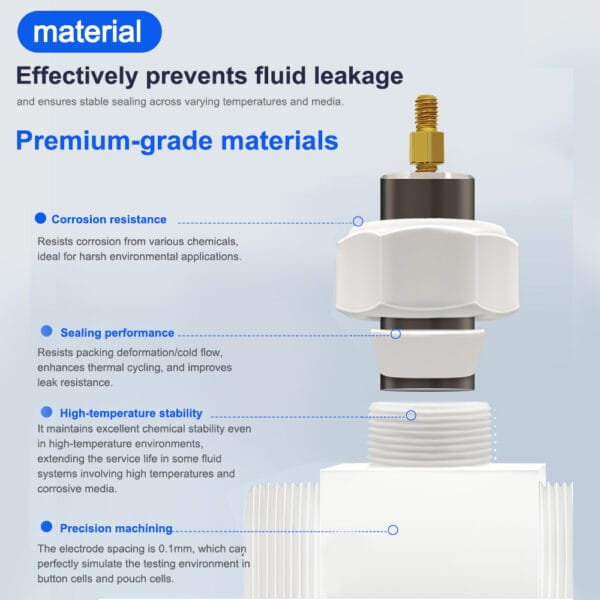
– High-quality Swagelok material — corrosion-resistant for harsh chemical environments; sealing that resists packing deformation and “cold flow” for better thermal-cycling and leak resistance; and high-temperature chemical stability for long life in hot, corrosive media.
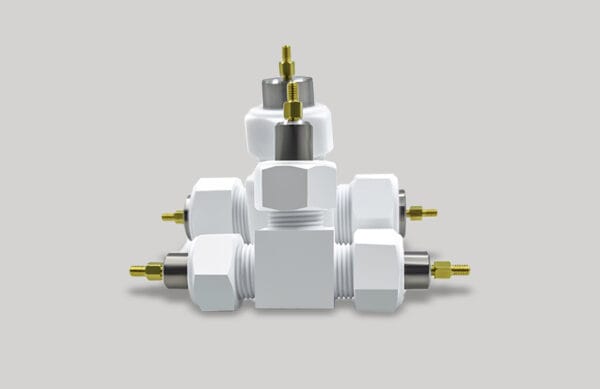
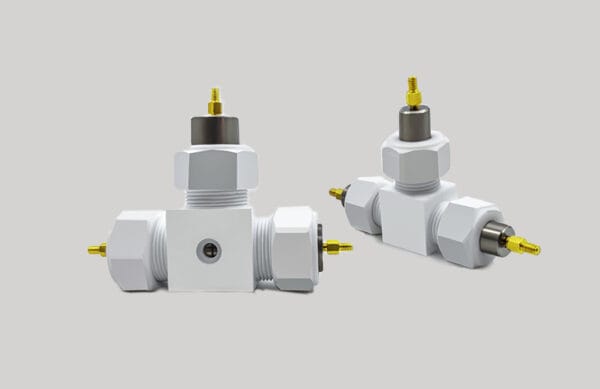
– Two versions — a standard version and a windowed version.
Selected Materials
PTFE · Copper (body) · Electrode options: titanium alloy, pure titanium, high-purity molybdenum
Specification
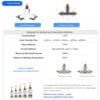
| Parameter | Specification |
|---|---|
| Model | XN-YT02 |
| Product Material | PTFE, Copper |
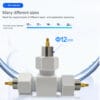
| Electrode Diameter | Φ10 / 12 / 14 / 16 / 18 / 20 mm |
| Electrode Material | Titanium alloy, pure titanium, high-purity molybdenum |
| Electrode Spacing | <0.1 mm |
Package Contents
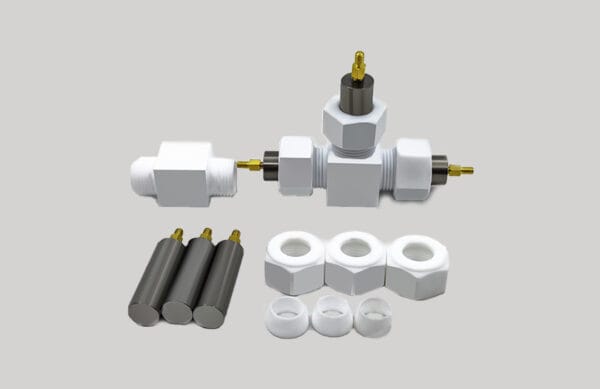
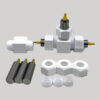
• Nut ×3
– Sealing ring ×3
– Connecting sleeve ×1
– Electrode column ×3
Application Areas
• New Energy
– Lithium Battery Research
– Research Projects
– Electrochemistry
– Mold Customization
– Solid-State Battery
Customization
Customized on demand — choose between the standard and windowed versions, and select the electrode diameter (Φ10–20 mm) and electrode material to suit your experiment.
Note: For a dual-electrolyte mold, see the XN-YT05; for a standard Swagelok-type test cell, the XN-YT08; and for in-situ dendrite observation, the XN-YT09. Browse the full range under Swagelok-Type Cells.
| XN-YT02 | 304 Stainless Steel 10mm, 304 Stainless Steel 12mm, 304 Stainless Steel 14mm, 304 Stainless Steel 16mm, 304 Stainless Steel 18mm, 304 Stainless Steel 20mm, 304 Stainless Steel 6mm, 304 Stainless Steel 8mm, 316 Stainless Steel 10mm, 316 Stainless Steel 12mm, 316 Stainless Steel 14mm, 316 Stainless Steel 16mm, 316 Stainless Steel 18mm, 316 Stainless Steel 20mm, 316 Stainless Steel 6mm, 316 Stainless Steel 8mm, High-Purity Molybdenum 10mm, High-Purity Molybdenum 12mm, High-Purity Molybdenum 14mm, High-Purity Molybdenum 16mm, High-Purity Molybdenum 18mm, High-Purity Molybdenum 20mm, High-Purity Molybdenum 6mm, High-Purity Molybdenum 8mm, Pure Titanium 10mm, Pure Titanium 12mm, Pure Titanium 14mm, Pure Titanium 16mm, Pure Titanium 18mm, Pure Titanium 20mm, Pure Titanium 6mm, Pure Titanium 8mm |
|---|
Related products
-
Ventilated Solid-State Battery Mold XN-GT02-TQ
Free Shipping$471.00 -
Microscopic Test Mold XN-GT08
Free Shipping$268.00 -
In-Situ Dendrite Observation Mold XN-YT09
Free Shipping Price range: $208.00 through $244.00Select options This product has multiple variants. The options may be chosen on the product page -
Monochromatic X-Ray Test Mold XN-GT07
Free Shipping$268.00