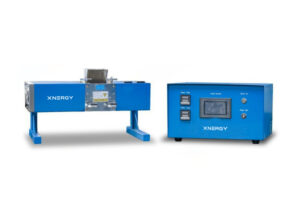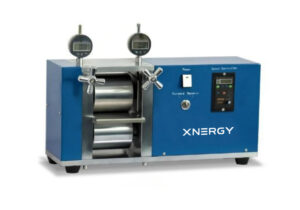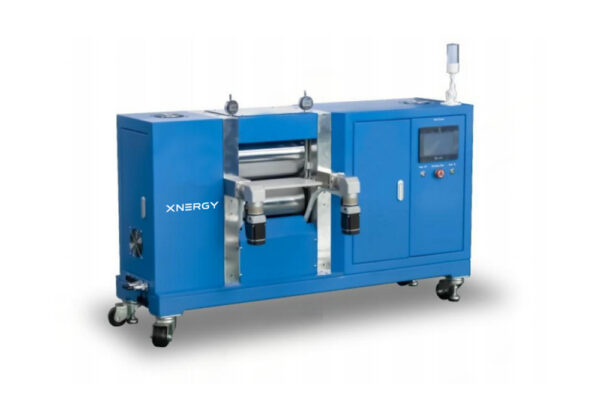
Hydraulic-Balance Motorized Roller Press XN-HPRP-300
SKU: XN-HPRP-300
Hydraulic-Balance Motorized Roller Press XN-HPRP-300 — pilot-scale high-precision calender with 50T rolling force, ±0.5T accuracy, Φ200 mm rollers HRC 65–70, 0.001 mm gap resolution, ±2 μm calendering accuracy, patented hydraulic balance mechanism, PLC + HMI control. Substrate width max 300 mm, 2 kW.
Need a bulk order or custom specification? Request a competitive quote today!
Name: Hydraulic-Balance Motorized Roller Press XN-HPRP-300
Equipment Type: Pilot-Scale Hydraulic-Balance Motorized Roller Press with Servo Electric Oil Pump & PLC HMI Control for Lithium-Ion Battery Electrode High-Precision Calendering
Product Code: XN-HPRP-300
Product Introduction:
The Hydraulic-Balance Motorized Roller Press XN-HPRP-300 is specifically designed for battery industry cathode and anode electrode sheet high-precision calendering. The equipment delivers excellent transverse and longitudinal rolling uniformity and premium post-rolling product appearance, making it suitable for applications that demand high consistency in rolling force and roller-gap control. As a result, the XN-HPRP-300 is well-suited for pilot-scale electrode densification, R&D process development, and small-batch electrode production in the lithium-ion battery industry.
Main Features:
- Servo electric oil pump — high-precision pressure control, stable operation
- Servo-motor-driven wedge-block roller-gap adjustment — high precision, convenient operation
- Integral gantry frame — CNC precision-machined, ensuring high accuracy and stability
- Imported cold-rolled chromium-molybdenum roller material — heat-treated, surface chrome-plated, deep cryogenic-treated; high internal and external hardness, excellent wear resistance
- Patent-designed hydraulic balance rolling mechanism — stable pressure-holding, excellent transverse and longitudinal rolling uniformity
- Wedge-block roller-gap adjustment with digital micrometer display
- PLC + HMI control — convenient parameter setting
- Roller surface hard-chrome-plated — excellent corrosion resistance, easy maintenance
- Optional unwind & rewind device — enables continuous roll-to-roll calendering when paired with the XN-FSJ300 unwind & rewind system
Technical Parameters:
| Parameter | Value |
|---|---|
| Equipment Type | Pilot-scale hydraulic-balance motorized roller press |
| Pressure Source | Servo electric oil pump |
| Rolling Force | 0 – 50 T (long-term operation) |
| Pressure Accuracy | ±0.5 T |
| Roller-Gap Adjustment | Servo-motor-driven wedge-block adjustment |
| Roller-Gap Resolution | 0.001 mm (displayed on touch screen) |
| Rolling Gap Range | 0 – 3 mm adjustable |
| Maximum Mill Opening | 3 mm |
| Rolling Speed | 0.3 – 4 m/min |
| Roller Specification | Φ200 × 330 mm |
| Roller Face Width | 330 mm |
| Substrate Width (Max) | 300 mm |
| Roller Hardness | HRC 65–70 surface hardness, case depth ≥15 mm; cylindricity ≤ ±2 μm |
| Roller Surface Finish | Ra 0.2 μm |
| Roller Material | 9Cr3Mo (cold-rolled chromium-molybdenum); surface chrome-plated layer ≥0.15 mm thick |
| Calendering Accuracy | ±2 μm |
| Gap Display | Digital micrometer display |
| Rolling Motor | 1.5 kW AC variable-frequency motor |
| Hydraulic Cylinders | 2 × cylinder diameter φ125 mm, stroke 10 mm |
| Hydraulic Oil | 68# anti-wear hydraulic oil |
| Frame | Integral gantry frame, CNC precision-machined, hard-chrome-plated parts |
| Safety Features | Feed-side hand protection plate, emergency stop button |
| Control System | PLC + HMI touch screen |
| Power Supply | Configurable according to local electrical standards |
| Total Power Consumption | 2 kW |
| Operating Environment | Ambient temperature 25 ± 3 °C, humidity 30–90% RH, free from vibration and electromagnetic interference |
| Overall Dimensions (L × W × H) | L1470 × W600 × H1200 mm |
| Net Weight | 780 kg |
| Mobility | Universal casters for easy moving |
| Optional Equipment | Unwind & rewind device for continuous roll-to-roll calendering |
Values measured by Xnergy. Typical values for reference; not guaranteed unless otherwise specified.
Equipment Composition:
The XN-HPRP-300 includes the hydraulic system, pressure-measurement system, AC variable-frequency motor, reducer, distribution gearbox, precision couplings, press-down mechanism, roller assembly, mill main body, protective panels, PLC + HMI touch screen, and electrical control system.
Application Areas:
- Lithium-ion battery cathode electrode sheet high-precision calendering — pilot-scale densification with controlled rolling force and gap
- Lithium-ion battery anode electrode sheet high-precision calendering — pilot-scale densification for graphite, Si-C, and similar anode systems
- Pilot-scale battery R&D and small-batch electrode production — applications requiring tight rolling-force consistency (±0.5T) and roller-gap accuracy (0.001 mm resolution)
- Continuous roll-to-roll electrode calendering — when paired with the optional unwind & rewind device
- Process development and scale-up studies for high-performance battery electrodes
Recommended Operating Procedure:
1. Install the XN-HPRP-300 on a stable laboratory or pilot-scale production floor that meets the operating environment requirements (ambient temperature 25 ± 3 °C, humidity 30–90% RH, free from vibration and electromagnetic interference). Universal casters allow positioning before final placement. 2. Connect the unit to a power supply matching local electrical standards (2 kW total). Verify the 68# anti-wear hydraulic oil reservoir is filled to the correct level. 3. Power on the unit and verify the servo electric oil pump, hydraulic cylinders (2 × φ125 mm), PLC + HMI touch screen, servo-motor-driven wedge-block gap adjustment, AC variable-frequency rolling motor (1.5 kW), feed-side hand protection plate, and emergency stop button are all in good condition and operating normally. 4. On the HMI touch screen, configure the target rolling force (within 0–50T, ±0.5T accuracy), target rolling gap (within 0–3 mm, 0.001 mm resolution), and target rolling speed (within 0.3–4 m/min). 5. Load the electrode sheet (or strip, ≤ 300 mm wide) into the feed side; if paired with the optional unwind & rewind device, configure tension and edge-correction setpoints on that system. 6. Initiate operation; the servo electric oil pump applies and maintains the configured rolling force through the two hydraulic cylinders, while the AC variable-frequency motor rotates the Φ200 × 330 mm rollers at the configured speed. The patented hydraulic balance mechanism maintains stable pressure-holding for excellent uniformity. 7. Monitor rolling force, gap, and speed on the HMI throughout the run. 8. After the run, retract the hydraulic pressure, release the rollers, then clean the roller surfaces with a soft, clean cloth. Inspect the roller surfaces, hydraulic cylinders, servo motor, gap-adjustment mechanism, and hydraulic oil level periodically.
Maintenance:
- Frequently wipe the machine with a soft cloth dampened with alcohol to keep it clean
- Lubricate moving parts with oil to keep movement smooth
- If the machine will not be used for an extended period, wipe down the surface of moving components and apply a protective rust-prevention oil
- Periodically inspect screws, nuts, pins, and other fasteners across all parts of the machine to prevent loosening, avoiding equipment-quality issues and personal-safety incidents
- Periodically check the 68# anti-wear hydraulic oil level and replace per the maintenance schedule
Packaging & Storage:
The XN-HPRP-300 ships fully assembled with the CNC-machined integral gantry frame, Φ200 × 330 mm hard-chrome-plated 9Cr3Mo rollers (HRC 65–70, surface chrome layer ≥0.15 mm), servo electric oil pump, two hydraulic cylinders (φ125 mm × 10 mm stroke), servo-motor-driven wedge-block gap adjustment, digital micrometer gap display, 1.5 kW AC variable-frequency rolling motor with reducer, distribution gearbox, precision couplings, press-down mechanism, feed-side hand protection plate, emergency stop button, PLC + HMI touch screen control panel, hard-chrome-plated frame parts, and universal casters. Install on a stable laboratory or pilot-scale production floor in a clean, dry environment meeting the operating requirements. Disconnect the power supply when the equipment is not in active use. After each use, clean the roller surfaces, frame, and HMI; inspect the rollers, servo motor, hydraulic cylinders, hydraulic oil, gap-adjustment mechanism, PLC system, and emergency stop periodically for wear, contamination, or signs of degradation.
Safety:
For research and industrial use only. During operation, do not insert hands or any other body parts into the roller-engagement area, the hydraulic mechanism, or any moving components to prevent personal injury — the feed-side hand protection plate provides additional safety margin but does not replace operator vigilance. The emergency stop button must be accessible at all times during operation. Operation by two or more persons simultaneously is not allowed to avoid accidental injury. External (third-party) technical personnel and unauthorized persons must not disassemble the equipment under any circumstances. Always wear appropriate PPE (safety glasses, lab coat, close-fitting sleeves, safety shoes) when operating the roller press. Keep loose clothing, hair, and jewelry away from the rotating rollers, gears, motor, and hydraulic components. When handling battery electrode sheets that may have absorbed solvent residues or contain reactive materials, wear chemical-resistant gloves and operate in a well-ventilated area. Press the emergency stop or power off the unit immediately if any binding, unusual resistance, abnormal motor sound, hydraulic-oil leakage, smoke, or damage to the material is observed; inspect the machine before resuming operation. Disconnect the power supply and isolate the hydraulic system before any cleaning, maintenance, or component replacement. Refer to the included user manual for complete safety and operating instructions.
Note: Specifications listed above are typical and for reference only. Actual performance depends on the specific electrode formulation, coated film thickness, target final thickness, target electrode density, rolling force setpoint, gap setpoint, rolling speed, and operator technique — consult published literature and our technical team for guidance on specific pilot-scale electrode calendering protocols. The XN-HPRP-300 is a pilot-scale hydraulic-balance roller press for high-precision battery electrode densification with patent-designed hydraulic balance mechanism, 50T rolling force, and 0.001 mm gap resolution. For continuous roll-to-roll calendering, pair the XN-HPRP-300 with the Unwind & Rewind System XN-FSJ300. For researchers requiring the same mechanical platform with dual roller heating up to 130 °C, see the Heated Hydraulic-Balance Roller Press XN-SHPRP-300. For researchers requiring smaller laboratory-scale heated calendering, see Xnergy’s heated vertical CRPE series with dual-zone independent heating up to 130 °C — Heated Vertical Roller Press XN-HRPE-100, XN-HRPE-150, XN-HRPE-200, and XN-HRPE-250; and the heated horizontal HRPH series — XN-HRPH-100, XN-HRPH-150, XN-HRPH-200, and XN-HRPH-250. For ambient-temperature laboratory calendering, see the motorized vertical CRPE series — XN-CRPE-100, XN-CRPE-150, XN-CRPE-200, and XN-CRPE-250; the motorized horizontal CRPE-W series — XN-CRPE-100W, XN-CRPE-150W, XN-CRPE-200W, and XN-CRPE-250W; and the manual vertical CRP series — XN-CRP-100, XN-CRP-150, XN-CRP-200, and XN-CRP-250. For researchers exploring complete lithium-ion battery electrode preparation workflows, see also Xnergy’s related products: Automatic Film Coater XN-VC-300, Automatic Film Coater XN-VC-800, Glove-Box-Compatible Film Coating & Drying Machine XN-VCH-200, Automatic Film Coater with Integrated Drying System XN-VCH-300, Slot-Die Coating System XN-SDC, Laboratory Transfer Coating Machine XN-RTCA-300, Comma-Blade Continuous Coating Machine XN-KD200, Planetary Vacuum Mixer for Mixing Electrode Powders, and Three-Door Vacuum Drying Oven (XN-DVO-3), plus the full Calendering equipment category, Pilot-Scale Calendering equipment category, Coating equipment category, Pilot-Scale Coating equipment category, Drying equipment category, and Slitting & Die Cutting equipment category. For complete electrode formulation systems, see also Cathode Materials, Anode Materials, Binders, and Current Collectors.