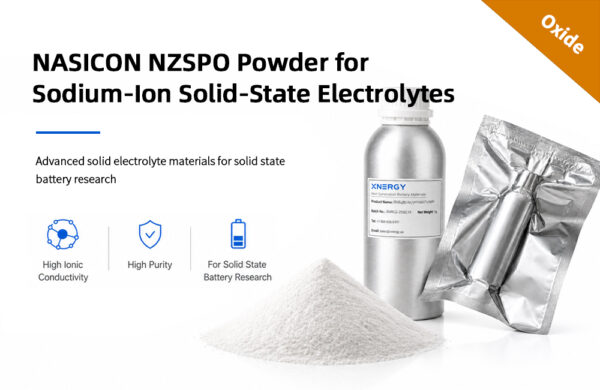
NASICON NZSPO Powder for Sodium-Ion Solid-State Electrolytes
SKU: XN-NZSPO
NASICON NZSPO powder for sodium-ion solid-state electrolytes, available in multiple particle sizes and conductivity grades for battery research and development.
Need a bulk order? Request a competitive quote today!
Name: NASICON NZSPO Sodium-Ion Solid-State Electrolyte (Na₃Zr₂Si₂PO₁₂)
Material Form: White powder (multiple grades available)
Product Code: XN-NZSPO
Description:
NASICON NZSPO (Na₃Zr₂Si₂PO₁₂) is a sodium superionic conductor (NASICON-type) oxide solid-state electrolyte for sodium-ion battery (Na-ion) and all-solid-state sodium battery (Na-ASSB) applications. As an oxide-class electrolyte, NZSPO offers excellent ambient-air stability, high safety, and low-cost raw materials, making it a strong candidate to replace flammable liquid electrolytes and separators in commercial sodium battery systems. As a result, NASICON NZSPO is widely deployed in grid-scale stationary storage research and pilot-stage Na-ASSB cell prototyping.
Application:
This material serves as a sodium-ion conducting solid electrolyte and separator for all-solid-state sodium-ion batteries (Na-ASSBs), large-scale grid energy storage systems, sodium-sulfur (Na-S) batteries, sodium-air battery research, and academic studies of NASICON-structure ion transport. Furthermore, three different grades are available to support varied processing routes — from coarse-particle sintered ceramics to nano-scale composite electrolyte films.
Specifications — Standard Grade (0.9 mS/cm, 99.9% Purity):
| Property | Value |
|---|---|
| Product Name | NASICON (NZSPO) Powder |
| Chemical Formula | Na₃Zr₂Si₂PO₁₂ |
| Color | White |
| Conductivity at RT | 9 × 10⁻⁴ S/cm (~0.9 mS/cm) |
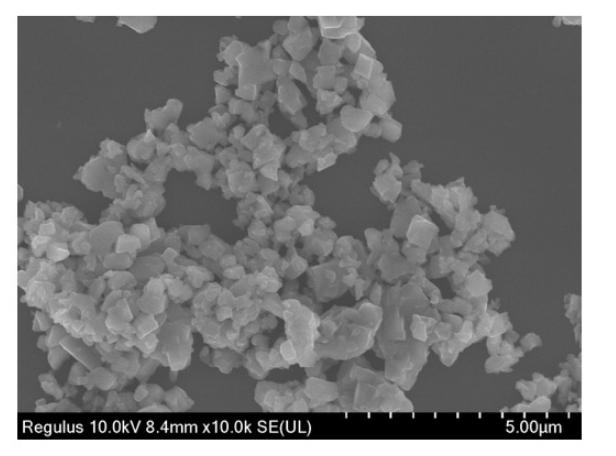
| Particle Size | 5–10 μm |
| Purity | 99.9% |
| Packaging | 10 g / 20 g / 50 g / 100 g per bottle |
Specifications — Sintered Grade (0.58 mS/cm, 2-5 μm):
| Property | Value |
|---|---|
| Conductivity at RT | 5.8 × 10⁻⁴ S/cm (~0.58 mS/cm) |
| Particle Size | 2–5 μm |
| Purity | 99% |
| Color | White |
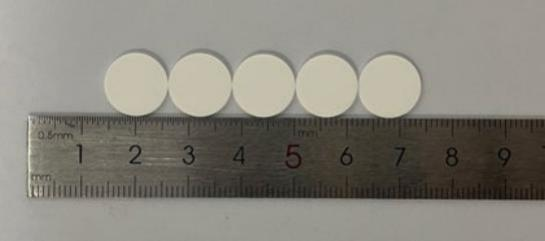
| Shrinkage Rate | R = 14% (14 → 12 mm) |
| Activation Energy (Ea) | 0.31 eV |
| Ceramic Pellet SEM | Dense, no obvious pores |
| Packaging | 10 g per bottle |
| Application | Solid-state electrolyte for sodium-ion battery |
| Storage | Vacuum box, moisture-protected |
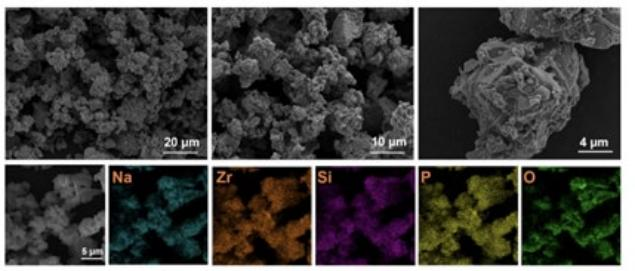
Ceramic Pellet Sintering
Ionic Conductivity
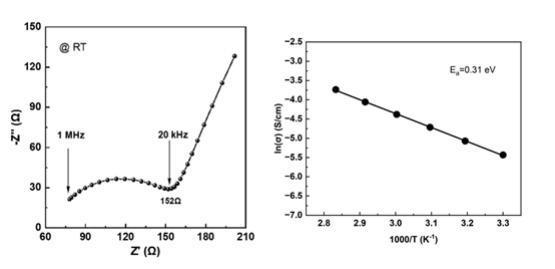
RT conductivity = 5.8 × 10⁻⁴ S/cm; Shrinkage Rate R = 14% (14 → 12 mm); Activation Energy Ea = 0.31 eV. Ceramic Pellet SEM shows dense structure without obvious pores.
Specifications — Nano Grade (0.65 mS/cm @ RT, up to 8.1 mS/cm @ 95°C):
| Property | Value |
|---|---|
| Appearance | White powder, uniform, no foreign matter |
| Chemical Formula | Na₃Zr₂Si₂PO₁₂ |
| Specific Surface Area (SSA) | 2–5 m²/g |
| Particle Size | 300–500 nm |
| Moisture Content | < 0.025% |
| Electrical Conductivity | > 0.65 mS/cm @ 25 °C |
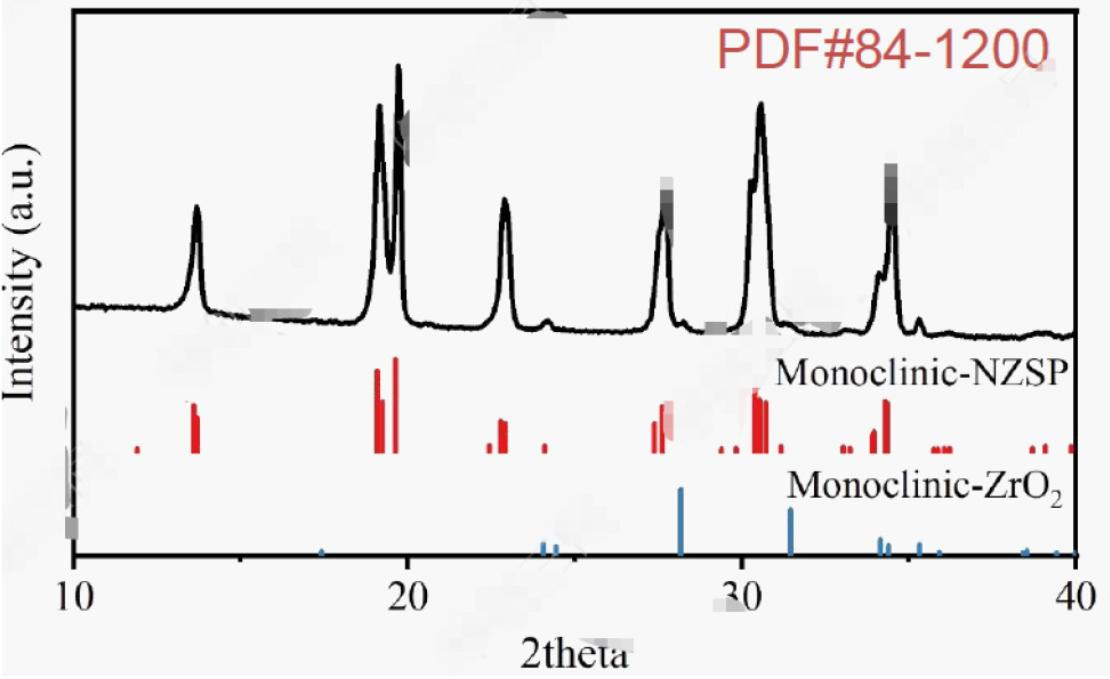
| Crystal Phase | Monoclinic phase (M phase) |
| Magnetic Impurities | < 0.005% |
| Tapped Density | 0.08–0.15 g/cm³ |
| Packaging | 10 g / 50 g per bottle |
| Storage / Shelf Life | Sealed, dry condition; 6 months shelf life |
Temperature-Dependent Conductivity (Nano Grade):
| Temperature (°C) | Conductivity (mS/cm) |
|---|---|
| 25 | 0.65 |
| 35 | 1.07 |
| 45 | 1.57 |
| 55 | 2.51 |
| 65 | 3.32 |
| 75 | 5.03 |
| 85 | 6.10 |
| 95 | 8.10 |
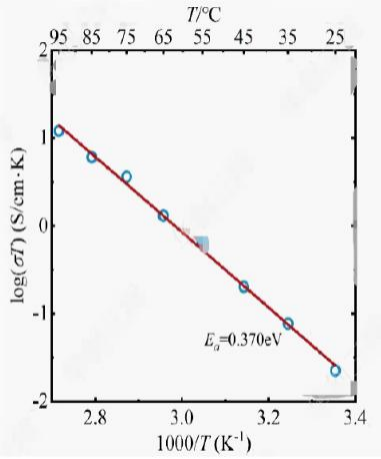
Test Conditions
After fully dispersing in an ethanol medium and drying, the powder is dry-pressed at –100 MPa for 30 s with a sample weight of 0.3 g. Following sintering at approximately 1100 °C, the sample is polished with sandpaper to 3000 grit and then gold-sputtered for measurement. (Note: dry pressing conditions can be optimized; the example above is for reference and should be determined based on the dispersion state and powder condition. Pressures from 100 MPa to 200 MPa have been tested.) Measurements use a German SP300 electrochemical workstation. For elevated-temperature measurements, the sample is heated in an oven and equilibrated for 30 minutes at each setpoint before recording the conductivity.
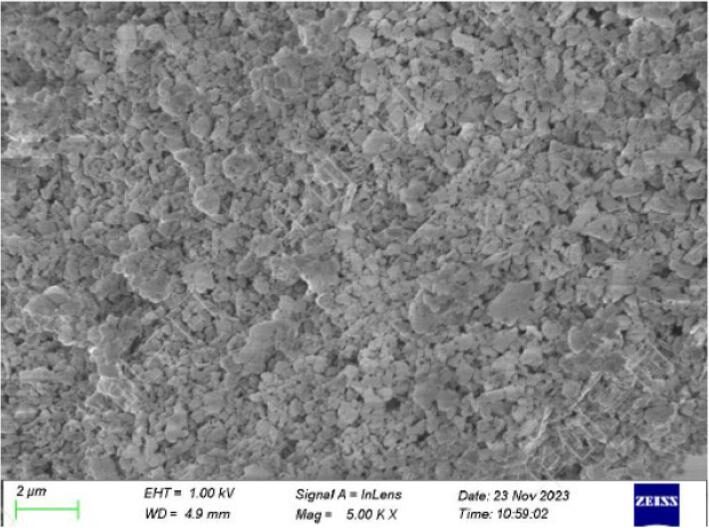
Particle Size and Crystal Phase Relationship
Particle size < 80 nm: amorphous structure. Particle size > 300 nm: monoclinic phase (M phase). The 300–500 nm Nano Grade therefore offers crystalline monoclinic NASICON with high surface area for composite electrolyte applications.
Values measured by Xnergy. Typical values for reference; not guaranteed unless otherwise specified.
Characteristics:
Three grades for diverse processing needs
Standard Grade (5–10 μm, 0.9 mS/cm) is optimized for traditional ceramic sintering routes. Sintered Grade (2–5 μm, 0.58 mS/cm) is fully characterized for cell-level applications with documented sintering behavior. Nano Grade (300–500 nm, 0.65 mS/cm) targets composite electrolyte films and high-loading cathode formulations.
Excellent thermal scaling for elevated-temperature operation
The Nano Grade delivers 8.10 mS/cm at 95 °C — an order-of-magnitude increase from room temperature. As a result, NZSPO is well-suited for moderately elevated-temperature sodium battery operation where high power output is required.
Air-stable oxide chemistry
Unlike sulfide electrolytes, oxide NASICON does not release toxic gases on ambient exposure. Therefore, customers can handle the material in normal laboratory environments with significantly simpler safety requirements than sulfide chemistries.
Monoclinic NASICON phase verified
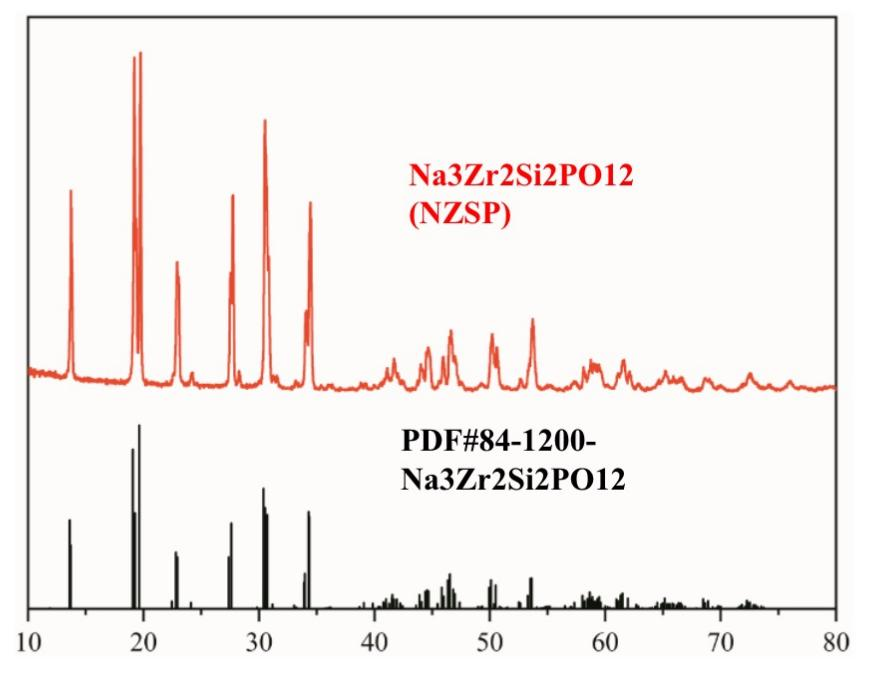
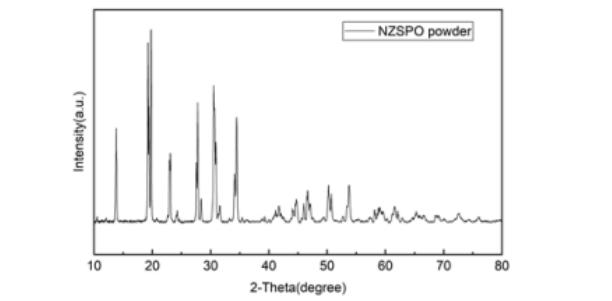
X-ray diffraction confirms the target monoclinic Na₃Zr₂Si₂PO₁₂ phase for particles above 300 nm. Consequently, the material delivers reproducible electrochemical performance characteristic of well-crystallized NASICON.
Low-cost sodium chemistry for grid storage
Sodium-based electrolytes leverage abundant raw materials (Na vs Li). Therefore, NASICON NZSPO is well-suited for cost-sensitive, large-scale stationary storage applications where Li-ion economics are unfavorable.
Packaging & Storage:
The material ships in sealed bottles. Therefore, customers should store it in a sealed, dry environment, protected from moisture. Reseal promptly after opening. Sealed shelf life is 6 months for the Nano Grade.
Safety:
For research and industrial use only. Wear PPE (gloves, masks, safety goggles) when handling powders. Refer to SDS for complete safety information.
Note: Values listed above are typical and for reference only. Performance may vary depending on cell architecture, sintering conditions, cathode selection, and test protocol. Compare with our other sodium-ion solid electrolytes: W-Doped NPS (Na₃.₁P₀.₉W₀.₁S₄) at 4.1 mS/cm, Na₃PS₄ Sodium-Ion Sulfide Electrolyte at 0.19 mS/cm, NPSCl (Na₂.₉PS₃.₉Cl₀.₁), and MgO-Doped β″-Al₂O₃.