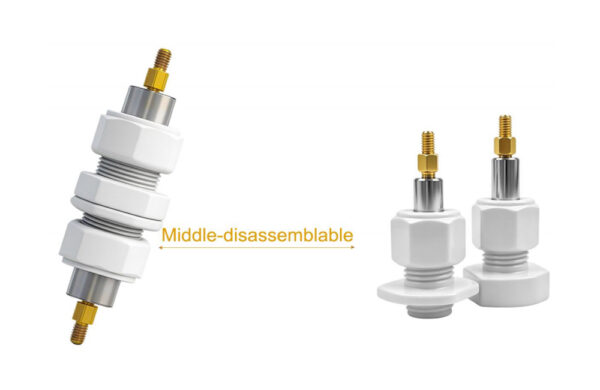
YT05 Dual-electrolyte Swagelok battery mold

SKU: XN-BM-YT05

$119.00

[Customize and modify as required]

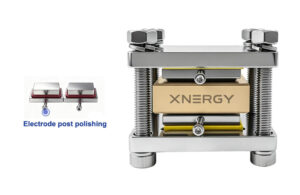
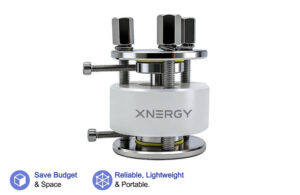
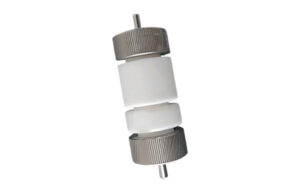
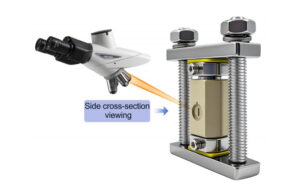
YT05 Dual-Electrolyte Swagelok Battery Mold — customizable Swagelok-style test cell engineered for dual-electrolyte battery research, where catholyte and anolyte use different electrolyte chemistries separated by a membrane or salt bridge. Designed for material testing, prototype making, performance evaluation, process validation, safety testing, and customized research. Fully customizable specifications — inner diameter, working pressure, operating temperature, and electrode materials configured to match your specific dual-electrolyte research requirements.

Need a bulk order or custom specification? Request a competitive quote today!

Request a Quote

Name: YT05 Dual-Electrolyte Swagelok Battery Mold for Asymmetric Electrolyte Research

Mold Type: Customizable Swagelok-Style Battery Test Cell with Dual-Electrolyte Configuration

Product Code: XN-BM-YT05

Description:

The YT05 is a customizable Swagelok-style dual-electrolyte battery mold engineered for laboratory-scale research where the catholyte and anolyte use different electrolyte chemistries separated by a membrane or salt bridge. As a result, the YT05 enables advanced research into asymmetric battery systems — including aqueous/non-aqueous hybrid cells, hybrid lithium-air systems, and electrochemistry studies that exploit different stability windows on each side of the cell. Liquid battery molds are mainly used in experiments for material testing, prototype making, performance evaluation, process validation, safety testing, and customized research — helping researchers to conduct battery development and optimization efficiently and accurately. The defining feature of the YT05 is its dual-electrolyte cell architecture, where the catholyte and anolyte are physically separated and individually tunable. Furthermore, the YT05 is fully customizable — researchers specify inner diameter, working pressure, operating temperature, electrode materials, and membrane/salt-bridge configuration to match the requirements of their specific dual-electrolyte chemistry. Customization and modification are available on request — contact our team for detailed specifications and configuration options that match your research needs.

Application:

The YT05 mold is designed for laboratory-scale dual-electrolyte battery research, including aqueous/non-aqueous hybrid battery development (where one side is aqueous and the other side is organic for expanded voltage windows), hybrid lithium-air systems with separated catholyte and anolyte chemistries, asymmetric electrochemistry studies that exploit different stability ranges on each side of the cell, comparative ion-exchange membrane and salt-bridge studies in dual-electrolyte geometry, fundamental research into electrolyte crossover and selectivity in asymmetric cells, prototype development of new battery chemistries that depend on dual-electrolyte separation, and academic studies of electrolyte-electrode interface phenomena in cells with chemically distinct catholyte and anolyte.

Customization-First Approach:

Unlike standardized off-the-shelf molds, the YT05 is designed from the ground up as a customizable research tool. As a result, every YT05 ships configured to the customer’s research-specific requirements rather than a generic specification. Contact our team to specify the parameters that match your research, including:

Customizable Parameter Configuration Options
Inner Diameter Specified to match your electrode geometry and research scale
Working Pressure Configured to match your stack-pressure protocol
Operating Temperature Configured for room-temperature or elevated-temperature electrochemistry
Electrode Materials Titanium alloy, pure titanium, high-purity molybdenum, or specialty materials on request
Catholyte Compartment Configured for your specific catholyte chemistry (aqueous, non-aqueous, ionic liquid)
Anolyte Compartment Configured for your specific anolyte chemistry (aqueous, non-aqueous, ionic liquid)
Separator Type Ion-exchange membrane (Nafion, anion-exchange, sulfonated polymer), salt bridge, or specialized separator
Body Materials PTFE (chemical inertness), copper (current collection), or alternative materials for chemistry-specific compatibility
Sealing System Configured to maintain integrity between the two electrolyte compartments under your operating conditions

Characteristics:

Dual-electrolyte cell architecture for asymmetric research

The YT05’s defining feature is its dual-electrolyte cell architecture, where the catholyte and anolyte are physically separated and individually tunable. As a result, this mold uniquely enables research into asymmetric battery systems where each electrode operates in its own optimized electrolyte chemistry — bridging applications that conventional symmetric-electrolyte cells cannot support.

Customization-first research platform

The YT05 is engineered as a customization-first research mold rather than a fixed-specification product. Therefore, researchers receive a fixture tailored to their specific dual-electrolyte chemistry, sample geometry, and experimental protocol — eliminating the compromises that arise when generic molds are forced to fit specialized research applications.

Designed for the full liquid battery research workflow

Liquid battery molds are mainly used in experiments for material testing, prototype making, performance evaluation, process validation, safety testing, and customized research. Consequently, the YT05 supports the complete research lifecycle from initial material screening through prototype development and process validation — within a single configurable platform.

Hybrid aqueous/non-aqueous capability

The dual-electrolyte architecture is particularly well-suited for hybrid aqueous/non-aqueous battery research — where one side uses an aqueous electrolyte (high conductivity, safe handling) and the other side uses an organic electrolyte (extended voltage window, lithium compatibility). Therefore, the YT05 supports research workflows that target voltage windows beyond those accessible with single-electrolyte cells.

Compatibility with the broader Xnergy YT-series

The YT05 follows the same Swagelok-style cell convention used across Xnergy’s YT-series — supporting consistent mechanical and electrical interfaces with YT01 (dual-electrode), YT02 (membrane-friendly three-electrode), YT04 (electrolyte membrane), YT06 (liquid battery), YT07 (metal-air), YT08 (Ag/AgCl three-electrode), and YT09 (in-situ dendrite observation). As a result, advanced research labs can deploy the full YT-series for end-to-end Swagelok-cell battery research.

Three standard electrode material options

Like other YT-series cells, the YT05 supports the three standard Xnergy electrode material options — titanium alloy (general-purpose corrosion resistance), pure titanium (highest-purity research applications), and high-purity molybdenum (specialized chemistry compatibility). Furthermore, alternative electrode materials are available on request for non-standard chemistry requirements.

Membrane and salt-bridge separator flexibility

The YT05 supports a wide range of separator options between the two electrolyte compartments — including ion-exchange membranes (Nafion, anion-exchange, sulfonated polymer), traditional salt bridges, and specialized separator configurations. Consequently, researchers can match the separator to the specific selectivity, ionic conductivity, and crossover requirements of their dual-electrolyte chemistry.

Strong customer support for specification development

Because the YT05 is fundamentally a customizable research tool, Xnergy’s technical team works directly with researchers to specify configurations that match their specific dual-electrolyte research requirements. Therefore, the YT05 ordering process includes consultation on catholyte and anolyte compatibility, separator selection, target pressure and temperature ranges, and electrode material selection — ensuring the delivered fixture matches the experimental need.

Recommended Use Workflow:

1. Contact Xnergy’s technical team with your dual-electrolyte research application — including the catholyte chemistry, anolyte chemistry, target separator type, expected operating pressure and temperature, and electrode material preferences. 2. Receive a configuration recommendation tailored to your research, with specifications for inner diameter, working pressure, operating temperature, electrode materials, separator integration, and cell geometry. 3. Confirm the configuration and receive your customized YT05 mold. 4. Follow the included use instructions specific to your customized configuration — paying particular attention to the assembly sequence for filling the catholyte and anolyte compartments separately. 5. Verify membrane or salt-bridge integrity before applying voltage to prevent crossover artifacts. 6. After testing, drain the catholyte and anolyte safely (separately if mixing must be avoided) and follow standard cleaning and storage protocols. 7. Contact Xnergy for replacement components, additional configurations, or modified versions as your research evolves.

Packaging & Storage:

Each YT05 mold ships in a protective foam-lined case with all customer-specified components, including the cell body in the configured material, electrode columns of the selected material, separator (if pre-installed) or separator-mounting hardware (if user-supplied membrane), sealing components for the dual-compartment configuration, fittings, and assembly hardware. Configuration-specific accessories are included as ordered. Therefore, store in a dry environment (15–25 °C, RH < 40 %) protected from dust and chemical exposure. After each use, follow the cleaning and storage protocol provided with your specific configuration.

Safety:

For research and industrial laboratory use only. Always wear appropriate PPE (safety glasses, chemical-resistant gloves, lab coat) when handling electrolytes — particularly when working with both aqueous and non-aqueous electrolytes simultaneously, where unintended mixing can cause exothermic reactions or unexpected electrochemical behavior. Operate within the working pressure and operating temperature limits specified for your configured YT05 — these limits are documented in the configuration sheet provided with your order. Take particular care when filling the catholyte and anolyte compartments — verify each compartment is leak-free before adding the second electrolyte to prevent cross-contamination. When working with reactive materials (lithium-metal anodes, sulfide electrolytes, concentrated electrolytes), follow standard battery safety protocols, including glovebox-based assembly when required. Refer to the configuration-specific user manual for complete safety and operating instructions.

Note: Because the YT05 is configured to each customer’s specific research application, exact specifications are determined during the consultation process and documented in the configuration sheet that accompanies each order. Contact Xnergy for detailed specifications and configuration options that match your research needs. For researchers exploring complete dual-electrolyte and liquid battery research workflows, see also Xnergy’s related products: YT06 Liquid Battery Mold, YT04 Electrolyte Membrane Battery Mold, YT01 Swagelok Dual-Electrode Mold, YT02 Swagelok Three-Electrode Mold, YT07 Swagelok Metal-Air Battery Test Cell, YT08 Swagelok-Type Three-Electrode Battery Test Cell, YT09 In-Situ Dendrite Observation Mold, YL01 Laboratory Flow Battery Testing Cell System, and YL02 CG Square Flow Battery Mold. Browse the full Battery Mold category for all configurations.