

Solid-State Battery Mold – GT18

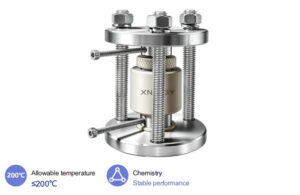
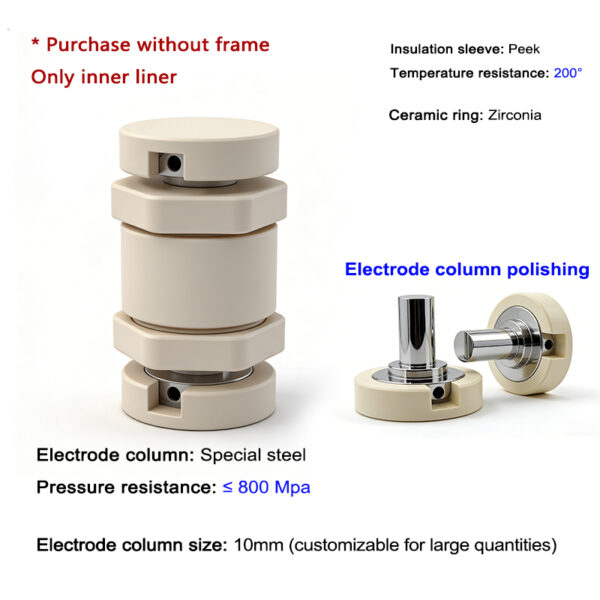
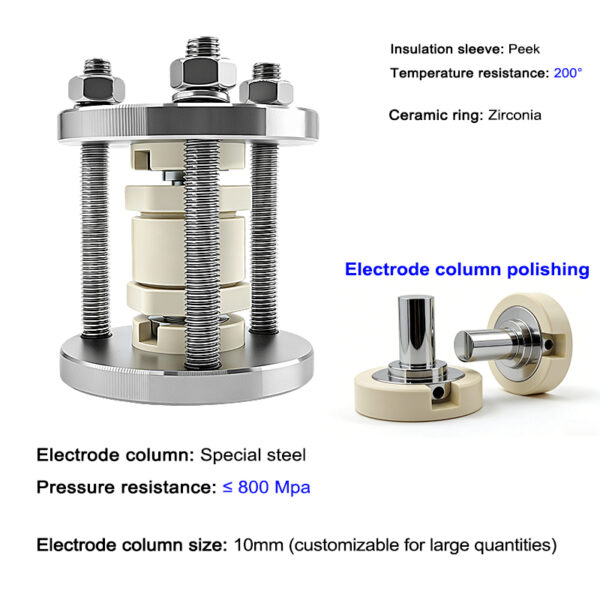
GT18 Ceramic Edition Solid-State Battery Mold — high-pressure pressure jig with mirror-polished electrode column for solid-state battery research and EIS testing. 80 × 100 mm overall size, Φ10 mm default electrode column, 800 MPa maximum working pressure. Built with stainless steel, special steel, and PEEK plus integrated ceramic ring. Modular hexagonal hand-tightening design for easy glovebox use. Ideal for LLZO, LGPS, and other solid electrolyte pellet research.

Need a bulk order or custom specification? Request a competitive quote today!

Name: GT18 Ceramic Edition Solid-State Battery Mold (Mirror-Polished, 800 MPa)

Mold Type: High-Pressure Solid-State Pressure Jig with Mirror-Polished Electrode Column

Product Code: XN-BM-GT18

Description:

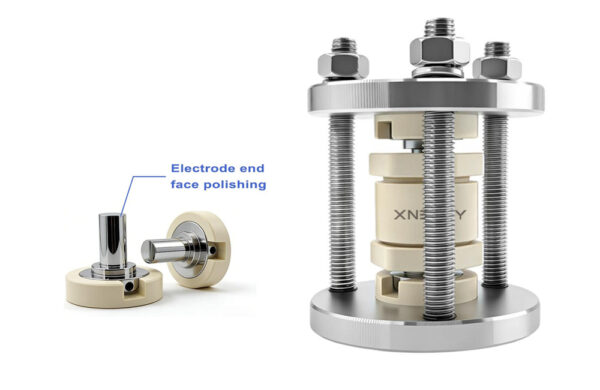
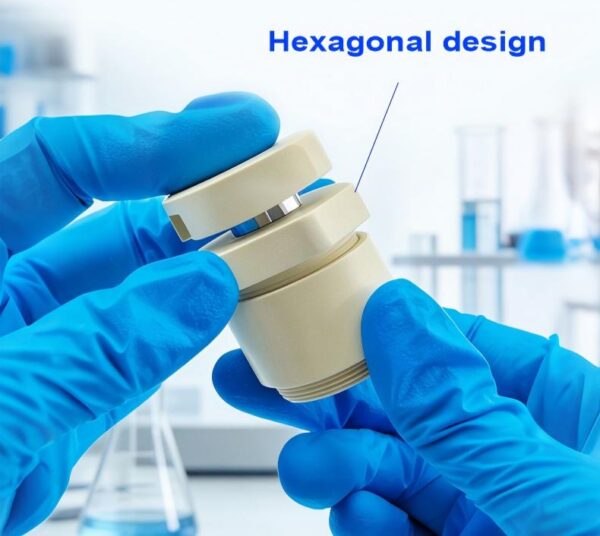
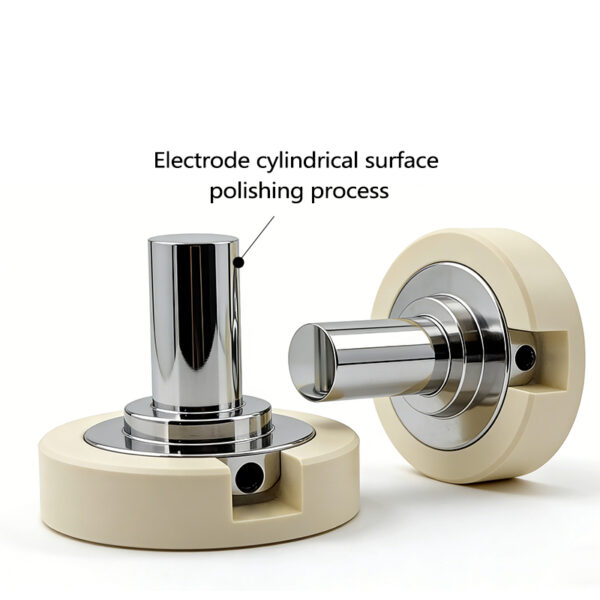
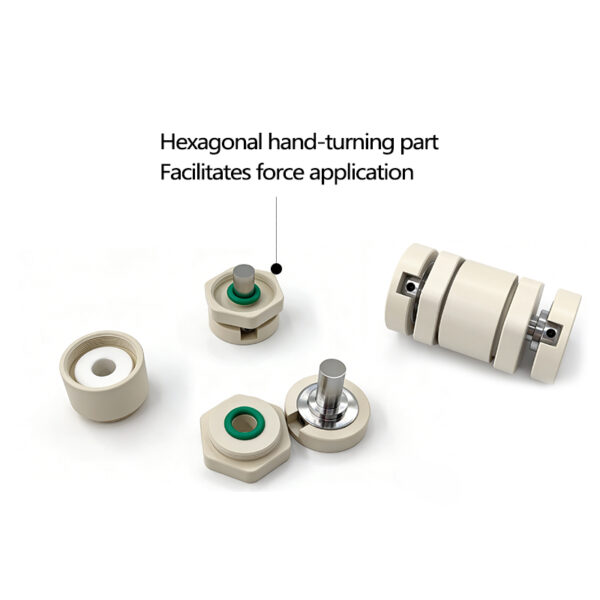
The GT18 Ceramic Edition is a high-pressure solid-state battery mold designed for laboratory testing and solid-state battery research. As a result, this mold enables researchers to apply controlled high stack pressure, simulate real operating conditions, and optimize interfacial contact within solid-state cell assemblies — addressing one of the central challenges in solid-state battery development. The defining feature of the GT18 is its mirror-polished electrode column, which creates a smoother contact surface and significantly reduces contact resistance. Under high-pressure conditions, the polished surface distributes force more evenly across the electrolyte pellet — preventing cracking, crushing, and internal short circuits caused by uneven mechanical stress. The GT18 is rated to 800 MPa maximum working pressure, features a compact 80 × 100 mm form factor, and ships with a Φ10 mm electrode column as the standard configuration. Furthermore, the mold features an upgraded hexagonal hand-tightening design that allows users to apply force more easily and securely — even while wearing gloves inside an argon-filled glovebox. Customization is available upon request.

Application:

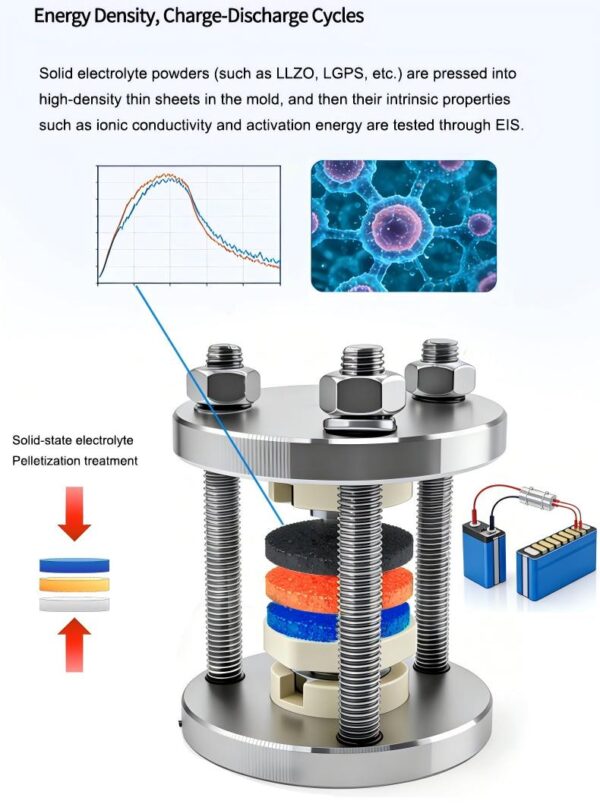
The GT18 Ceramic Edition is designed for solid-state battery R&D experiments, including pressing solid electrolyte powders such as LLZO (Li₇La₃Zr₂O₁₂), LGPS (Li₁₀GeP₂S₁₂), and related materials into dense pellets for ionic conductivity studies, electrochemical impedance spectroscopy (EIS) measurements with controlled stack pressure, charge-discharge cycling experiments under sustained high pressure, energy density evaluation studies, activation energy and intrinsic electrochemical property characterization of solid electrolyte pellets, lithium-metal solid-state battery research where uniform high pressure is critical for suppressing dendrite growth, and academic studies of solid-electrolyte/electrode interfacial contact under variable pressure conditions.

Specifications:

Parameter Value
Product Name GT18 Ceramic Edition Solid-State Battery Mold
Mold Type High-pressure pressure jig with mirror-polished electrode column
Inner Diameter (Default) Φ10 mm
Product Size 80 × 100 mm (Ø × H)
Maximum Working Pressure 800 MPa
Frame Material Stainless steel
Electrode Column Material Special steel (mirror-polished)
Insulating Sleeve Material Polyether ether ketone (PEEK) + ceramic ring
Operating Conditions Room temperature
Hand-Tightening Design Hexagonal anti-slip structure (compatible with open-end and ratchet wrenches)
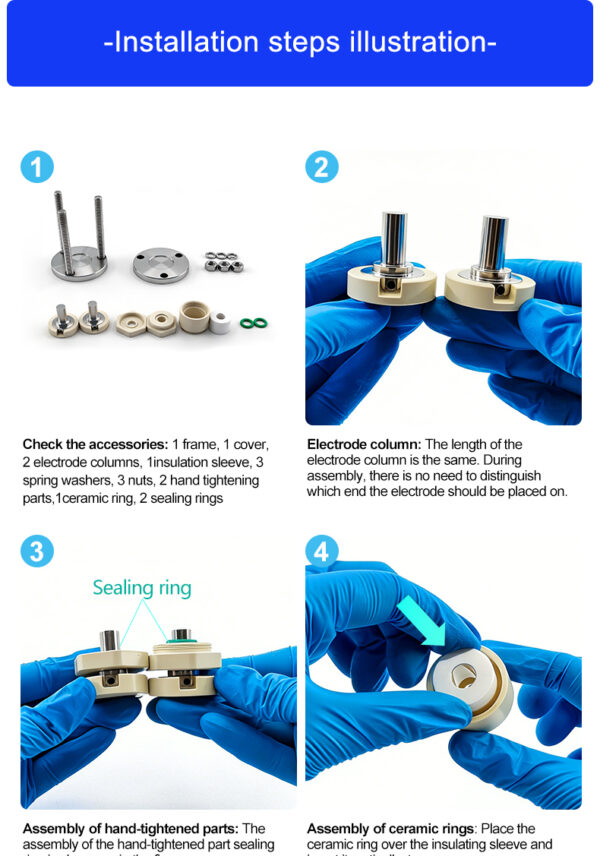
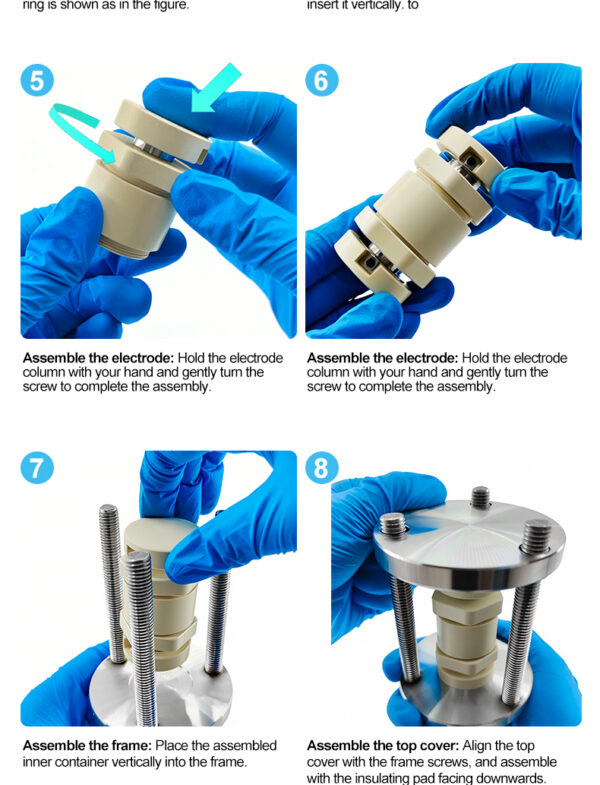
Modular Structure Easy assembly and disassembly for cleaning and component replacement
Customization Available on request — alternative inner diameters, frame configurations, and component specifications
Application Environment Glovebox or ambient lab benchtop
Compatibility LLZO, LGPS, sulfide and oxide solid electrolytes; lithium-ion, lithium-metal, sodium-ion, and all-solid-state battery test cells

Values measured by Xnergy. Typical values for reference; not guaranteed unless otherwise specified.

Standard Configuration Includes:

Component Description
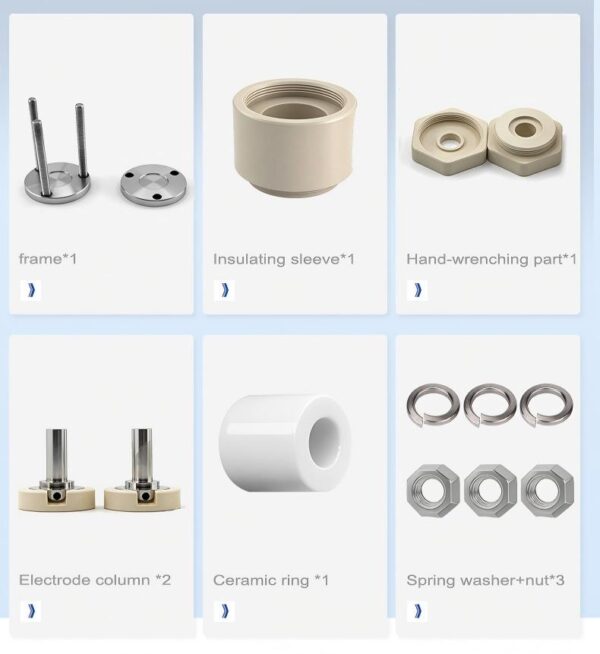
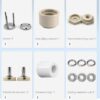
Frame Stainless steel structural frame
Insulating Sleeve PEEK insulating sleeve for electrical isolation
Hand-Wrenching Part Hexagonal anti-slip structure for glove-friendly tightening
Ceramic Ring Chemical-inert ceramic ring for high-temperature and reactive-electrolyte compatibility
Electrode Columns Mirror-polished special-steel column, Φ10 mm (default)
Fastening Hardware Locking nuts and assembly screws

Available Configurations:

Configuration Inner Diameter Notes
GT18-Φ10 (Standard) Φ10 mm Default configuration — most common solid electrolyte pellet diameter
GT18-Φ8 Φ8 mm Smaller pellet research, conserved sample volume
GT18-Φ12 Φ12 mm Larger pellet diameter for area-averaged EIS studies
GT18-Φ15 Φ15 mm Maximum pellet size for scale-up validation
Custom Specs Custom diameters, alternative ceramic-ring materials, and modified frame designs available on request; contact sales

Characteristics:

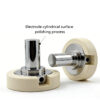
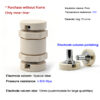
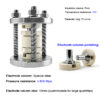
Mirror-polished electrode column for reduced contact resistance

The GT18’s defining feature is its mirror-polished special-steel electrode column, which creates a smoother contact surface than as-machined columns and significantly reduces contact resistance at the electrode-electrolyte interface. As a result, EIS measurements obtained with the GT18 isolate the intrinsic ionic conductivity of the solid electrolyte more accurately — eliminating the contact-resistance artifacts that confound impedance interpretation in non-polished molds.

Uniform pressure distribution prevents pellet cracking

Under high-pressure conditions (up to 800 MPa), the mirror-polished surface distributes force more evenly across the solid electrolyte pellet — preventing cracking, crushing, and internal short circuits caused by uneven mechanical stress. Therefore, this design is particularly valuable for brittle oxide solid electrolytes (LLZO, LATP) that fracture catastrophically under non-uniform loading.

High maximum working pressure (800 MPa)

The GT18 is rated to 800 MPa maximum working pressure — sufficient for densifying sulfide-based solid electrolytes (LGPS, Li₆PS₅Cl), oxide-based pellets (LLZO, LATP), and composite cathodes that require high compaction to achieve target ionic conductivity. Consequently, this mold supports the full range of common solid-state battery materials, from sulfide systems requiring 300–500 MPa to oxide systems near full theoretical density requiring 600–800 MPa.

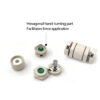
Hexagonal hand-tightening design for glovebox use

The upgraded hexagonal hand-tightening design allows users to apply force more easily and securely while wearing gloves — a critical capability for glovebox-based solid-state battery research with reactive materials like lithium metal or sulfide electrolytes. Furthermore, the anti-slip hexagonal structure supports convenient adjustment with common tools such as open-end wrenches and ratchet wrenches when higher torque is required.

Modular structure for easy assembly and maintenance

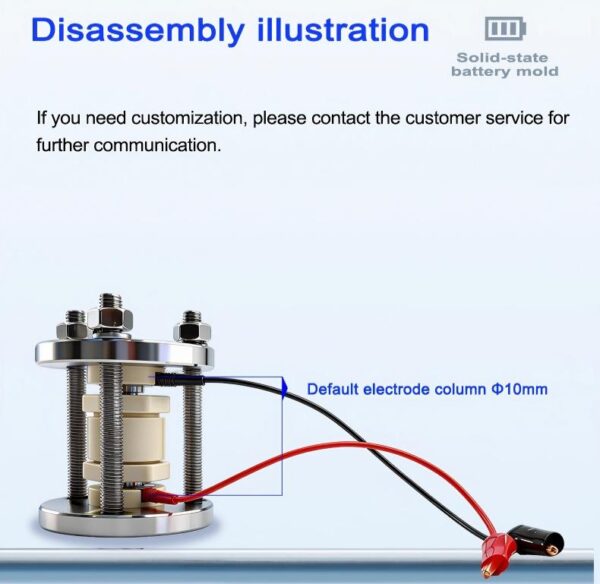
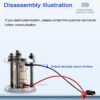
The GT18 features a modular construction with separable frame, insulating sleeve, hand-wrenching part, ceramic ring, electrode columns, and fastening hardware. As a result, researchers can disassemble the mold rapidly between experiments for thorough cleaning, replace individual worn components without buying a complete new fixture, and swap electrode columns to change inner diameter configurations.

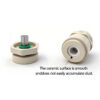
Ceramic ring for chemical inertness

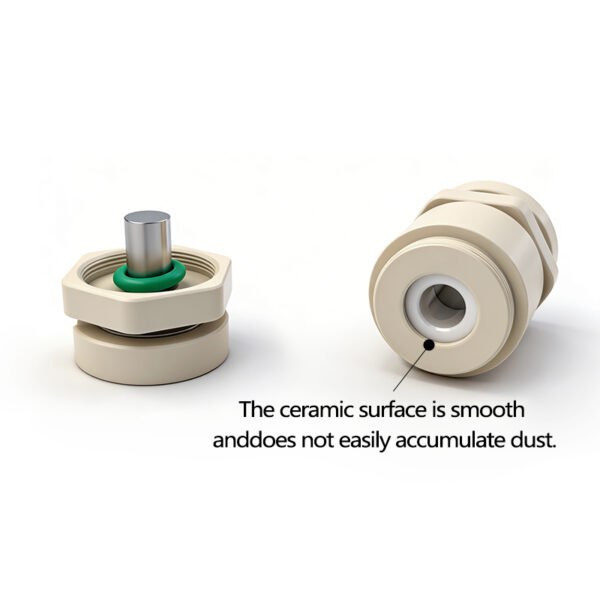
The integrated ceramic ring provides chemical inertness against lithium-metal anodes, sulfide solid electrolytes, and corrosive aprotic solvents. Therefore, this mold prevents contamination of test samples by polymer outgassing or dissolution — a critical requirement for accurate impedance spectroscopy and long-duration solid-state battery experiments.

PEEK insulating sleeve for reliable electrical isolation

The polyether ether ketone (PEEK) insulating sleeve provides high dielectric strength to ensure complete electrical isolation between the working and counter electrodes — a critical requirement for accurate electrochemical measurements. Furthermore, PEEK delivers excellent chemical stability and mechanical resilience under repeated high-pressure cycling.

Optimized for LLZO, LGPS, and related solid electrolytes

The GT18 is specifically engineered for laboratory research on LLZO (Li₇La₃Zr₂O₁₂), LGPS (Li₁₀GeP₂S₁₂), and related solid electrolyte materials — supporting both oxide- and sulfide-based chemistries through its high pressure rating, ceramic-ring chemical inertness, and mirror-polished low-contact-resistance interface. Consequently, this mold serves as a versatile platform for the most active areas of solid electrolyte research.

Customization on request

The GT18 supports customization on request — including alternative inner diameters, modified frame configurations, alternative ceramic-ring materials, and specialized component specifications. Therefore, researchers with non-standard cell geometries or specialized experimental setups can obtain a tailored configuration to match their experimental requirements.

Recommended Operating Procedure:

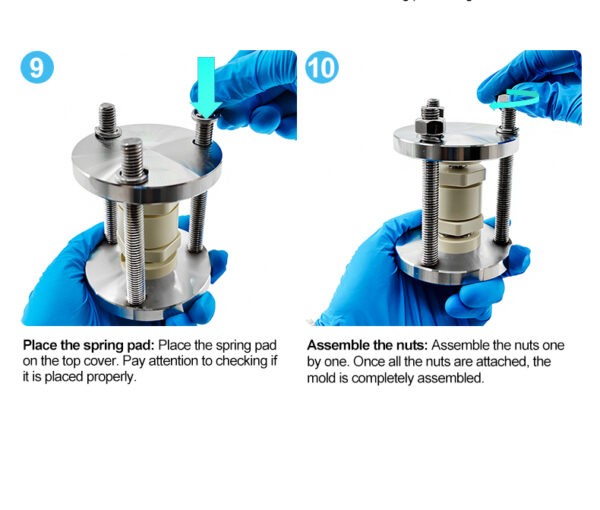
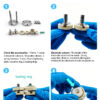
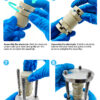
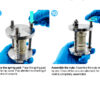
1. Clean all mold components with isopropyl alcohol and dry thoroughly before each use; pay particular attention to the mirror-polished electrode column surface — clean gently to avoid scratching. 2. Apply a thin layer of vacuum grease or anti-seize compound between the electrode column and the PEEK sleeve to reduce friction during assembly. 3. Inside an argon-filled glovebox, load the bottom electrode column, then place the solid electrolyte powder or pre-pressed pellet into the cylindrical cavity. 4. Add the cathode and anode layers as required, ensuring the lithium-metal foil (or cathode powder) is in direct contact with the electrolyte pellet. 5. Insert the top electrode column and engage the hexagonal hand-tightening part to apply the target pressure (do not exceed 800 MPa). 6. For higher torque, use an open-end or ratchet wrench on the hexagonal anti-slip structure. 7. Perform electrochemical measurements at room temperature. 8. After testing, release pressure gradually by loosening the hand-tightening part, disassemble in the glovebox, and clean all components with alcohol before storage. 9. Inspect the mirror-polished electrode column surface for scratches between experiments and re-polish if necessary.

Packaging & Storage:

Each GT18 mold ships fully assembled in a protective foam-lined case with all components, including the stainless steel frame, PEEK insulating sleeve, hand-wrenching part, ceramic ring, mirror-polished electrode columns, and fastening hardware. Therefore, store in a dry environment (15–25 °C, RH < 40 %) protected from dust and moisture. After each use, clean components with isopropyl alcohol, gently clean the mirror-polished electrode column with a non-abrasive lint-free cloth, apply a thin layer of vacuum grease to metal surfaces, and store in the original case to prevent oxidation, corrosion, scratching of the polished surface, and impact damage to the ceramic ring.

Safety:

For research and industrial laboratory use only. Do not exceed the maximum working pressure (800 MPa) — exceeding this limit may result in mold damage, sample loss, or personal injury. Operate at room temperature only. Always wear appropriate PPE (safety glasses, gloves) when applying pressure. When working with lithium-metal anodes, sulfide electrolytes (which release toxic H₂S gas on moisture exposure), or other reactive materials, perform all assembly and disassembly inside an argon-filled glovebox. Handle the ceramic ring with care — although chemically inert and mechanically stable, ceramic components can crack under impact loading. Take care to avoid scratching the mirror-polished electrode column surface — surface damage will increase contact resistance and degrade EIS measurement quality. Refer to the included user manual for complete safety and operating instructions.

Note: Specifications listed above are typical and for reference only. Actual performance and pressure requirements depend on solid electrolyte chemistry, pellet thickness, target densification level, and EIS measurement parameters — consult published literature for guidance on optimal pressure conditions and EIS protocols for specific solid-state battery systems (LLZO, LGPS, Li₆PS₅Cl, LATP, etc.). For researchers exploring complete solid-state battery research workflows, see also Xnergy’s related products: GT01 Standard Solid-State Battery Mold, GT01-TC Ceramic Solid-State Battery Mold, GT02 Standard Solid-State Battery Mold, GT02-TC Ceramic Solid-State Battery Mold, GT03 High-Pressure Solid-State Battery Mold, GT04 Three-Electrode Solid-State Battery Mold, GT05 Square Solid-State Battery Test Cell, YP01 Circular Tablet Pressing Die, and Ventilated Solid-State Battery Mold (EX02-TQ). Browse the full Battery Mold category for all configurations.