



Solid-State Battery Assembly Mold XN-GT01
SKU: XN-GT01
Free Shipping$228.00
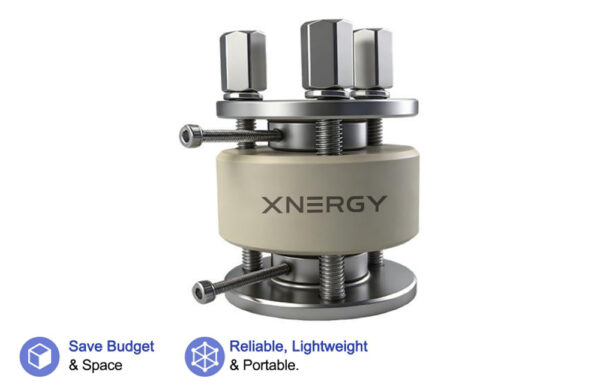
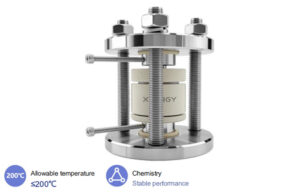
Solid-State Battery Assembly Mold XN-GT01 is the simplified, budget-friendly model in Xnergy’s solid-state battery mold series — saving budget and space while staying reliable, lightweight, and portable.
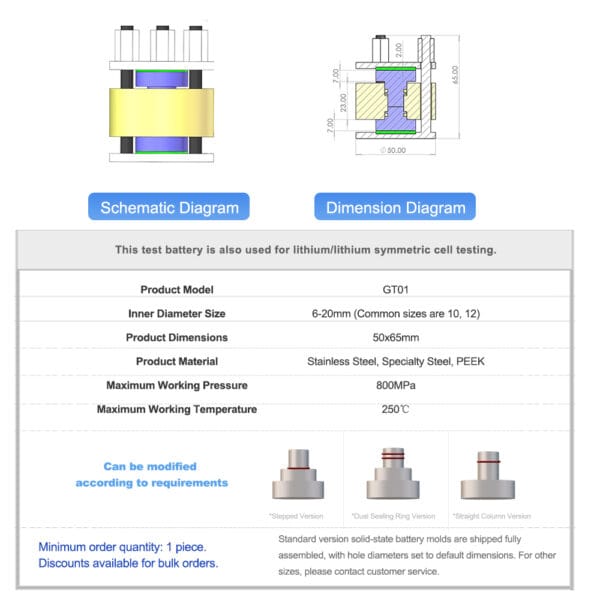
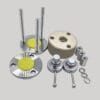
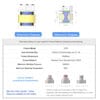
It is durable with good compressive performance, built with a stainless steel frame, a PEEK insulating sleeve, and Grade 4 special-steel electrode columns. Sleeve diameter 50 mm, assembly height 65 mm, inner diameter Φ6–20 mm, working pressure ≤800 MPa. Customizable as required, with frame raising provided free of charge.
Need a bulk order or custom specification? Request a competitive quote today!
Name: Solid-State Battery Assembly Mold XN-GT01
Mold Type: Simplified Solid-State Battery Assembly & Test Mold
Product Code: XN-GT01
Brand: Xnergy
Product Introduction:
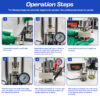
The XN-GT01 is the simplified model in Xnergy’s solid-state battery mold series. It saves budget and space while remaining reliable, lightweight, and portable, and is durable with good compressive performance. Following the operation flow, a sample is placed into the mold, pressed and held under pressure, then connected to the positive and negative electrodes for testing.
Key Features:
Saves budget and space
Reliable, lightweight, and portable
Durable with good compressive performance
PEEK insulating sleeve — high strength, good insulation, and self-lubricating
Customizable as required; frame can be raised at no extra cost
Selected Materials:
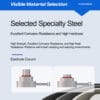
PEEK insulating sleeve — high strength, good insulation, and self-lubricating.
• High-temperature resistance — withstands up to 300 °C
• Self-lubricating — easier demolding after pressing
• Peel resistance — usable under harsh conditions
• Corrosion resistance — high chemical stability
• Insulation stability — low dielectric loss even at high frequency
Grade 4 special steel — high strength, good corrosion resistance, and high heat resistance, with good corrosion resistance in both oxidizing and reducing media. Used for the electrode columns.
Specifications:
| Parameter | Specification |
|---|---|
| Product | XN-GT01 |
| Sleeve Diameter | 50 mm |
| Assembly Height | 65 mm |
| Inner Diameter (ID) | Φ6–20 mm |
| Material | Stainless steel, PEEK, Grade 4 steel |
| Working Pressure | ≤ 800 MPa |
Package Contents:
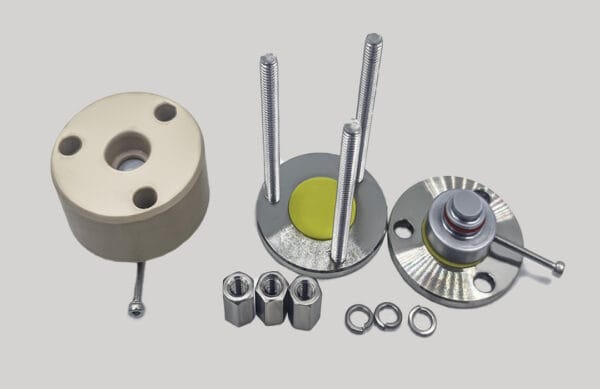
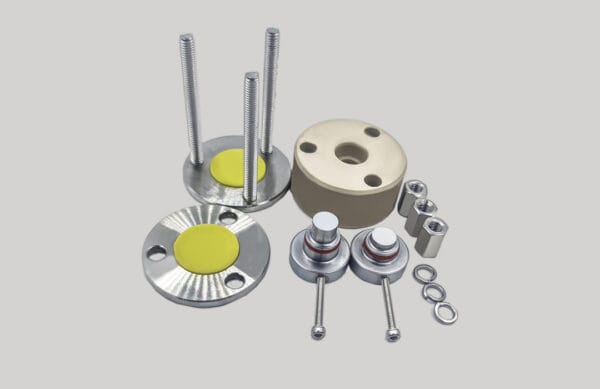
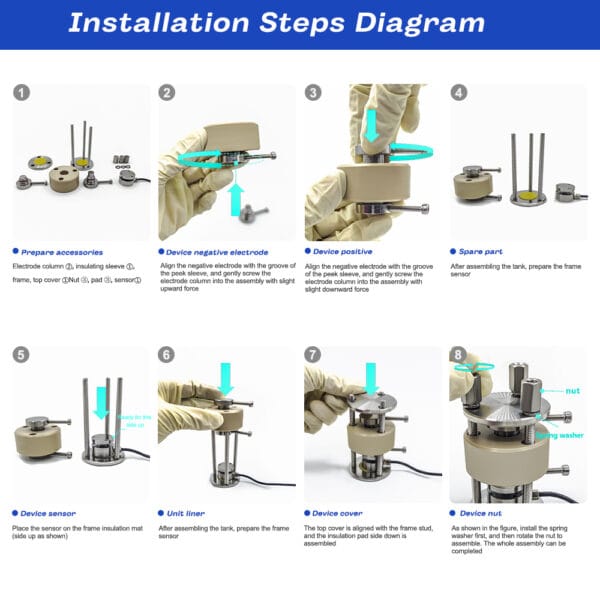
Frame — stainless steel × 1
Top cover — stainless steel × 1
Electrode column × 2
Insulating sleeve — PEEK × 1
Spring washer — stainless steel × 3
Nut — stainless steel × 3
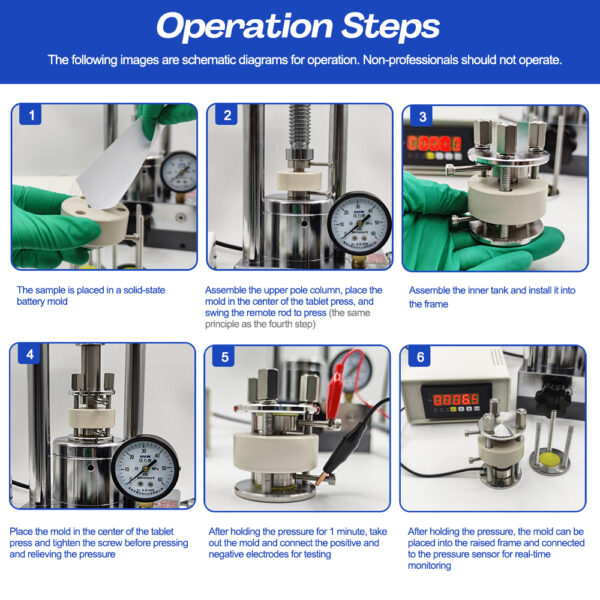
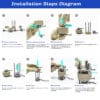
Operation Steps (schematic — not for operation by non-professional personnel):
1. Place the sample into the solid-state battery mold
2. Assemble the upper electrode post, place the mold pellet in the center of the tablet press, and swing the lever to apply pressure (same principle as step 4)
3. Assemble the inner liner and install it into the frame
4. Place the mold in the center of the tablet press; before pressing and releasing, tighten the screw to hold the pressure
5. After holding the pressure for one minute, remove the mold and connect the positive and negative electrodes for testing
6. After holding pressure, the mold can be placed into a raised frame and connected to a pressure sensor for real-time monitoring
Customization:
Customizable as required; the frame can be raised at no extra cost.
Application Areas:
New Energy
Lithium Battery Research
Research Projects
Electrochemistry
Mold Customization
Solid-State Battery
Note: Specifications listed above are for reference only. The XN-GT01 is the simplified, lightweight entry model (50 mm sleeve, 65 mm height) in Xnergy’s solid-state battery mold series. For a taller stack build, see the XN-GT02 Solid-State Battery Assembly Mold; for the ceramic-lined upgrade, see the XN-GT01-TC Ceramic Solid-State Battery Mold; for high-pressure work with a stabilized central-screw design, see the XN-GT03 High-Pressure Solid-State Battery Mold; for three-electrode measurements, see the XN-GT04 Three-Electrode Solid-State Battery Mold. Browse all options in the Battery Mold category.
| Weight | 0.35 kg |
|---|
Related products
-
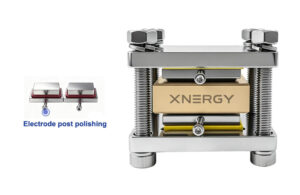
Square Battery Test Mold XN-GT05
Free Shipping$471.00 -
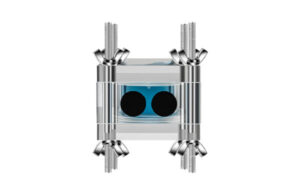
KQ01 Air battery mold
Free Shipping$129.00 -
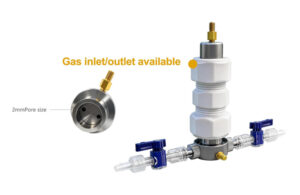
Swagelok Metal-Air Battery Test Cell XN-YT07
Free Shipping$239.00Select options This product has multiple variants. The options may be chosen on the product page -
Ceramic Solid-State Battery Mold XN-GT02-TC
Free Shipping$399.00