
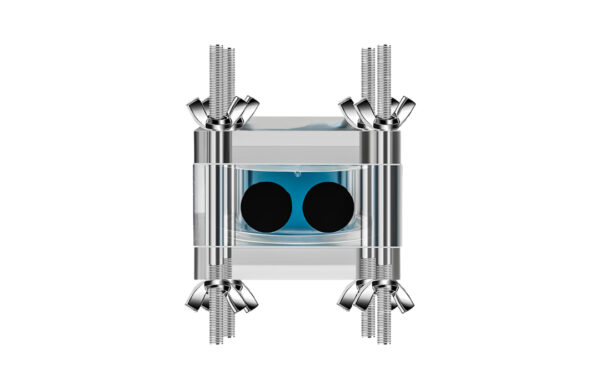
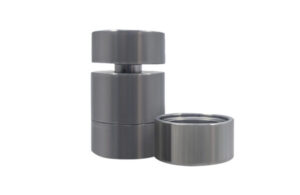
KQ01 Air battery mold
SKU: XN-BM-KQ01
Free Shipping$129.00
[Customize and modify as required]
KQ01 Air Battery Mold — compact PMMA + stainless steel air battery test cell for laboratory air battery (Li-air, Zn-air, Mg-air) assembly and testing. 60 × 42 mm size, 90 mm assembly height, 0 MPa working pressure, normal-temperature operation. Features silicone seal for airtight integrity and high transparency PMMA window for direct in-situ observation of air electrode reactions.
Need a bulk order or custom specification? Request a competitive quote today!
Name: KQ01 Air Battery Mold (PMMA + Stainless Steel Construction)
Mold Type: Compact Air Battery Test Cell with Transparent PMMA Body
Product Code: XN-BM-KQ01
Description:
The KQ01 is a compact air battery mold engineered for laboratory air battery assembly, electrochemical testing, and direct visual observation of air electrode reactions. Air batteries — including lithium-air (Li-O₂), zinc-air, magnesium-air, and aluminum-air systems — require open access to atmospheric oxygen at the cathode while maintaining electrolyte containment, a unique mechanical and chemical design challenge. As a result, the KQ01 features a PMMA (polymethyl methacrylate) transparent body with stainless steel structural support, providing both the chemical compatibility required for air battery research and the high optical transparency needed for in-situ visual observation of cathode reactions, gas evolution, and electrolyte changes. The mold is rated for 0 MPa working pressure (normal-pressure operation), supports normal-temperature conditions, and features a compact 60 × 42 mm form factor with 90 mm assembly height that fits easily on standard laboratory benchtops. Furthermore, the integrated silicone seal ensures airtight integrity at the cell joints while allowing controlled atmospheric access at the air cathode. Customization is available on request.
Application:
The KQ01 air battery mold is designed for laboratory-scale air battery research, including lithium-air (Li-O₂) battery development with controlled oxygen partial pressure, zinc-air battery research with alkaline electrolytes (KOH solutions), magnesium-air and aluminum-air battery prototyping, in-situ visual observation of air-cathode reactions (Li₂O₂ formation/decomposition, oxygen reduction/evolution), comparative electrolyte studies for air batteries (aqueous, non-aqueous, hybrid), gas-diffusion-electrode (GDE) characterization studies, and academic studies of air battery degradation mechanisms visible through the transparent PMMA window.
Specifications:
| Parameter | Value |
|---|---|
| Mold Type | Compact air battery test cell with transparent PMMA body |
| Body Material | PMMA (polymethyl methacrylate, transparent acrylic) |
| Frame Material | Stainless steel |
| Sealing | Silicone seal (airtight at cell joints, controlled atmospheric access at air cathode) |
| Assembly Height | 90 mm |
| Product Size | 60 × 42 mm |
| Working Pressure | 0 MPa (normal pressure, no high-pressure compaction) |
| Operating Conditions | Normal temperature conditions |
| Observation Window | High-transparency PMMA body for direct in-situ visualization |
| Customization | Available on request — alternative materials, modified dimensions, and electrode configurations |
| Application Environment | Laboratory benchtop (ambient atmosphere or controlled-atmosphere chamber) |
| Compatibility | Lithium-air (Li-O₂), zinc-air, magnesium-air, aluminum-air, and other metal-air battery chemistries |
Values measured by Xnergy. Typical values for reference; not guaranteed unless otherwise specified.
Characteristics:
Silicone seal for reliable airtight integrity
The KQ01 features an integrated silicone seal at the cell joints, providing reliable airtight integrity to prevent electrolyte leakage and uncontrolled atmospheric ingress. As a result, researchers obtain consistent, repeatable air-battery cycling data without the seal-failure artifacts that compromise low-quality air battery fixtures. Furthermore, silicone is chemically compatible with most air battery electrolytes (alkaline, neutral, mildly acidic) and resistant to oxygen-induced degradation.
High transparency PMMA body for direct in-situ observability
The PMMA (polymethyl methacrylate) body provides excellent optical transparency, allowing researchers to directly observe air-cathode reactions during cycling — including Li₂O₂ deposit formation in lithium-air batteries, gas bubble evolution at gas-diffusion electrodes, electrolyte color changes, and dendrite or precipitate growth. Therefore, this mold supports operando visualization studies that generate uniquely valuable mechanistic data unavailable from opaque-body cells.
Designed for atmospheric-access air battery chemistry
Unlike sealed lithium-ion or solid-state battery cells, the KQ01 is designed specifically for air batteries — providing controlled atmospheric access at the air cathode while sealing the rest of the cell. As a result, this design enables proper functioning of air battery chemistries that require continuous oxygen supply (Li-O₂, Zn-air) without compromising electrolyte containment.
Compact 60 × 42 mm form factor for benchtop deployment
With a 60 × 42 mm footprint and 90 mm assembly height, the KQ01 features a compact form factor that fits easily on standard laboratory benchtops, inside fume hoods, and within controlled-atmosphere chambers. Consequently, the KQ01 supports flexible deployment across diverse laboratory environments — including high-throughput comparative studies where multiple molds operate simultaneously.
Normal-pressure operation for air battery research
The KQ01 is rated for 0 MPa working pressure (normal pressure) — consistent with the operational requirements of air battery research, which typically involves atmospheric or controlled overpressure conditions rather than the high-compaction stack pressures used in solid-state battery molds. Therefore, this design eliminates unnecessary mechanical complexity while maintaining all electrochemical functionality required for air battery testing.
PMMA + stainless steel: chemical compatibility for diverse electrolytes
The combination of PMMA body and stainless steel frame provides good chemical compatibility with most air battery electrolytes — including alkaline solutions (KOH for zinc-air), aprotic solvents with lithium salts (TEGDME, DMSO for lithium-air), and aqueous neutral electrolytes for magnesium-air systems. As a result, the KQ01 supports research across the full spectrum of air battery chemistries currently under development.
Cost-effective platform for air battery prototyping
At a compact size and simple architecture, the KQ01 offers a cost-effective platform for air battery prototyping and educational research — supporting comparative studies where multiple molds are required without the high cost of specialized in-situ characterization fixtures. Therefore, this mold is well-suited for fundamental research and academic teaching laboratories.
Customization on request
The KQ01 supports customization on request — including alternative body materials (PEEK for higher chemical compatibility, glass for full optical access), modified dimensions to match specific cell-architecture requirements, and specialized gas-diffusion electrode integration. Therefore, researchers with non-standard air battery requirements can obtain a tailored configuration to match their experimental needs.
Recommended Operating Procedure:
1. Clean all components (PMMA body, stainless steel frame, silicone seals) with deionized water followed by isopropyl alcohol; dry thoroughly before each use. Avoid alcohols stronger than isopropanol on PMMA — solvents like acetone or strong alcohols can cause crazing of the acrylic surface. 2. Inspect the silicone seal for damage; replace if necessary. 3. Inside a glovebox (for non-aqueous chemistries like Li-O₂) or on the benchtop (for aqueous chemistries like Zn-air, Al-air), assemble the cell by placing the bottom electrode current collector, then sequentially adding the metal anode (lithium, zinc, magnesium, aluminum), separator, electrolyte, and gas-diffusion air cathode. 4. Tighten the assembly using the wing-nut fasteners — do not over-tighten as PMMA can crack under excessive load. 5. Position the gas-diffusion electrode opening to face the desired atmosphere (ambient air, controlled O₂, or pure oxygen as required). 6. Connect the cell electrodes to the cycling tester or potentiostat. 7. Perform electrochemical measurements at room temperature, with simultaneous visual observation through the PMMA window if needed. 8. After testing, drain the electrolyte safely, rinse all wetted-surface components with deionized water followed by alcohol, dry thoroughly, and store in the original case.
Packaging & Storage:
Each KQ01 mold ships fully assembled in a protective foam-lined case with all components, including the PMMA transparent body, stainless steel frame, silicone seal, electrode contacts, and wing-nut fastening hardware. Therefore, store in a dry environment (15–25 °C, RH < 40 %) protected from dust and direct sunlight (extended UV exposure can yellow PMMA). After each use, drain electrolyte safely, rinse all wetted-surface components with deionized water and isopropyl alcohol (avoid stronger solvents that attack PMMA), gently clean the PMMA window with optical-grade lens cleaner and a non-abrasive lint-free cloth, and store in the original case to prevent scratching, crazing, and silicone-seal degradation.
Safety:
For research and industrial laboratory use only. For lithium-air (Li-O₂) battery research, use the KQ01 inside an argon-filled glovebox or oxygen-controlled atmosphere chamber — direct exposure of lithium metal to ambient air is a fire hazard. For zinc-air, magnesium-air, and aluminum-air research, follow standard alkaline-electrolyte safety protocols (KOH and similar electrolytes are caustic). Always wear appropriate PPE (safety glasses, chemical-resistant gloves, lab coat) when handling electrolytes and reactive metals. Do not use solvents stronger than isopropanol on PMMA components — acetone, methylene chloride, and similar solvents will damage the acrylic body. Refer to the included user manual for complete safety and operating instructions.
Note: Specifications listed above are typical and for reference only. Actual performance and chemical compatibility depend on the specific air battery chemistry (Li-O₂, Zn-air, Al-air, Mg-air), electrolyte composition, atmosphere conditions, and gas-diffusion-electrode design — consult published literature for guidance on optimal air battery testing protocols. For researchers exploring complete air battery and electrochemistry research workflows, see also Xnergy’s related products: YT07 Swagelok Metal-Air Battery Test Cell, YT06 Liquid Battery Mold, YT05 Dual-Electrolyte Swagelok Battery Mold, YT09 In-Situ Dendrite Observation Mold, YL04 CG In-Situ Heated Liquid Observation Mold, YL01 Laboratory Flow Battery Testing Cell System, YT01 Swagelok Dual-Electrode Mold, and YT08 Swagelok-Type Battery Test Cell. Browse the full Battery Mold category for all configurations.
Related products
-
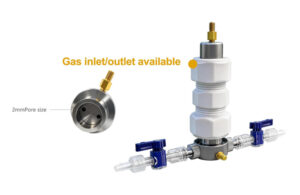
Swagelok Metal-Air Battery Test Cell XN-YT07
Free Shipping$239.00Select options This product has multiple variants. The options may be chosen on the product page -
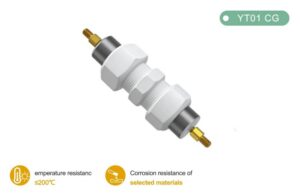
Swagelok Two-Electrode Cell XN-YT01-CG
Free Shipping Price range: $122.00 through $254.00Select options This product has multiple variants. The options may be chosen on the product page -
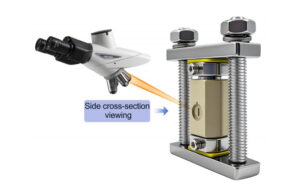
In-Situ Raman Battery Test Cell XN-GT06
Free Shipping$268.00 -
YP01 Circular tablet pressing die
Free Shipping$148.00