
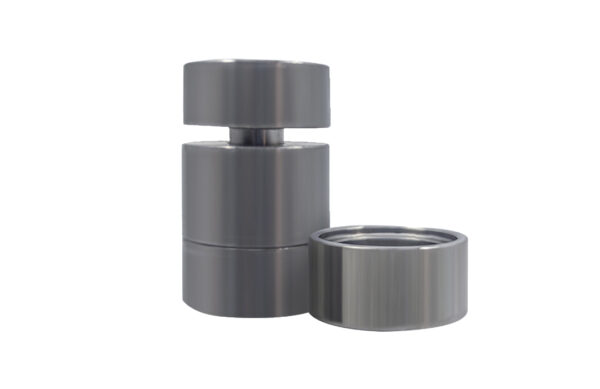
YP01 Circular tablet pressing die
SKU: XN-BM-YP01
Free Shipping$148.00
[Customize and modify as required]
YP01 Circular Tablet Pressing Die — laboratory-grade circular tablet pressing die for compacting solid electrolyte powders, electrode materials, and battery research samples into uniform circular pellets. Available in 10 mm and 20 mm diameters. Built from stainless steel for normal-temperature use. Compatible with hydraulic presses up to standard laboratory pressure ratings. Essential preparation tool for GT-series solid-state battery mold workflows.
Need a bulk order or custom specification? Request a competitive quote today!
Name: YP01 Circular Tablet Pressing Die – Stainless Steel, 10 mm & 20 mm Diameters
Mold Type: Laboratory Circular Tablet Pressing Die
Product Code: XN-BM-YP01
Description:
The YP01 is a laboratory-grade circular tablet pressing die engineered for compacting solid electrolyte powders, cathode and anode materials, and other battery research samples into uniform circular pellets. As a result, this die is the essential preparation tool for any solid-state battery research workflow that requires pre-formed electrolyte pellets — including LLZO, LGPS, sulfide solid electrolytes, oxide solid electrolytes, and densified composite electrode pellets used downstream in Xnergy’s GT-series solid-state battery assembly molds. The YP01 is constructed from stainless steel for excellent dimensional precision, mechanical durability, and chemical compatibility with most solid-state battery research materials. The die is available in two standard diameters — 10 mm and 20 mm — covering the full range of common pellet sizes used in academic and industrial battery laboratories. Customization is available on request.
Application:
The YP01 die is designed for laboratory-scale pellet pressing and sample preparation in battery and electrochemistry research, including pressing solid electrolyte powders (LLZO, LGPS, Li₆PS₅Cl, LATP) into dense circular pellets for ionic conductivity studies, compacting cathode and anode powders for solid-state battery assembly in downstream GT-series molds, sample preparation for X-ray diffraction (XRD) and X-ray fluorescence (XRF) analysis, fundamental densification studies of electrolyte and electrode materials, comparative studies of pellet density vs. ionic conductivity, calibration and standards preparation for electrochemical impedance spectroscopy (EIS), and academic studies of pressure-induced phase transformations in solid electrolytes.
Specifications:
| Parameter | Value |
|---|---|
| Mold Type | Circular tablet pressing die for laboratory pellet preparation |
| Product Material | Stainless steel |
| Available Diameters | 10 mm, 20 mm |
| Pellet Geometry | Circular (cylindrical pellet) |
| Operating Conditions | Normal temperature conditions |
| Customization | Available on request — alternative diameters and modified component specifications |
| Application Environment | Glovebox or ambient lab benchtop |
| Compatibility | Solid electrolyte powders (LLZO, LGPS, sulfide-based, oxide-based), cathode and anode powders, and battery research samples |
Values measured by Xnergy. Typical values for reference; not guaranteed unless otherwise specified.
Available Configurations:
| Configuration | Pellet Diameter | Notes |
|---|---|---|
| YP01-10 | 10 mm | Most common configuration — matches standard solid electrolyte pellet diameter for downstream GT-series molds (GT01, GT02, GT03, GT04, GT18) |
| YP01-20 | 20 mm | Larger pellet diameter for area-averaged EIS studies and scale-up validation |
| Custom Specs | — | Custom diameters and modified component specifications available on request; contact sales |
Characteristics:
Stainless steel construction for dimensional precision and durability
The YP01 is fabricated from stainless steel, providing excellent dimensional precision (critical for repeatable pellet diameter and thickness), mechanical durability under repeated high-pressure pressing cycles, and good chemical compatibility with most solid-state battery research materials. As a result, the YP01 maintains tight pellet-to-pellet reproducibility across long service life — a critical requirement for comparative studies where pellet geometry must be controlled.
Two standard diameters for matched downstream workflow
The 10 mm diameter is the most common pellet size used across Xnergy’s GT-series solid-state battery molds (GT01, GT02, GT03, GT04, GT18), enabling seamless workflow integration. The 20 mm diameter supports area-averaged EIS studies and larger-scale validation experiments. Therefore, the YP01 supports both small-pellet fundamental research and larger-pellet scale-up validation within a single standardized platform.
Essential preparation tool for solid-state battery research
Solid-state battery research depends on consistently pre-pressed pellets — the foundation of accurate impedance spectroscopy, ionic conductivity measurement, and full-cell solid-state battery assembly. As a result, the YP01 is an essential preparation tool that bridges raw powder synthesis (or commercial powder procurement) to downstream electrochemical characterization in GT-series cells.
Compatible with standard hydraulic presses
The YP01 is designed for use with standard laboratory hydraulic presses (typically rated 1–5 ton capacity for 10 mm pellets, 5–20 ton for 20 mm pellets at the pressures common in solid-state battery research). Therefore, the YP01 integrates seamlessly with existing laboratory equipment without requiring specialized infrastructure.
Normal-temperature operation for diverse sample compatibility
Operation at normal temperature ensures compatibility with the widest range of solid-state battery materials — including thermally sensitive sulfide electrolytes, polymer-binder composites, and air-sensitive lithium-containing materials. Consequently, the YP01 supports research workflows where pellet pressing must be performed without thermal damage to delicate sample chemistry.
Compact form factor for glovebox use
The compact stainless steel design fits easily inside argon-filled gloveboxes, supporting pellet pressing workflows where moisture-sensitive materials (sulfide electrolytes, lithium-metal) require inert atmosphere from sample loading through final pellet ejection. As a result, the YP01 enables high-quality pellet preparation without compromising sample integrity.
Customization on request
The YP01 supports customization on request — including custom pellet diameters (beyond 10 mm and 20 mm), modified pellet thickness ratings, alternative materials for chemistry-specific compatibility, and specialized component arrangements. Therefore, researchers with non-standard pellet requirements can obtain a tailored configuration to match their experimental needs.
Foundation tool for the Xnergy GT-series workflow
The YP01 is the foundation pellet-preparation tool for Xnergy’s full GT-series solid-state battery research workflow — used for preparing pellets that flow into GT01/GT02/GT03/GT04/GT18 molds for electrochemical characterization. As a result, advanced research labs can deploy a complete YP01 → GT-series workflow for end-to-end solid-state battery research from powder to full cell.
Recommended Operating Procedure:
1. Clean all die components with isopropyl alcohol and dry thoroughly before each use. 2. Apply a thin layer of vacuum grease or anti-seize compound between the punch and the die body to reduce friction and ease pellet ejection. 3. Inside an argon-filled glovebox (for moisture-sensitive materials like sulfide electrolytes) or on the benchtop (for stable materials), load the bottom punch into the die body. 4. Add the powder sample into the die cavity, distributing it evenly across the die diameter. 5. Insert the top punch and apply pressure using a hydraulic press at the target pressure (typical 200–500 MPa for sulfide electrolytes, 500–800 MPa for oxide electrolytes; consult published literature for specific material recommendations). 6. Hold pressure for the required duration (typically 1–5 minutes). 7. Release pressure gradually to prevent pellet cracking from rapid stress release. 8. Eject the formed pellet by removing the bottom support and gently pressing through with the top punch. 9. Inspect the pellet for cracks, edge defects, or thickness uniformity issues. 10. Clean all die components with isopropyl alcohol and apply a thin layer of vacuum grease before storage.
Packaging & Storage:
Each YP01 die ships fully assembled in a protective foam-lined case with all components, including the stainless steel die body, top and bottom punches, ejection support, and assembly hardware. Therefore, store in a dry environment (15–25 °C, RH < 40 %) protected from dust and moisture. After each use, clean components with isopropyl alcohol, apply a thin layer of vacuum grease to all metal surfaces, and store in the original case to prevent oxidation, corrosion, and mechanical damage to the precision-machined die surfaces.
Safety:
For research and industrial laboratory use only. Always wear appropriate PPE (safety glasses, gloves) when applying pressure or operating a hydraulic press. Use the YP01 only with hydraulic presses appropriate to the target pellet diameter — undersized presses cannot generate sufficient force; oversized presses risk damaging the die. Take particular care during pellet ejection to avoid pinching injuries — release press force fully before attempting ejection. When working with reactive materials (sulfide electrolytes, lithium-metal-containing samples), perform all loading and ejection inside an argon-filled glovebox. Refer to the included user manual for complete safety and operating instructions.
Note: Specifications listed above are typical and for reference only. Actual performance and pressure requirements depend on powder chemistry, particle size distribution, target densification level, and pressing duration — consult published literature for guidance on optimal pressing protocols for specific solid-state battery materials. For researchers exploring complete solid-state battery research workflows, see also Xnergy’s related products: GT01 Standard Solid-State Battery Mold, GT01-TC Ceramic Solid-State Battery Mold, GT02 Standard Solid-State Battery Mold, GT02-TC Ceramic Solid-State Battery Mold, GT03 High-Pressure Solid-State Battery Mold, GT04 Three-Electrode Solid-State Battery Mold, GT18 Ceramic Edition Solid-State Battery Mold, GT02 TQ Ventilated Solid-State Battery Mold, and GT05 Square Solid-State Battery Test Cell. Browse the full Battery Mold category for all configurations.
Related products
-
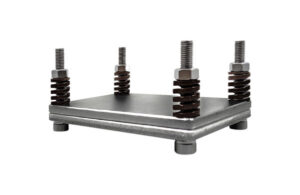
GT11 Pouch Cell Pressure Fixture – Spring Clamp, Adjustable 80–200mm, 50MPa | Xnergy
Free Shipping$151.00 -
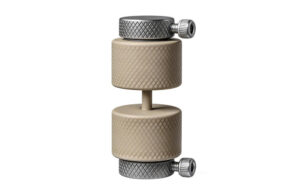
Monochromatic X-Ray Test Mold XN-GT07
Free Shipping$268.00 -
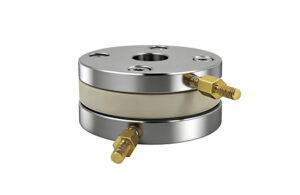
Microscopic Test Mold XN-GT08
Free Shipping$268.00 -
In-Situ Raman Battery Test Cell XN-GT06
Free Shipping$268.00