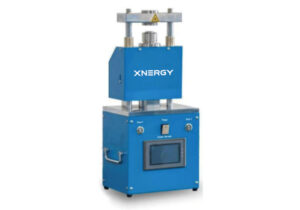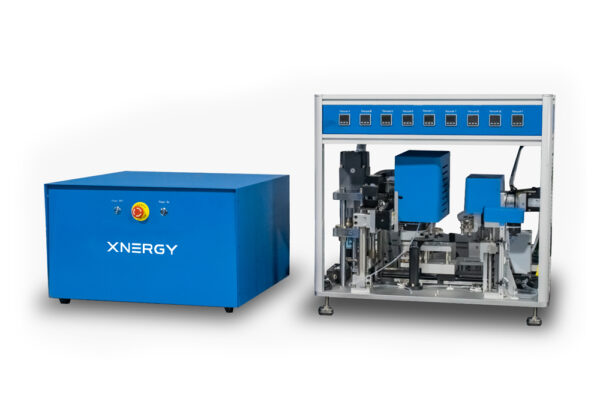
Automatic Coin Cell Assembly Machine XN-CCMZ-20
SKU: XN-CCMZ-20
Automatic Coin Cell Assembly Machine XN-CCMZ-20 — compact glovebox-compatible system integrating automatic material handling, high-precision electrolyte injection, and crimping/sealing with a vision inspection system that logs electrode alignment and coating quality for every cell. Throughput 60 pcs/hr, 20 pcs/cycle, Series 20 & 24 compatible, PLC + touchscreen, AC 220V / 2 kW.
Need a bulk order or custom specification? Request a competitive quote today!
Name: Automatic Coin Cell Assembly Machine XN-CCMZ-20
Equipment Type: Automated Coin Cell Encapsulation Machine with Vision Inspection, Electrolyte Injection, and Glovebox Compatibility
Product Code: XN-CCMZ-20
Product Introduction:
The Automatic Coin Cell Assembly Machine XN-CCMZ-20 is a compact, highly automated coin cell encapsulation system designed for the complete assembly process of coin cell batteries, including manual tray loading, automatic material pickup and handling, high-precision electrolyte injection, and crimping/sealing. The equipment is equipped with a vision inspection system that records the electrode alignment and coating quality of every battery produced, enabling traceable quality control for research and small-batch production. With its compact footprint and sealed design, the XN-CCMZ-20 is fully compatible with operation inside a glovebox or dry room, making it ideal for moisture- and oxygen-sensitive battery chemistries.
The control system features PLC and touchscreen control, offering flexible parameter settings, high automation, and stable performance. The tray-and-fixture transfer design allows rapid switching between Series 20 and Series 24 coin cell formats by simply replacing the tray fixture, without requiring major reconfiguration. As a result, the XN-CCMZ-20 is widely used in coin cell fabrication for lithium-ion, solid-state, sodium-ion, and other battery chemistries in universities, research institutes, and industrial laboratories.
Working Process:
Manual tray loading → equipment picks up materials sequentially → electrolyte injection → crimping and sealing → battery placed back into tray → tray returns to position → robot arm switches to next tray → repeat until completion.
Main Features:
- Vision inspection system with data logging — records electrode alignment and coating quality for every battery produced; real-time display of inspection images with full data logging, enabling traceable quality control and process optimization
- High-precision syringe pump for electrolyte dosing — adjustable injection volume with high repeatability, ensuring consistent electrolyte filling across all cells in each batch
- Servo module drive — all motion axes driven by servo motors for smooth, stable, and precise operation with low vibration and high positional repeatability
- Flexible assembly sequence configuration — the assembly order can be freely configured according to specific process requirements, accommodating a wide range of coin cell chemistries and stack configurations
- Tray-and-fixture transfer design — rapid switching between Series 20 and Series 24 coin cell formats by replacing the tray fixture; supports future expansion to additional coin cell sizes
- Glovebox and dry room compatible — compact footprint (L720×W620×H680 mm) and sealed construction enable direct operation inside standard gloveboxes or dry rooms for moisture- and oxygen-sensitive cell chemistries
- Automatic tray switching — robot arm automatically switches to the next tray upon completion, enabling continuous unattended operation at up to 60 pcs/hr throughput
- Chemical-resistant electrolyte tubing — electrolyte inlet connected via chemical-resistant tubing for safe and reliable handling of standard and aggressive electrolyte formulations
- PLC and touchscreen control — intuitive operator interface with flexible parameter settings, high degree of automation, and stable long-term performance
Technical Parameters:
| Parameter | Value |
|---|---|
| Product Name | Automatic Coin Cell Assembly Machine |
| Model | XN-CCMZ-20 |
| Applicable Product | Coin cell batteries |
| Compatible Battery Series | Series 20 and Series 24 coin cells |
| Assembly Method | Inverted stacking — negative shell at bottom, layers stacked upward |
| Loading Method | Manual tray loading, automatic material pickup |
| Tray Capacity per Cycle | 20 pcs (for reference) |
| Throughput | 60 pcs/hr (for reference) |
| Electrolyte Pump | High-precision syringe pump with adjustable injection volume |
| Machine Dimensions (L × W × H) | L720 × W620 × H680 mm |
| Control Cabinet Dimensions (L × W × H) | L650 × W600 × H400 mm |
| Power Supply | AC 220V / 50Hz |
| Power Consumption | 2 kW |
| Machine Weight | 90 kg |
| Control Cabinet Weight | 30 kg |
| Control System | PLC + touchscreen |
| Environment Compatibility | Glovebox or dry room |
| After-Sales | One-year warranty plus lifetime technical support |
Values are typical and for reference only. Actual throughput depends on specific cell format, electrolyte volume, and operator workflow.
Application Areas:
- Lithium-ion coin cell fabrication — automated encapsulation of CR2016, CR2025, and CR2032 half-cells and full cells for electrochemical testing and materials evaluation
- Solid-state battery coin cell assembly — glovebox-compatible operation for moisture- and oxygen-sensitive solid electrolyte coin cell fabrication
- Sodium-ion battery research — coin cell assembly for NVP, NFPP, P2, and other sodium-ion cathode/anode material evaluation
- Lithium–sulfur and lithium–metal battery research — controlled atmosphere assembly of Li–S and Li-metal coin cells requiring strict moisture exclusion
- Electrolyte formulation screening — high-throughput coin cell fabrication for systematic comparison of electrolyte compositions and additives
- Electrode material quality control — vision inspection system enables batch-level tracking of electrode alignment and coating quality for process development and QC reporting
- University, research-institute, and industrial laboratory coin cell production — small-batch automated assembly replacing manual crimping for improved consistency and reproducibility
Recommended Operating Procedure:
1. Before operation, verify all electrical, pneumatic, and electrolyte tubing connections are properly installed. Confirm the glovebox (or dry room) atmosphere meets the requirements for the target battery chemistry. 2. Power on the machine and the control cabinet. The PLC touchscreen will display the system status; confirm all servo axes, vision system, syringe pump, and tray mechanism are in the ready state. 3. Load the tray fixture appropriate for the target battery series (Series 20 or Series 24) and confirm it is correctly seated and locked. 4. Manually load the tray with the required coin cell components (negative shell, anode, separator, cathode, spacer, spring, and positive cap) in the correct inverted stacking order (negative shell at bottom). 5. Set the electrolyte injection volume on the syringe pump according to the target cell design. Confirm the chemical-resistant electrolyte tubing is connected and primed. 6. Set the assembly sequence and process parameters on the PLC touchscreen. Initiate the automated run. 7. The equipment will automatically pick up materials sequentially, inject the electrolyte, crimp and seal each cell, return completed cells to the tray, and switch to the next tray automatically upon cycle completion. 8. Monitor the vision inspection display in real time to verify electrode alignment and coating quality. Review the data log after each batch to identify any out-of-specification cells. 9. Upon completion of the batch, remove the completed cell tray from the glovebox or dry room following standard atmospheric-sensitive material handling procedures. 10. After each session, clean all moving components with a soft cloth, inspect pneumatic fittings and sealing rings, and verify all fasteners are secure.
Maintenance:
- Regularly wipe all moving components with a soft cloth to keep them clean and free of electrolyte residue or particulate contamination
- Periodically lubricate ball screws, linear guides, and other moving parts to ensure smooth, low-friction operation
- If the equipment will not be used for an extended period, clean all moving surfaces and apply anti-rust protection to prevent corrosion
- Periodically inspect all screws, nuts, pins, and other fasteners to prevent loosening — loose fasteners can cause equipment failure or personal injury
- Regularly clean the sealing rings and inspect them for wear or cracking to maintain proper sealing of the electrolyte injection system
- Regularly check all pneumatic fittings to ensure they are securely tightened and leak-free
Packaging & Storage:
The XN-CCMZ-20 ships fully assembled with the main machine body (L720×W620×H680 mm), control cabinet (L650×W600×H400 mm), PLC touchscreen controller, servo drive modules, vision inspection system with camera and lighting, high-precision syringe pump with chemical-resistant tubing, tray fixtures for Series 20 and Series 24 coin cells, and all standard connecting hardware and accessories. Install on a stable, level surface inside a glovebox or dry room with adequate clearance for operator access, tray loading, and cable/tubing management. Connect to AC 220V / 50Hz power supply and to the electrolyte supply line. When not in use for extended periods, clean all moving surfaces, remove residual electrolyte from the syringe pump and tubing, and store with the moving surfaces protected from corrosion.
Safety:
For research and industrial laboratory use only. All personnel must read the operating manual before use. During operation, it is strictly prohibited to insert hands or any body part into moving areas — lead screws, linear guides, the crimping mechanism, and other servo-driven motion zones can cause serious injury. Only one operator is permitted at the machine at a time. Unauthorized personnel and non-designated technicians must not disassemble, adjust, or modify the equipment under any circumstances — unauthorized modification voids the warranty and creates safety hazards. When operating inside a glovebox, ensure the machine footprint and all cable/tubing feedthroughs are properly sealed to maintain inert-atmosphere integrity. Always use chemical-resistant tubing and fittings compatible with the electrolyte formulation in use; inspect tubing connections before each session for signs of chemical degradation or leakage. Follow standard laboratory safety protocols for electrolyte handling, including appropriate PPE (chemical-resistant gloves, safety glasses, lab coat) when loading electrolyte or handling completed cells. Follow all applicable safety protocols for lithium or sodium metal handling as required by the specific battery chemistry. Refer to the included user manual for complete safety and operating instructions.
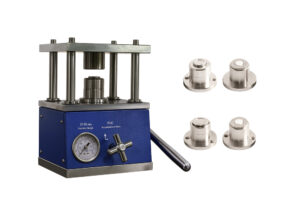
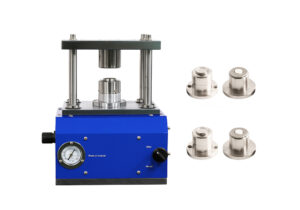
Note: Specifications listed above are typical and for reference only. Actual throughput, electrolyte injection accuracy, and vision inspection performance depend on the specific cell format, stack configuration, electrolyte viscosity, and operating environment — consult our technical team to verify compatibility with your coin cell assembly process before ordering. Custom tray fixtures for non-standard coin cell formats are available upon request. The XN-CCMZ-20 is a fully automated coin cell encapsulation system combining material handling, electrolyte injection, crimping, and vision inspection in one glovebox-compatible footprint. For researchers requiring standalone crimping without integrated electrolyte injection, see Xnergy’s manual and semi-automatic crimpers: Hydraulic Crimper for All Types of Coin Cells XE-SF120, Coin Cell Electric Crimping Machine XN-CCME-20, and Coin Cell Pneumatic Crimping Machine XN-CCMP-20. For manual electrolyte dispensing during R&D screening, see the Precision Electronic Single-Channel Pipette. For complete coin cell assembly workflows, see also Xnergy’s related products and material categories: Coin Cells & Hardware (CR2016/CR2025/CR2032 cases), Coin Cell Cases, Spacers & Springs, Coin Cell Assembly equipment category, and the broader Pouch Cell Lab Equipment category. For electrolyte formulations and salts, see Electrolytes, Electrolyte Solvents, Electrolyte Salts, and Electrolyte Formulations. For electrode active materials, see Cathode Materials (including Cathode Material Powder, Li-ion Cathode Electrode Sheet, and Na-ion Cathode Electrode Sheet) and Anode Materials (including Anode Material Powder, Li-ion Anode Electrode Sheet, Na-ion Anode Electrode Sheet, and Metallic Lithium Series). For solid-state coin cell research, see also Solid-State Electrolytes (Sulfide, Halide, and Oxide variants) and Battery Research Molds including Solid-State Battery Molds and Swagelok-Type Cells. For separators, binders, and conductive additives, see Binders and Conductive Additives. For upstream electrode fabrication, see the Coating equipment category, Drying equipment category, Calendering equipment category, and Slitting & Die Cutting equipment category.