



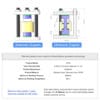

Solid-State Battery Assembly Mold XN-GT02
SKU: XN-GT02
Free Shipping$369.00
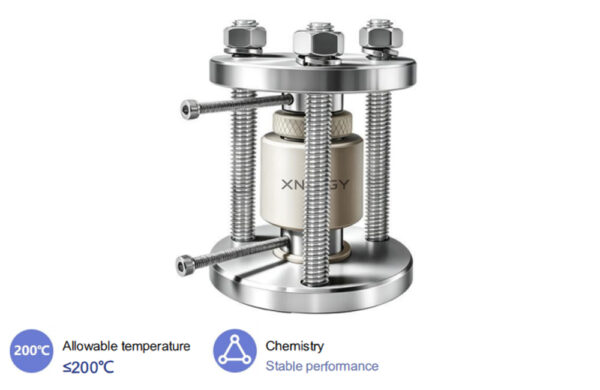
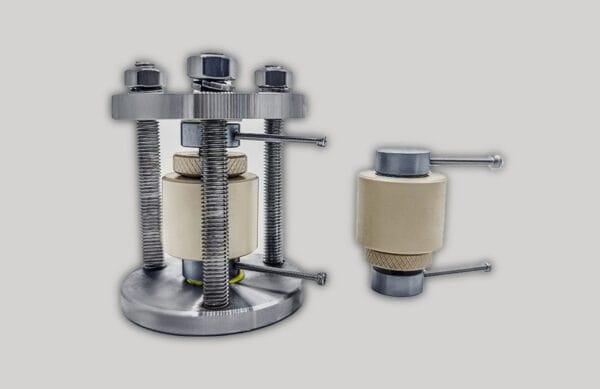
Solid-State Battery Assembly Mold XN-GT02 is a standard solid-state battery research mold used to assemble, press, and test solid-state cells under stable, adjustable pressure.
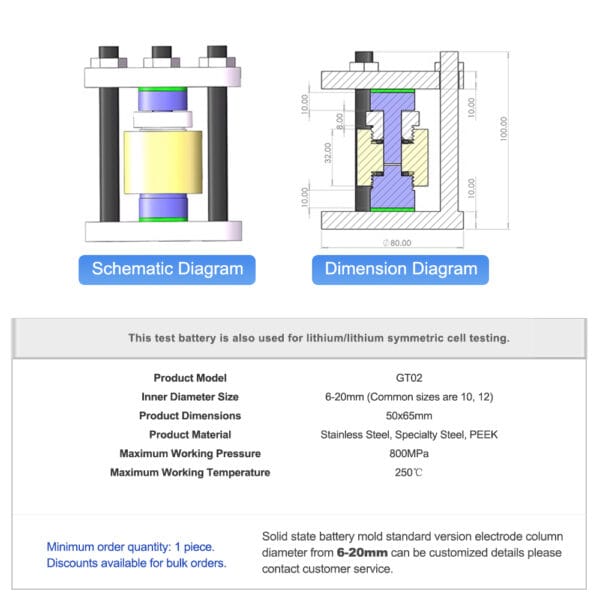
It provides the controlled stack pressure that is critical for solid-state systems — especially sulfide and halide electrolytes — and lets researchers simulate real working pressures and improve the rigid solid-electrolyte/electrode interface. Built with a stainless steel frame, a PEEK insulating sleeve, and Grade 4 special-steel electrode posts. Sleeve diameter 40 mm, assembly height 100 mm, inner diameter Φ6–20 mm, working pressure ≤800 MPa, allowable temperature ≤200 °C. Frame raising provided free of charge.
Need a bulk order or custom specification? Request a competitive quote today!
Name: Solid-State Battery Assembly Mold XN-GT02
Mold Type: Standard Solid-State Battery Assembly & Test Mold
Product Code: XN-GT02
Brand: Xnergy
Product Introduction:
The XN-GT02 is a standard solid-state battery research mold used in the laboratory to assemble, press, and test the electrochemical performance of solid-state cells. Through a screw or press, it provides stable and adjustable pressure to the cell — the key requirement for solid-state battery operation, particularly in sulfide and halide systems.
Key Features:
Applies pressure — delivers stable, adjustable pressure to the cell via screw or press
Simulates working conditions — reproduces the pressure environment a cell experiences in real use, for studying the effect of pressure on performance
Optimizes the interface — uses pressure to improve the interfacial impedance of the rigid contact between the solid electrolyte and the electrodes
Durable construction with good compressive performance
Selected Materials:
PEEK insulating sleeve — high strength, excellent insulation, and self-lubricating. It maintains structural mechanical strength under extremely high pressure while providing absolute electrical insulation. In electrochemical testing, all current must flow through the cell material itself; if the cavity were conductive, the electrodes would short directly through the mold body and invalidate the data. As an excellent insulator, PEEK isolates the electrodes and forces the current through the electrolyte, safeguarding measurement accuracy.
• Pressure-bearing capacity ≥ 375 MPa
• Dimensional stability — prevents mold deformation and keeps pellet density uniform
• Electrical insulation — prevents short circuit between the positive and negative electrodes
• Data accuracy — ensures all measured current passes through the cell material itself
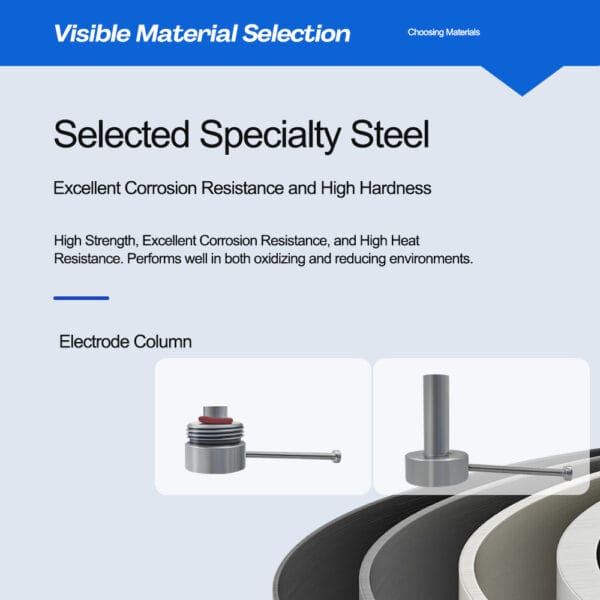
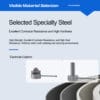
Grade 4 special steel (No. 4 steel) — high strength, high hardness, and good corrosion resistance. It acts as the load-bearing element of the mold: its high strength delivers the large pressure required for the cell material, while its corrosion resistance ensures stability and durability in complex chemical environments. Used for the electrode posts.
Specifications:
| Parameter | Specification |
|---|---|
| Product | XN-GT02 |
| Sleeve Diameter | 40 mm |
| Assembly Height | 100 mm |
| Inner Diameter | Φ6–20 mm |
| Material | Stainless steel, PEEK, Grade 4 steel |
| Working Pressure | ≤ 800 MPa |
| Allowable Temperature | ≤ 200 °C |
| Chemistry | Stable performance |
Package Contents:
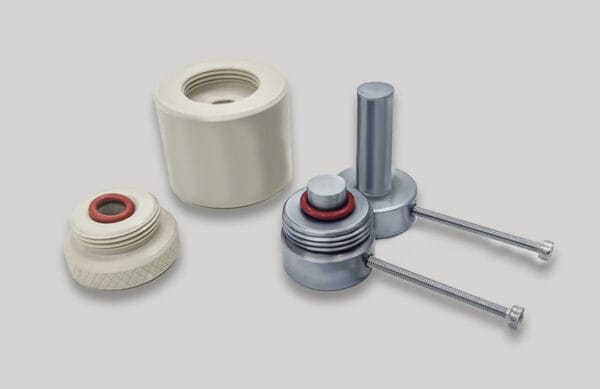
Frame × 1
Insulating sleeve (PEEK) × 1
Hand-wrenching part × 1
Electrode column × 2 (default Φ10 mm)
Spring washer × 3
Nut × 3
Customization:
Customizable as required; the frame can be raised at no extra cost. The default electrode column is Φ10 mm — for other sizes, contact us for a custom configuration.
Application Areas:
New Energy
Lithium Battery Research
Research Projects
Electrochemistry
Mold Customization
Solid-State Battery
Note: Specifications listed above are for reference only. The XN-GT02 is the standard, taller-stack (100 mm) solid-state battery assembly mold with a PEEK insulating sleeve. For the shorter standard-height mold, see the XN-GT01 Solid-State Battery Assembly Mold; for the ceramic-lined upgrade at the same height, see the XN-GT02-TC Ceramic Solid-State Battery Mold; for higher-pressure work with a stabilized central-screw design, see the XN-GT03 High-Pressure Solid-State Battery Mold; for three-electrode measurements, see the XN-GT04 Three-Electrode Solid-State Battery Mold. Browse all options in the Battery Mold category.
| Weight | 1.2 kg |
|---|
Related products
-
Swagelok Metal-Air Battery Test Cell XN-YT07
Free Shipping$239.00Select options This product has multiple variants. The options may be chosen on the product page -
Liquid Battery Mold XN-YT06
Free Shipping$258.00Select options This product has multiple variants. The options may be chosen on the product page -
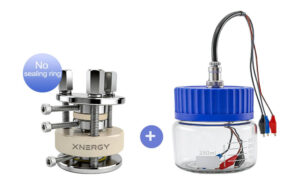
Three-Electrode Solid-State Battery Assembly Mold XN-GT04
Free Shipping$338.00 -
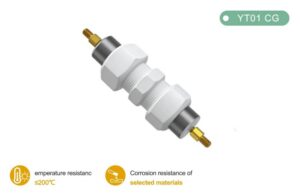
Swagelok Two-Electrode Cell XN-YT01-CG
Free Shipping Price range: $122.00 through $254.00Select options This product has multiple variants. The options may be chosen on the product page