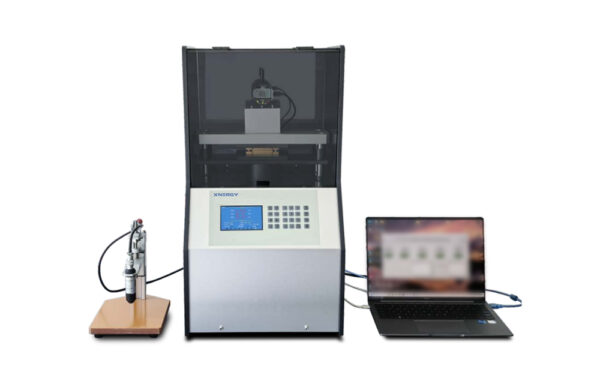
Fuel Cell Bipolar Plate and Carbon Paper Resistance Tester XN-ST2921B
SKU: XN-ST2921B
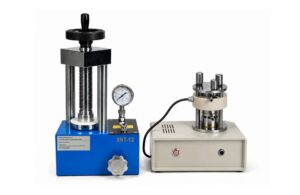
The XN-ST2921B Fuel Cell Bipolar Plate and Carbon Paper Resistance Tester is an integrated four-probe and four-terminal system for measuring resistivity, bulk resistance, and contact resistance of proton-exchange membrane fuel-cell components.
Need a bulk order or custom specification? Request a competitive quote today!
Name: Fuel Cell Bipolar Plate and Carbon Paper Resistance Tester
Equipment Type: Proton-Exchange Membrane Fuel Cell Bipolar Plate and Carbon Paper Resistance Tester
Product Code: XN-ST2921B
Brand: Xnergy
Product Introduction:
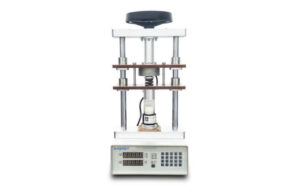
The XN-ST2921B is a professional integrated resistance-testing system for proton-exchange membrane fuel-cell bipolar plates, carbon paper, diffusion layers, and related components. It combines four-probe and four-terminal measurement methods with an automatic pressure console, thickness gauge, color display, and PC measurement software.
The four-probe method is used for in-plane resistivity measurement, while the four-terminal method is used for through-plane resistance and contact-resistance measurement. The system can synchronously display resistance, pressure, and thickness, and can generate resistance-pressure, resistivity-pressure, and contact-resistance-pressure reports and curves.
Key Features:
Four-probe and four-terminal measurement in one system
Automatic pressure control with a minimum pressure step of 0.05 MPa
Pressure range from 0.05 MPa to 4 MPa
Gold-plated copper electrodes and dedicated fuel-cell test bench
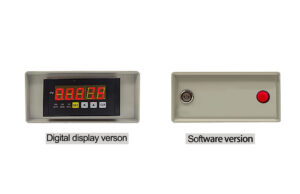
Color screen with synchronous resistance, pressure, and thickness display
PC software for measurement control, data viewing, editing, saving, printing, and history queries
Automatic stepped multi-pressure testing and curve fitting
Suitable for bipolar plates, carbon paper, diffusion layers, and fuel-cell components
Applicable Standards:
GB/T 20042.6-2011 — Proton Exchange Membrane Fuel Cells Part 6: Test Methods for Bipolar Plate Characteristics
GB/T 20042.7-2014 — Proton Exchange Membrane Fuel Cells Part 7: Test Methods for Carbon Paper Properties
GB/T 1551-2021 — Determination of Resistivity of Silicon Single Crystals by In-Line Four-Probe Method and DC Two-Probe Method
Technical Parameters:
| Parameter | Specification |
|---|---|
| Measurable Materials | Graphite or metal bipolar plates, fuel-cell carbon paper, diffusion layers, and bipolar-plate components |
| Resistivity Range | 20.00 × 10⁻⁶ to 200.00 × 10³ Ω·cm |
| Resistance Range | 20.00 × 10⁻⁶ to 200.00 × 10³ Ω |
| Contact-Resistance Range | 20.00 × 10⁻⁶ to 200.00 × 10³ Ω·cm |
| Sample Thickness | Within 13 mm; customized height available |
| Sample Area | Less than 50 × 50 mm square electrode area; customizable |
| Constant-Current Sources | 0.1 μA, 1 μA, 10 μA, 100 μA, 1 mA, 10 mA, 100 mA, 1 A; accuracy ±0.1% |
| Voltmeter | 20 mV–2.0 V autorange; accuracy ±0.1% |
| Electrode | Gold-plated copper; 50 × 50 mm square; electrode spacing 25 mm |
| Pressure Range | 0.05–4 MPa; minimum step 0.05 MPa |
| Pressure Holding Time | 0–90 s, adjustable |
| Dimensions | 350 × 370 × 670 mm |
| Weight | 20 kg |
| Power Supply | 220 V ±10%, 50 Hz ±5 Hz; power below 200 W |
| Operating Conditions | 0–40 °C; relative humidity ≤60% |
Typical Applications:
Fuel-cell bipolar plate characterization
Carbon-paper and gas-diffusion-layer testing
Through-plane resistance measurement
In-plane resistivity measurement
Bipolar-plate and carbon-paper contact resistance testing
Fuel-cell component research in universities, research institutes, measurement laboratories, and production facilities
Note: Select the electrode, test bench, pressure range, and measurement mode according to the sample type and required test method. For related material and electrochemical workflows, see the XN-ST2253 Digital Four-Probe Tester, CS350M Potentiostat/Galvanostat with EIS, XN-GT04 Three-Electrode Solid-State Battery Assembly Mold, and XN-YT08 Swagelok-Type Battery Test Cell. Explore more equipment in the Testing & Characterization category.