




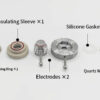
GT16CG-End face Raman testing mold

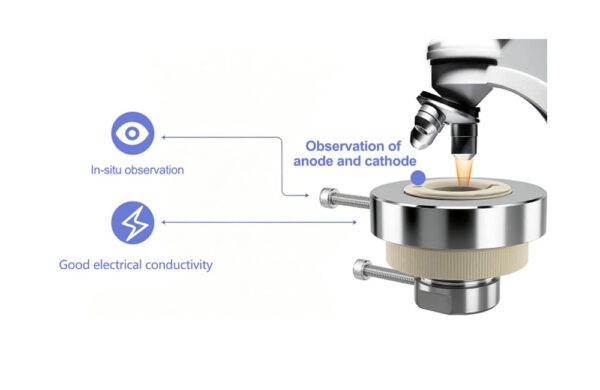
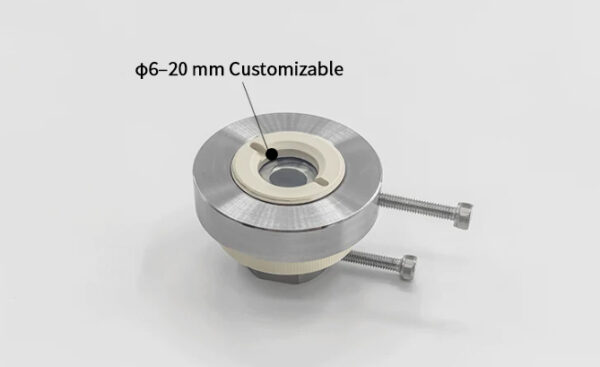
GT16 End-Face Raman Testing Mold — battery test mold for end-face Raman measurements on positive/negative electrode materials. Features quartz observation window. Sample inner diameter (sleeve) φ6–10 mm (customizable), adjustable inner diameter 1–6 mm. Built with stainless steel and PEEK. Can be customized and modified as required.

Need a bulk order or custom specification? Request a competitive quote today!

Name: GT16 End-Face Raman Testing Mold

Mold Type: Battery Test Mold for End-Face Raman Measurements

Product Code: XN-BM-GT16

Description:

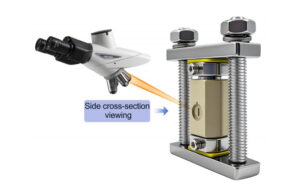
The GT16 is a battery test mold designed for end-face Raman measurements on positive and negative electrode materials. The mold features a quartz observation window for optical access at the cell end-face, supporting Raman spectroscopic measurements of electrode materials. The GT16 has a sample inner diameter (sleeve diameter) of φ6–10 mm (customizable) and an adjustable inner diameter of 1–6 mm. The mold is built with stainless steel and PEEK (polyether ether ketone). Can be customized and modified as required.

Application:

The GT16 is designed for laboratory in-situ Raman testing in battery research, with optical access at the end-face of the cell for measurements on positive and negative electrode materials.

Specifications:

Parameter Value
Mold Type Battery test mold for end-face Raman measurements
Observation Window Quartz
Optical Access Geometry End-face
Sample Inner Diameter (Sleeve) φ6 – 10 mm (customizable)
Adjustable Inner Diameter 1 – 6 mm
Frame Material Stainless steel
Insulating Sleeve Material PEEK (polyether ether ketone)
Designed For Observation of positive and negative electrode materials
Customization Available on request

Values measured by Xnergy. Typical values for reference; not guaranteed unless otherwise specified.

Characteristics:

End-face Raman measurement geometry

The GT16 features an end-face observation geometry, providing optical access at the cell end for Raman spectroscopic measurements on positive and negative electrode materials.

Quartz observation window

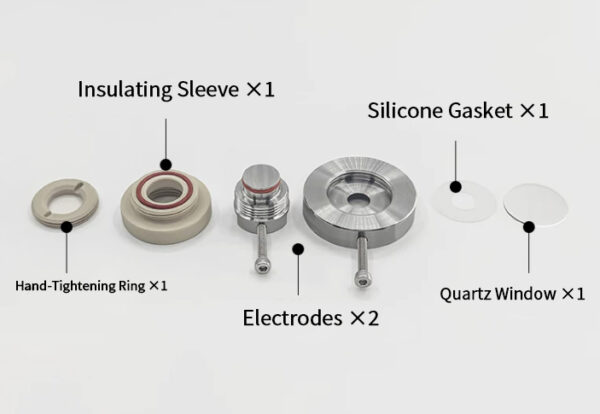
The GT16 features a quartz observation window. Quartz is chemically inert and optically transparent across a wide spectral range used in Raman spectroscopy.

Customizable sample inner diameter (φ6–10 mm)

The sample inner diameter (sleeve diameter) is φ6–10 mm and is customizable.

Adjustable inner diameter range (1–6 mm)

The mold’s adjustable inner diameter range is 1 mm to 6 mm.

PEEK insulating sleeve

The GT16 uses a PEEK (polyether ether ketone) insulating sleeve. PEEK is a high-performance thermoplastic with high dielectric strength and chemical stability against a wide range of chemicals.

Stainless steel frame

The GT16 frame is constructed from stainless steel.

Customization available on request

The GT16 can be customized and modified as required. Contact Xnergy for configuration options that match your specific research requirements.

Recommended Operating Procedure:

1. Clean all mold components with isopropyl alcohol or other suitable cleaning solvent before each use; clean the quartz window with optical-grade lens cleaner and a non-abrasive lint-free cloth to avoid scratching. 2. Assemble the cell components in their designated positions, ensuring the electrode end-face of interest faces the quartz observation window. 3. Tighten the locking screws on the frame to maintain assembly integrity during transfer to the Raman microscope. 4. Position the assembled mold on the Raman microscope stage with the end-face quartz window aligned to the laser objective. 5. Perform Raman spectroscopic measurements together with electrochemical measurements as required. 6. After testing, disassemble and clean all components before storage.

Packaging & Storage:

The GT16 ships with all components, including the stainless steel frame, PEEK insulating sleeve, quartz observation window, sealing components, and assembly hardware. Store in a dry environment at room temperature, protected from dust and moisture. After each use, clean components with isopropyl alcohol, gently clean the quartz window with optical-grade lens cleaner, and store in a clean, dry environment to prevent window scratching or contamination.

Safety:

For research and industrial laboratory use only. Always wear appropriate PPE (safety glasses, chemical-resistant gloves, lab coat) when handling reactive materials and electrolytes. When working with reactive materials, follow standard laboratory safety protocols, including glovebox-based assembly when required. Handle the quartz window with care — quartz components can crack under impact loading or excessive thermal shock. Follow standard Raman laser safety protocols including laser eye protection and proper laser interlocks. Refer to the included user manual for complete safety and operating instructions.

Note: Specifications listed above are typical and for reference only. Actual performance depends on the specific electrolyte, electrode material, and experimental conditions — consult published literature for guidance on specific in-situ Raman measurement protocols. For researchers exploring complete in-situ characterization workflows, see also Xnergy’s related products: GT06 In-Situ Raman Battery Test Cell, GT17 Voltage-Stabilized Single-Stud Raman Testing Die, GT07 Monochrome X-Ray Battery Testing Mold, GT08 Microscopic Battery Test Mold, YT09 In-Situ Dendrite Observation Mold, GT01 Standard Solid-State Battery Mold, GT02 Standard Solid-State Battery Mold, GT03 High-Pressure Solid-State Battery Mold, GT04 Three-Electrode Solid-State Battery Mold, and GT05 Square Solid-State Battery Test Cell. Browse the full Battery Mold category for all configurations.