
GT14 Sealed Battery Test Bottle – Borosilicate Glass, 250–1000ml, 4 Sizes | Xnergy
SKU: XN-BM-GT14
[Customize and modify as required]
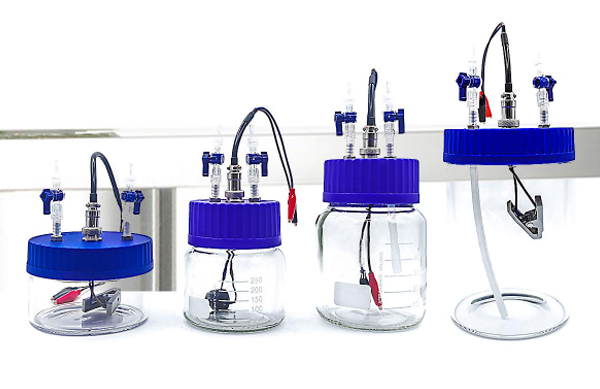
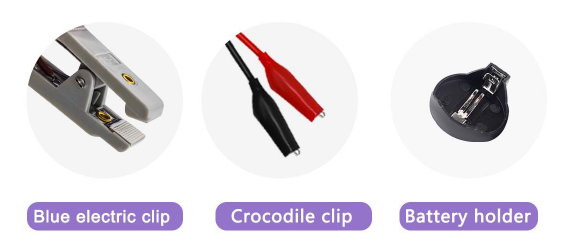
GT14 Sealed Electrochemical Battery Test Bottle — high-borosilicate-glass airtight bottle for fundamental solid-state battery research, providing a controllable, sealed, and pressure-applicable environment for accurate, repeatable electrochemical testing. Available in 4 sizes: 250 ml / 500 ml / 650 ml / 1000 ml. Bottle body temperature resistance ≤ 121 °C. Customizable wiring styles including battery holder, alligator clip, blue electric clip, and banana head.
Need a bulk order or custom specification? Request a competitive quote today!
Name: GT14 Sealed Electrochemical Battery Test Bottle – Borosilicate Glass, 250–1000 ml, Customizable Wiring
Type: Solid-State Battery Airtight Bottle (Series QM01)
Product Code: XN-BM-GT14
Description:
The GT14 is an airtight glass test bottle engineered as an indispensable tool for fundamental solid-state battery research. Airtight bottles ensure the accuracy, repeatability, and safety of electrochemical experiments by providing a controllable, sealed, and pressure-applicable environment — isolating sensitive samples (lithium-metal anodes, sulfide solid electrolytes, moisture-reactive cathodes) from atmospheric exposure during measurement. As a result, researchers can transfer assembled cells from glovebox to ambient-environment electrochemical workstations without sample contamination, supporting accurate research data on moisture-sensitive solid-state battery materials. The GT14 is built from high borosilicate glass with PP (polypropylene) sealing components, offering excellent chemical resistance against electrolytes and lithium-metal vapors, and a bottle body temperature resistance of ≤ 121 °C for autoclave sterilization and elevated-temperature electrochemical studies. Furthermore, the bottle is available in four standard sizes (250 ml, 500 ml, 650 ml, and 1000 ml) with multiple wiring styles to match different experimental setups. Customization and modification are available on request.
Application:
The GT14 sealed test bottle is designed for fundamental electrochemical research on solid-state and reactive battery systems, including airtight cell containment for electrochemical impedance spectroscopy and cyclic voltammetry on moisture-sensitive samples, three-electrode electrochemistry of lithium-metal and sulfide-electrolyte cells transferred from glovebox to electrochemical workstation, sealed long-duration cycling experiments where atmospheric exposure must be eliminated, fundamental research into solid-state battery degradation mechanisms requiring inert atmosphere, autoclave-sterilized electrochemistry for biomedical battery applications, and academic studies of pressure-applicable electrochemistry where controlled gas atmosphere or partial vacuum is required.
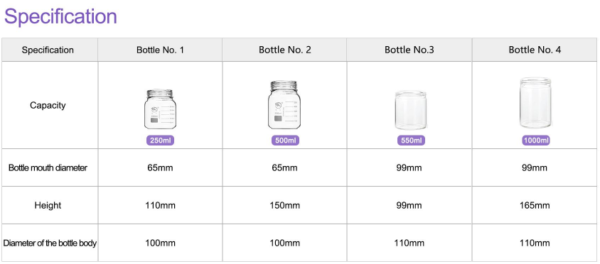
Available Sizes:
| Bottle | Capacity | Mouth Diameter | Height | Body Diameter |
|---|---|---|---|---|
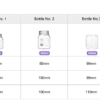
| Bottle No. 1 | 250 ml | 65 mm | 110 mm | 100 mm |
| Bottle No. 2 | 500 ml | 65 mm | 150 mm | 100 mm |
| Bottle No. 3 | 650 ml | 99 mm | 99 mm | 110 mm |
| Bottle No. 4 | 1000 ml | 99 mm | 165 mm | 110 mm |
Specifications:
| Parameter | Value |
|---|---|
| Bottle Body Material | High borosilicate glass |
| Cap & Sealing Material | Polypropylene (PP) |
| Bottle Body Temperature Resistance | ≤ 121 °C (autoclave-compatible) |
| Available Capacities | 250 ml, 500 ml, 650 ml, 1000 ml |
| Wiring Styles (Customizable) | Battery holder, alligator clip, blue electric clip, banana head |
| Sealing | Airtight, controllable, pressure-applicable |
| Customization | Available on request — wiring style, electrode count, and bottle modifications |
| Application Environment | Glovebox, ambient lab benchtop, autoclave |
| Compatibility | Lithium-ion, lithium-metal, sodium-ion, lithium-sulfur, and all-solid-state battery test cells |
Values measured by Xnergy. Typical values for reference; not guaranteed unless otherwise specified.
Wiring Style Options:
| Style | Best Use Case |
|---|---|
| Battery Holder | Coin-cell mounting for direct electrochemical measurement of CR2032/CR2025 cells inside the sealed bottle |
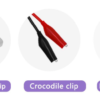
| Alligator Clip (Crocodile Clip) | Versatile clamp connections for irregular electrode shapes, foil samples, and prototype cells |
| Blue Electric Clip | Color-coded polarity-distinguished connections for three-electrode and multi-cell measurements |
| Banana Head | Standard 4 mm banana plug for direct connection to potentiostat and impedance analyzer leads |
| Custom Wiring | Custom electrode counts, alternative connector types, and specialized cable assemblies available on request |
Characteristics:
Indispensable tool for fundamental solid-state battery research
Airtight bottles are indispensable tools in solid-state battery research where atmospheric exposure compromises sample integrity. As a result, the GT14 ensures the accuracy, repeatability, and safety of experiments by providing a controllable, sealed, and pressure-applicable environment — supporting research data quality at the level required for peer-reviewed publication and industrial product validation.
High borosilicate glass for chemical inertness and visibility
The bottle body is fabricated from high borosilicate glass — chemically inert against lithium-metal vapors, electrolyte solvents, and corrosive aprotic species. Furthermore, the optical transparency of borosilicate glass allows visual inspection of the cell during experiments, supporting troubleshooting of leaks, electrode contact issues, and sample positioning.
Autoclave-compatible temperature resistance (≤ 121 °C)
The 121 °C bottle-body temperature resistance enables autoclave sterilization between experiments, supporting biomedical battery research and high-cleanliness electrochemistry where contamination from prior samples must be eliminated. Therefore, the GT14 supports research workflows requiring rigorous between-experiment cleaning protocols.
Four standard sizes for diverse experimental scales
Available in 250 ml, 500 ml, 650 ml, and 1000 ml capacities, the GT14 covers the full range of electrochemical experiment scales — from small fundamental studies (250 ml) to larger flooded-cell experiments and three-electrode systems with multiple electrolyte volumes (1000 ml). Consequently, researchers can match the bottle volume to their specific experimental requirement without forcing inappropriately small or large containers.
Customizable wiring for any electrochemical setup
The GT14 supports four standard wiring styles (battery holder, alligator clip, blue electric clip, banana head) plus custom configurations on request. Therefore, researchers can specify the exact electrical interface required for their potentiostat, impedance analyzer, or cycling tester — eliminating the need for adapter cables that introduce noise and contact resistance.
Pressure-applicable sealed environment
Beyond simple atmospheric isolation, the GT14 supports pressure-applicable sealed operation — allowing researchers to maintain controlled overpressure (for inert atmosphere preservation) or partial vacuum (for degassing studies) during electrochemical measurements. As a result, the bottle supports a wider range of experimental conditions than open-top electrochemistry cells.
Customization and modification on request
The GT14 supports customization and modification on request — including custom bottle volumes, alternative materials (PTFE, PFA caps), specialized port configurations, and integrated thermocouple feedthroughs. Therefore, researchers with specialized electrochemical setups can obtain a tailored bottle configuration to match their experimental requirements.
Recommended Operating Procedure:
1. Clean the bottle interior with isopropyl alcohol followed by deionized water, then dry thoroughly before use. 2. If working with moisture-sensitive samples, transfer the bottle into an argon-filled glovebox and pre-purge with inert gas. 3. Mount the test cell or coin cell using the appropriate wiring style (battery holder, clips, or banana plugs). 4. Connect the potentiostat or impedance analyzer leads to the external connectors. 5. Tighten the cap securely to ensure airtight sealing. 6. Transfer the sealed bottle from glovebox to ambient electrochemical workstation if needed. 7. Perform electrochemical measurements at the required temperature (do not exceed 121 °C). 8. After testing, return to the glovebox if required, disassemble in inert atmosphere, and clean all components with alcohol before storage. 9. For autoclave sterilization, follow standard autoclave protocols (121 °C, 15 psi, 20 minutes) — do not exceed the rated temperature.
Packaging & Storage:
Each GT14 bottle ships in a protective foam-lined case with all components, including the high borosilicate glass body, PP cap with sealing gasket, and selected wiring assembly (battery holder, clips, or banana plugs as ordered). Therefore, store in a dry environment (15–25 °C, RH < 40 %) protected from impact and direct sunlight. After each use, rinse the bottle interior with deionized water and isopropyl alcohol, dry thoroughly, and store in the original case to prevent breakage and contamination.
Safety:
For research and industrial laboratory use only. The bottle body is fabricated from glass — handle with care to avoid breakage. Always wear appropriate PPE (safety glasses, gloves) when handling, sealing, or transferring the bottle. Do not exceed the rated bottle-body temperature (121 °C) or apply excessive pressure beyond the cap’s sealing capability — overpressurization may result in seal failure, glass breakage, or personal injury. When working with lithium-metal anodes, sulfide electrolytes, or other reactive materials, perform all assembly inside an argon-filled glovebox before sealing. For autoclave sterilization, follow standard autoclave safety protocols. Refer to the included user manual for complete safety and operating instructions.
Note: Specifications listed above are typical and for reference only. Actual performance and chemical compatibility depend on the specific electrolyte, electrode materials, and experimental conditions — consult published literature for guidance on optimal sealed-bottle electrochemistry protocols. For researchers exploring complete solid-state battery research workflows, see also Xnergy’s related products: GT04 Three-Electrode Solid-State Battery Mold (which uses an integrated airtight bottle), GT01 Standard Solid-State Battery Mold, GT02 Standard Solid-State Battery Mold, GT03 High-Pressure Solid-State Battery Mold, GT05 Square Solid-State Battery Test Cell, GT11 Pouch Cell Pressure Fixture, YT09 In-Situ Dendrite Observation Mold, and KQ01 Air Battery Mold. Browse the full Battery Mold category for all configurations.
Related products
-
KQ01 Air battery mold
Free Shipping$129.00 -
Ceramic Solid-State Battery Mold XN-GT02-TC
Free Shipping$399.00 -
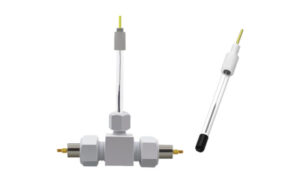
Swagelok-Type Battery Test Cell XN-YT08
Free Shipping Price range: $138.00 through $306.00Select options This product has multiple variants. The options may be chosen on the product page -
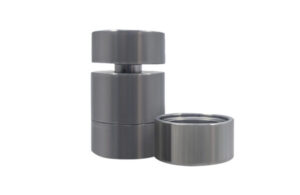
YP01 Circular tablet pressing die
Free Shipping$148.00