
Build Better Solid-State Cells with Xnergy Molds
Thirteen precision solid-state battery mold types — covering split-cell pressing, high-pressure pellet work, three-electrode studies, in-situ Raman and X-ray characterization, and sealed long-duration testing. All available online. All customizable. Shipped worldwide from our California warehouse.
Looking for solid-state battery molds?
Xnergy supplies a complete lineup of solid-state battery molds for research and pilot-scale cell development. Our catalog covers the full workflow — from entry-level GT01 split-cell molds for electrolyte characterization, through high-pressure GT03 and GT18 molds for dense sulfide and oxide pellets, specialized three-electrode GT04 systems, in-situ characterization molds (Raman, X-ray, optical), and sealed test bottles for long-duration studies. Every mold is fully customizable, compatible with glove-box operation, and available for direct online purchase. We also supply the matching XNT-12 hydraulic pellet press and YLCS pressure sensor — the three components fit each other out of the box.
01 / What They AreWhat Are Solid-State Battery Molds?
A solid-state battery mold is a precision fixture that holds a solid electrolyte powder — such as LLZO, LGPS, Li3PS4, or LiPON — and compresses it into a dense thin pellet suitable for electrochemical testing. The mold provides three things a loose powder cannot: controlled pressure (often 500-800 MPa), sealing against air and moisture (critical for sulfide electrolytes), and consistent geometry from run to run so that ionic-conductivity measurements, EIS fits, and cycling data are actually comparable.
In a typical solid-state cell research workflow, the mold is the gate between powder synthesis and meaningful electrochemistry. A poorly designed mold — or one with the wrong pressure rating, wrong insulation, or wrong electrode column geometry — produces pellets with porosity gradients, grain-boundary voids, or contact-resistance artifacts that make every downstream number unreliable. This is why serious solid-state programs invest in purpose-built molds rather than adapting pellet dies from other disciplines.
Xnergy engineers battery molds exclusively for solid-state cell research and early-stage production. The lineup below is organized by application — starting from the most common split-cell presses and moving into specialized high-pressure, three-electrode, in-situ characterization, and sealed testing categories.
All 13 solid-state battery molds in one place.
Browse specifications, customize, and order direct — same-day processing on in-stock items.
02 / Core MoldsCore Solid-State Battery Molds
These are the workhorse molds most solid-state research programs start with — split-cell and standard production configurations covering the 200-800 MPa pressure range that handles the vast majority of oxide, sulfide, and halide electrolyte work.
Entry-level split-cell molds — GT01 series
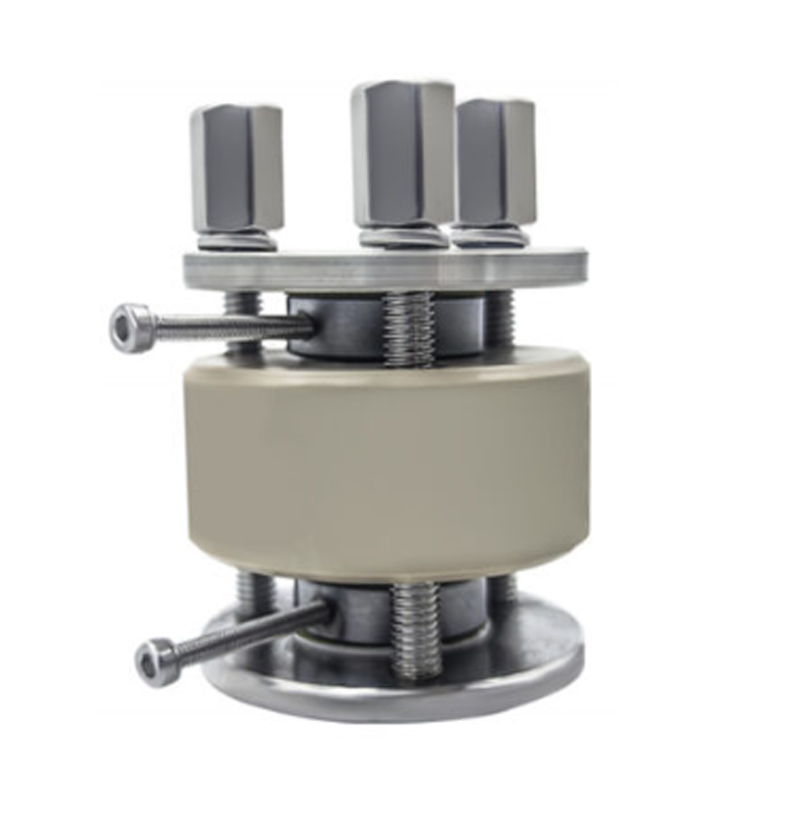
Simple split-cell solid-state battery mold
The most accessible entry point for new solid-state research programs. Compact split-cell design with straightforward disassembly and a wide 6-20 mm inner diameter range. Ideal for general electrolyte pellet characterization, cathode composite studies, and teaching labs. Frame raised free on request.
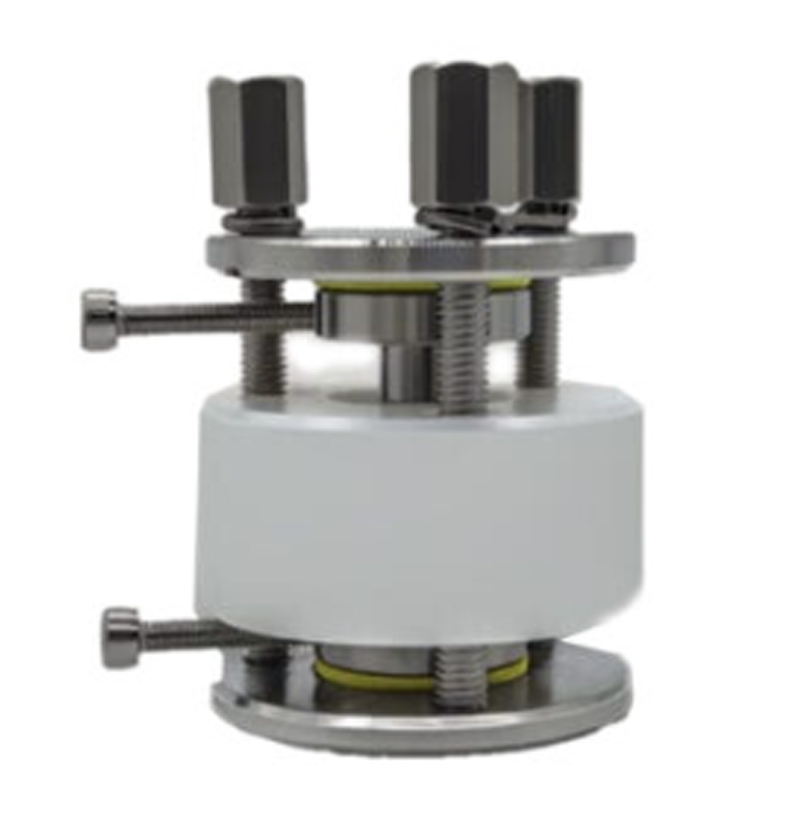
Ceramic-lined split-cell solid-state battery mold
Same footprint as GT01 CG but with an all-ceramic insulation liner for programs studying aggressive sulfide electrolytes or running at elevated temperatures where polymer insulation drifts. Preferred when zero ionic bleed-through and long-term chemical inertness matter.
Standard production molds — GT02 series
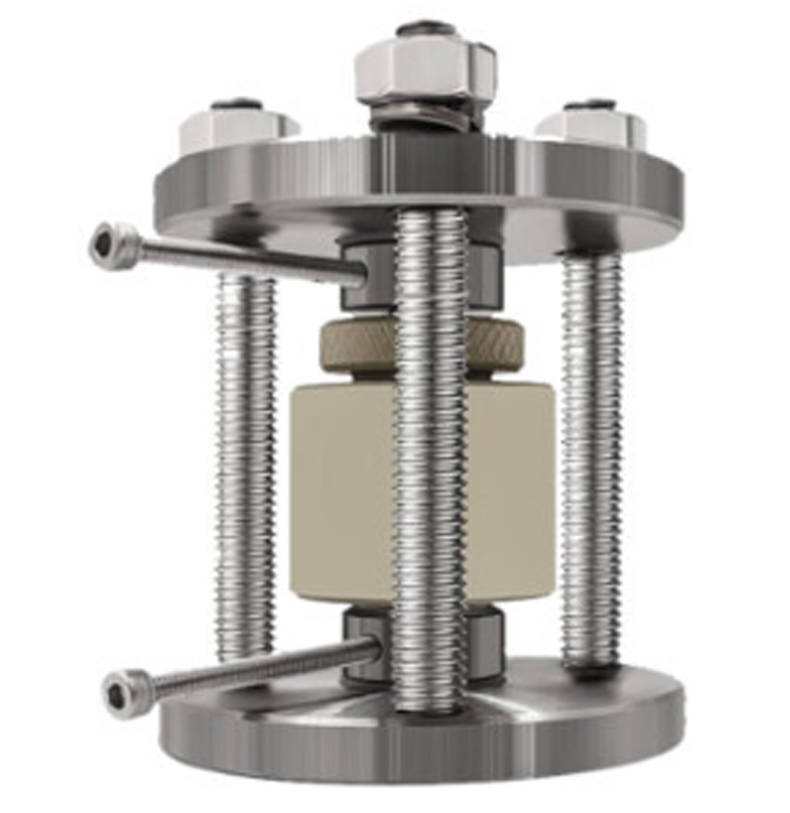
Standard solid-state battery mold
Our most-ordered mold. Taller 100 mm assembly height accommodates thicker composite cathodes and multi-layer pellet stacks. Rated to 200°C for elevated-temperature EIS and sintered-pellet work. The default pick for groups running routine solid-state characterization week in, week out.
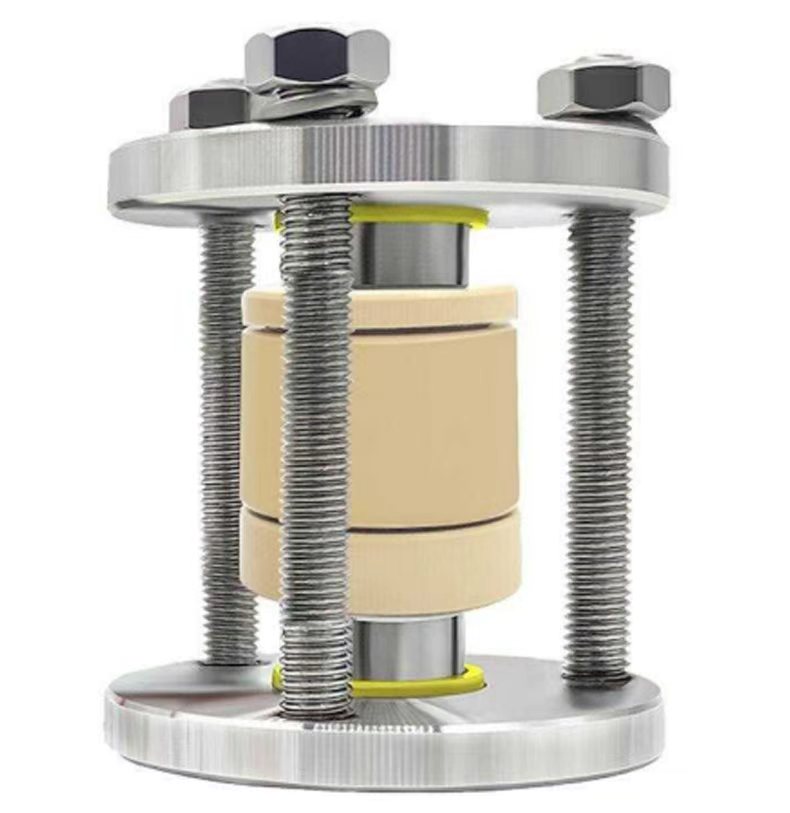
Standard ceramic solid-state battery mold
The ceramic-insulated variant of GT02 CG. Same mechanical envelope and pressure rating, but with ceramic isolation for programs working with sulfide and halide electrolytes that would attack polymer sleeves over extended contact. Good choice for long-duration storage studies.
High-pressure and ventilation variants
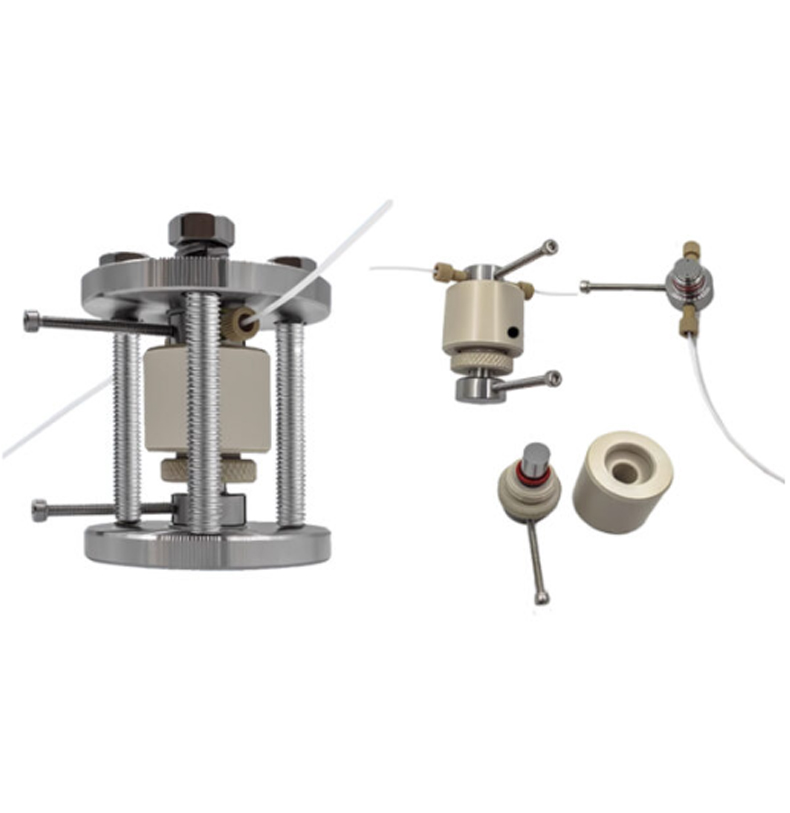
Ventilated solid-state battery mold
Pressure rating jumps to 800 MPa, and an integrated ventilation path lets trapped air escape during the compression stroke — eliminating a common source of pellet cracking in thick-stack pressing. Recommended when you need dense pellets above the usual 500 MPa working point but still want clean disassembly.
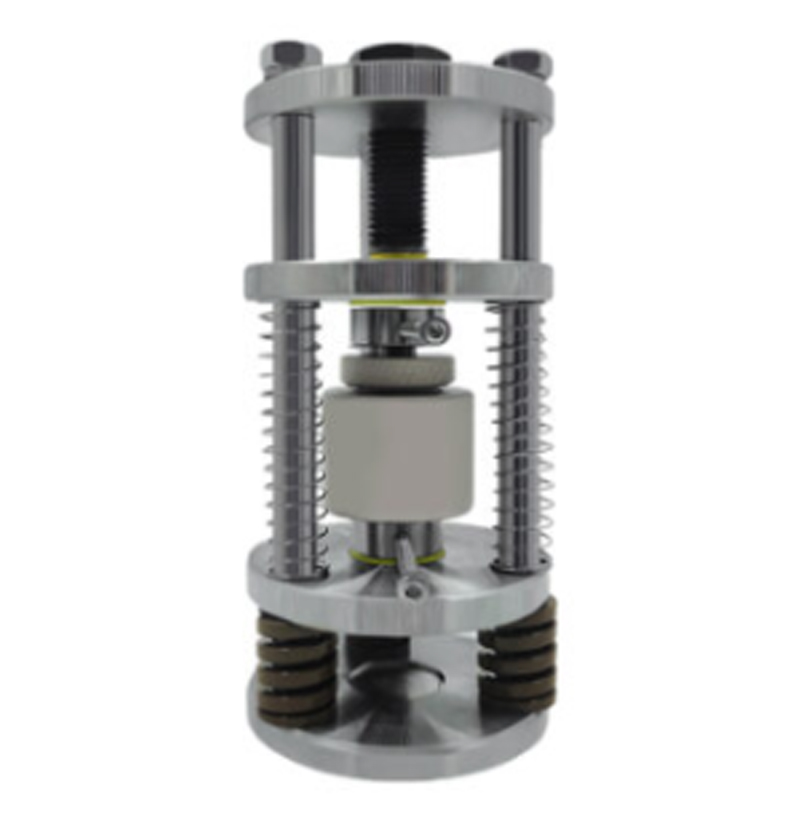
High-pressure solid-state battery mold with voltage stabilizing plate
The serious-pressure mold: 800 MPa rated, 200 mm tall frame, dedicated voltage-stabilizing top plate for reproducible contact resistance on repeated pellet runs. Rated to 250°C. Standard inner diameter range spans 6-20 mm with 10/12 mm being the most common order. This is where sulfide electrolyte densification programs land.
Three-electrode research system
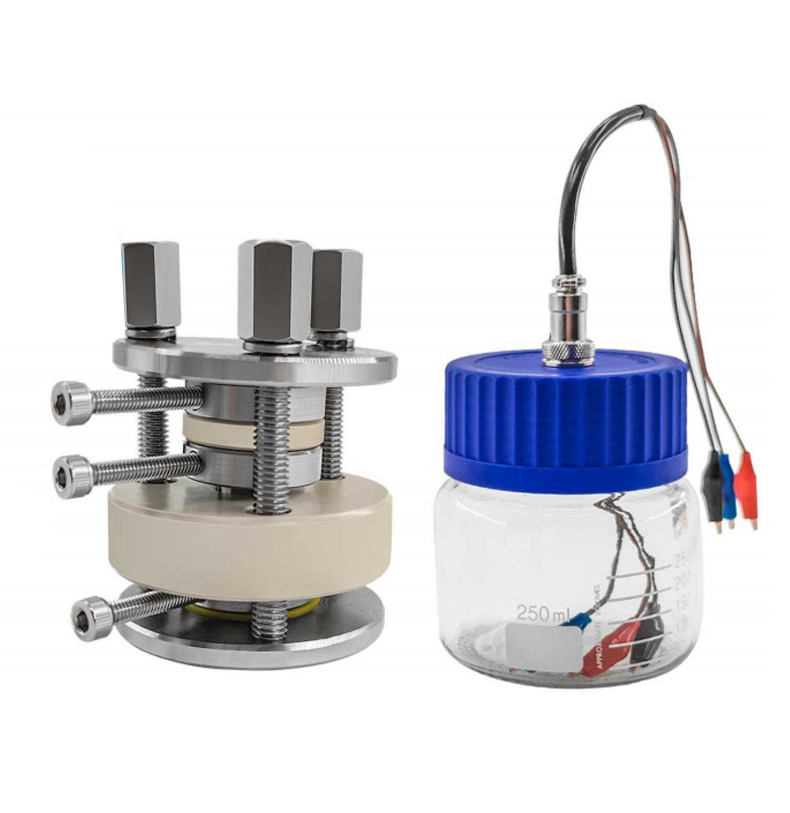
Solid-state three-electrode mold
Complete three-electrode solid-state test kit: the mold itself, a borosilicate airtight bottle, and an electrode column. Purpose-built for reference-electrode-inclusive electrochemistry — when you need to deconvolute anode-side versus cathode-side interfacial resistance, this is the setup. Minimum inner diameter 4 mm, adjustable.
03 / In-Situ MoldsIn-Situ Characterization Molds
Solid-state cell research increasingly depends on watching what happens during cycling — not just measuring before-and-after. These molds integrate optical windows and open-face geometries so Raman spectrometers, X-ray beamlines, and optical microscopes can look at the electrolyte-electrode interface while current is flowing.
Raman spectroscopy molds
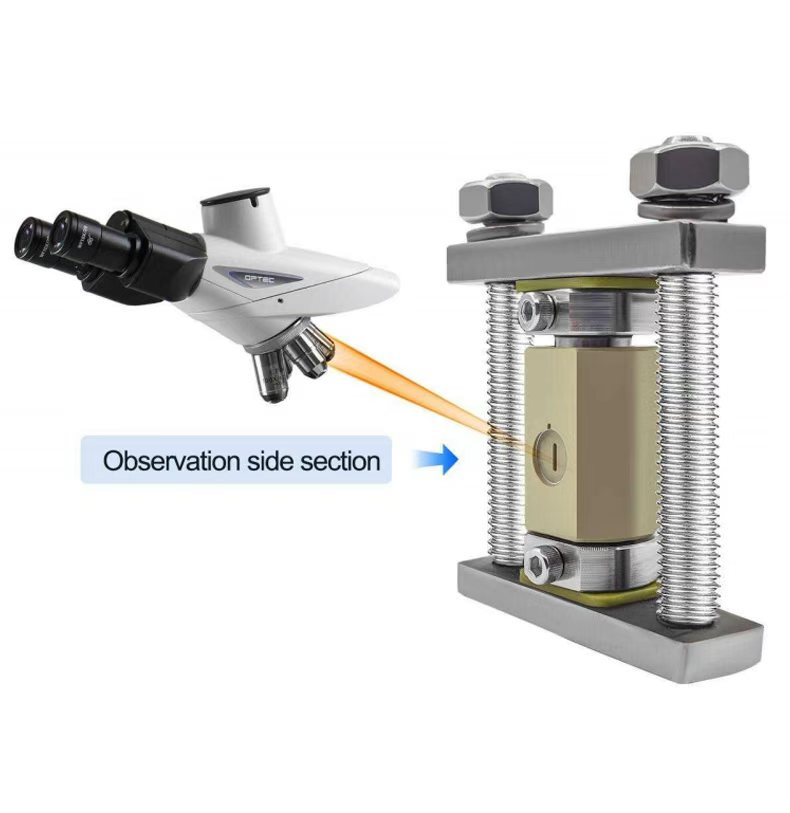
In-situ Raman test mold
Compact side-observation Raman mold. The open observation face sits directly under a Raman objective while the cell cycles — ideal for tracking electrolyte decomposition products, SEI formation signatures, and polysulfide evolution in real time. PEEK body keeps electromagnetic interference off the Raman signal.
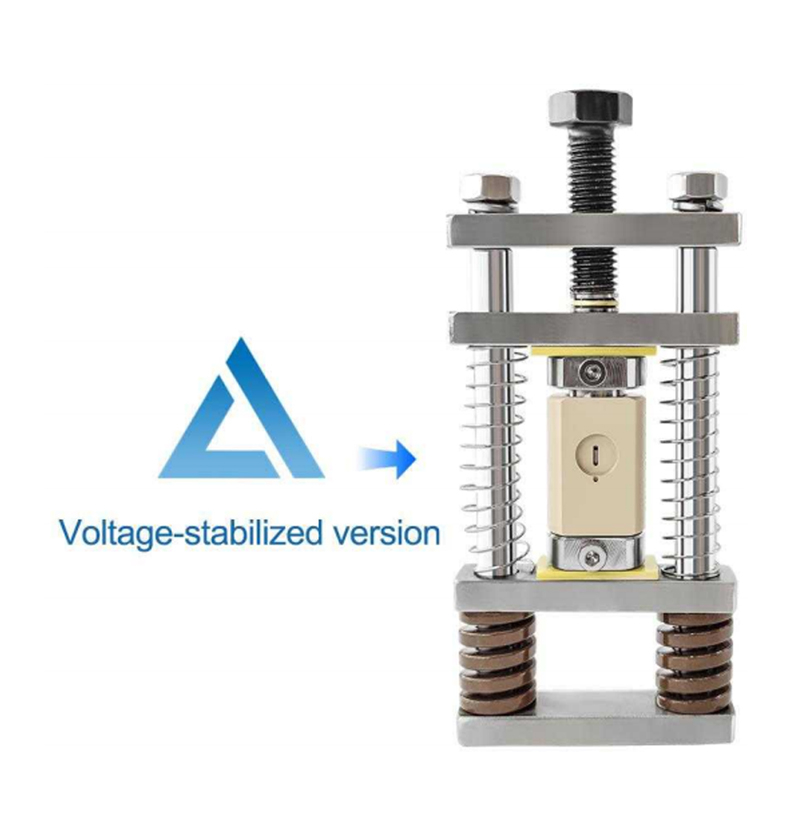
Single-stud Raman die (voltage-stabilized version)
A more compact Raman mold with a quartz window panel and voltage-stabilization design. The quartz window gives the cleanest possible Raman optical path. Room-temperature only — trade off against GT06's broader pressure envelope if your program needs heated studies.
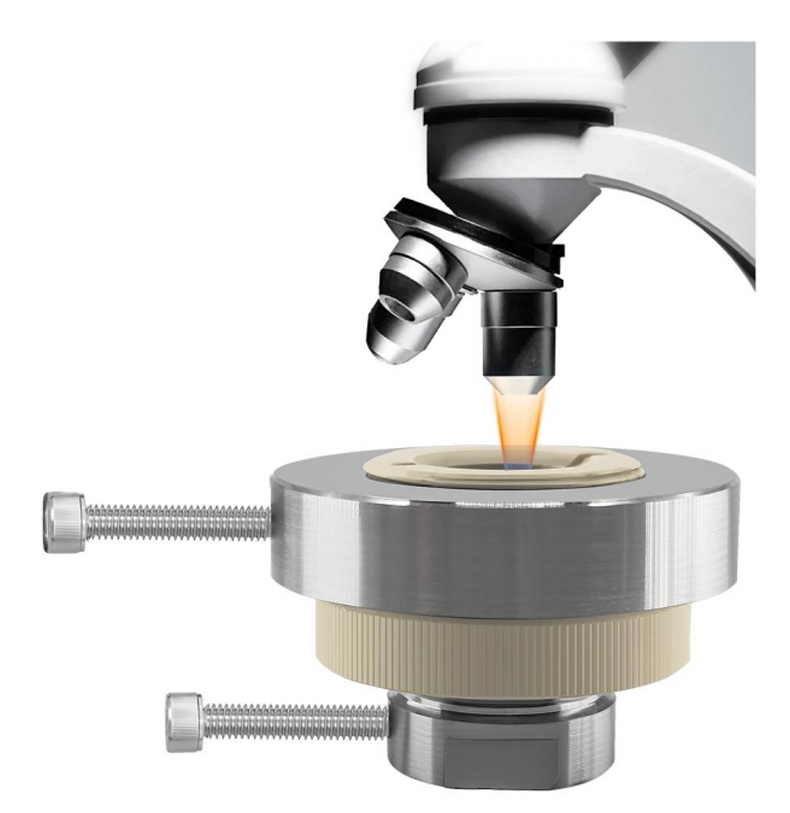
End-face Raman testing mold
Flips the observation geometry from GT06's side-view to an end-face setup — meaning the Raman beam hits the electrode surface directly rather than looking through the electrolyte edge. Better for studying positive/negative electrode interfacial chemistry specifically. Quartz window, φ6-10 mm customizable inner diameter.
X-ray and optical-microscopy molds
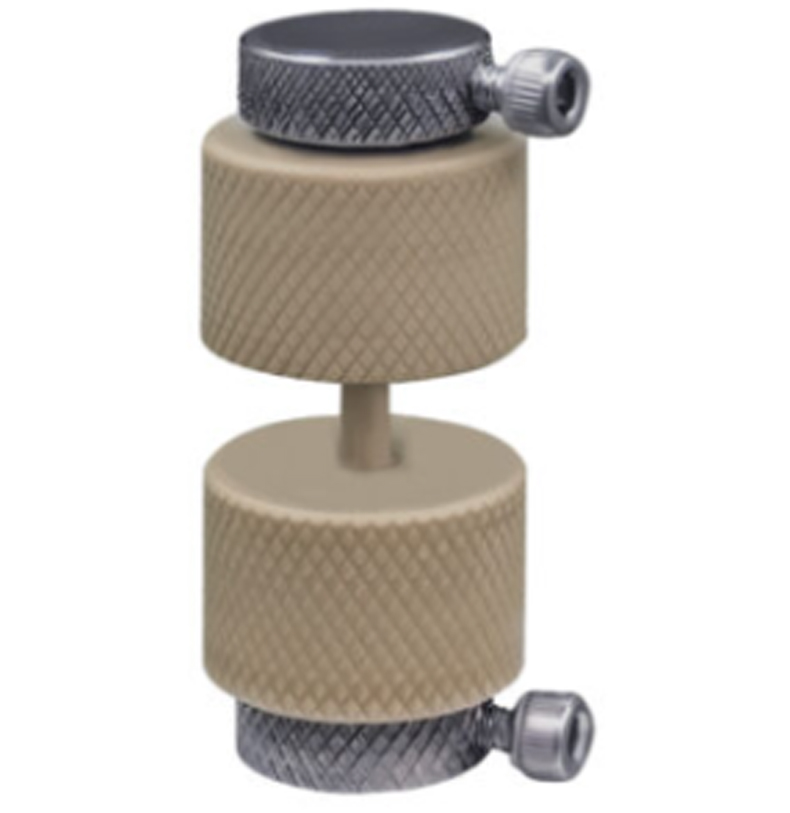
In-situ monochrome X-ray testing mold
Low-Z-material construction (PEEK + thin stainless) lets X-ray beams pass through the cell wall to monitor crystallographic evolution during cycling. Compact form factor fits inside most benchtop diffractometer sample stages. Useful for operando XRD studies of lithium plating, phase transitions, and grain-boundary evolution in sulfide and oxide electrolytes.
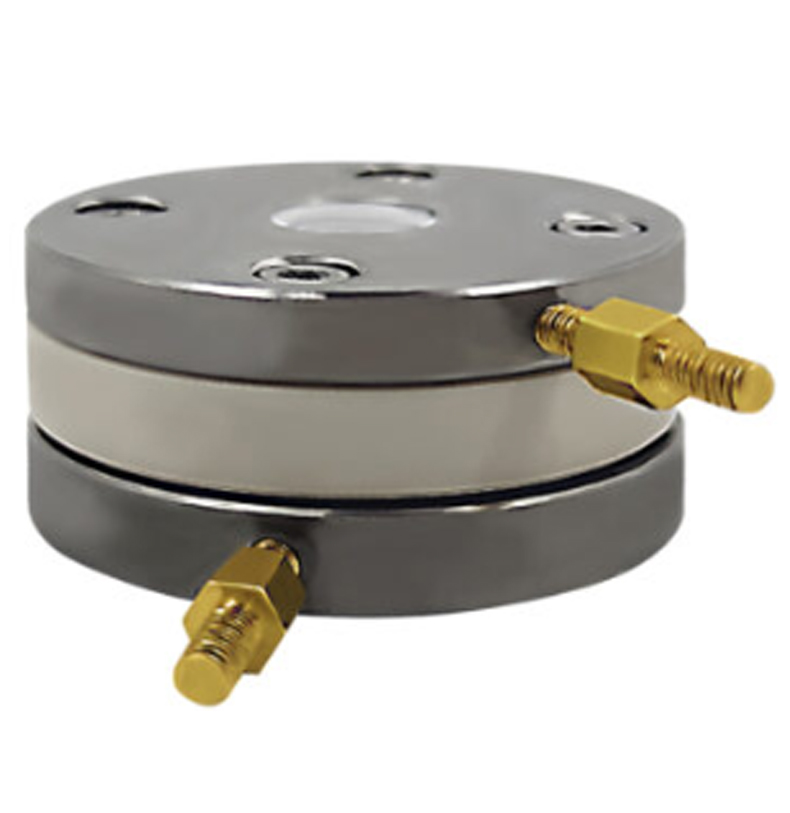
In-situ optical microscopy test mold
Wide-field observation geometry for visible-light and infrared microscopy during cycling. The flat, low-profile design sits directly on a microscope stage. Popular for dendrite-growth visualization on lithium metal anodes and interfacial crack propagation in sintered solid electrolytes. Handles up to 500 MPa working pressure.
04 / Sealed TestsSealed Test Bottles and High-Pressure Inner Liners
For long-duration tests, storage studies, or situations where you need maximum atmosphere control without a full glove box, these sealed formats work as standalone test cells. They also serve as the pressure-rated inner liner for custom cell builds.
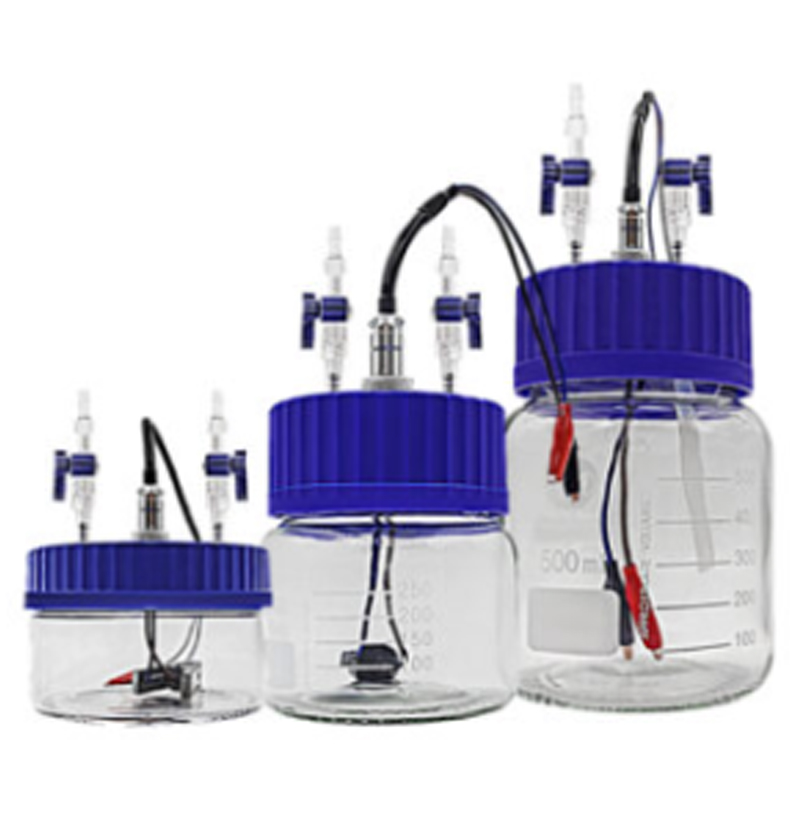
Sealed electrochemical battery test bottle (borosilicate)
A borosilicate-glass sealed test bottle for extended solid-state cycling and storage studies. The wiring can be specified with battery holder, alligator clip, blue electric clip, or banana-head connectors to match your potentiostat setup. Temperature resistance up to 121°C for baseline thermal-cycling studies.
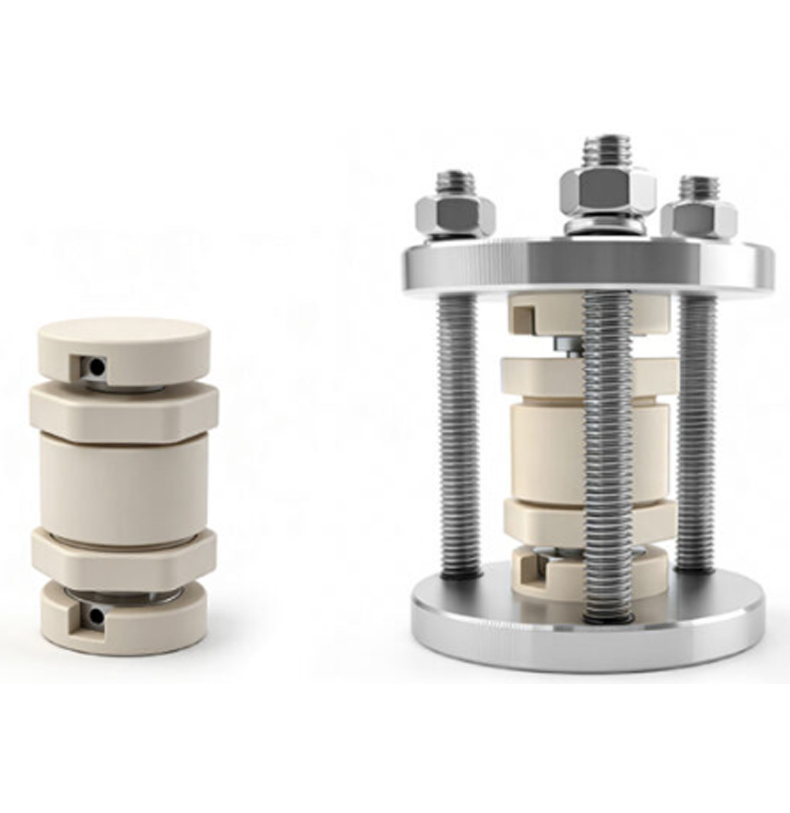
Solid-state battery mold — high-pressure inner liner
Ships as inner liner only, without the external frame — designed for groups that already have their own pressing frame and need a drop-in solid-state pressing core. 800 MPa pressure rating, PEEK insulation sleeve rated to 200°C, zirconia ceramic electrical-isolation ring, special-steel electrode column. Default φ10 mm column, customizable for large-quantity orders.
05 / Complete SetupThe Complete Solid-State Testing Setup
A solid-state battery mold is only as accurate as the pressure applied to it and the feedback loop reading that pressure. Xnergy supplies the full kit — mold, hydraulic press, and pressure sensor — with factory-matched interfaces so you don't waste time on adapters or mismatched footprints.
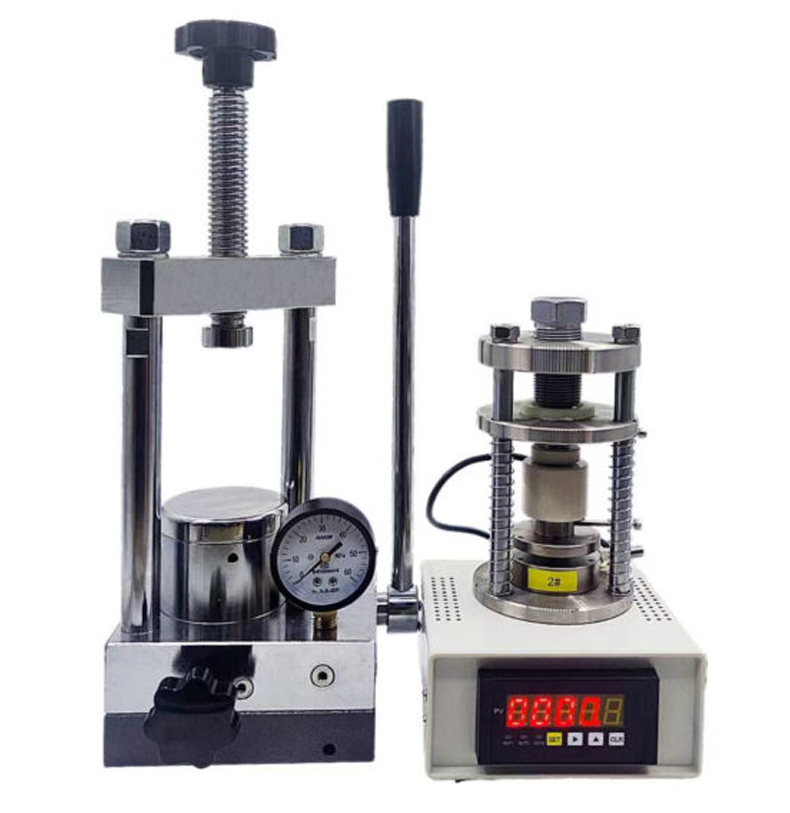
12-tonne hydraulic pellet press
Manual hydraulic press with 12-tonne max load — covers the entire pressure range of our solid-state mold lineup (500 MPa on the entry molds up to 800 MPa on GT03 and GT18). Built-in analog gauge for at-a-glance visual confirmation; pair with the YLCS sensor below for digital logging. Footprint fits standard lab bench.
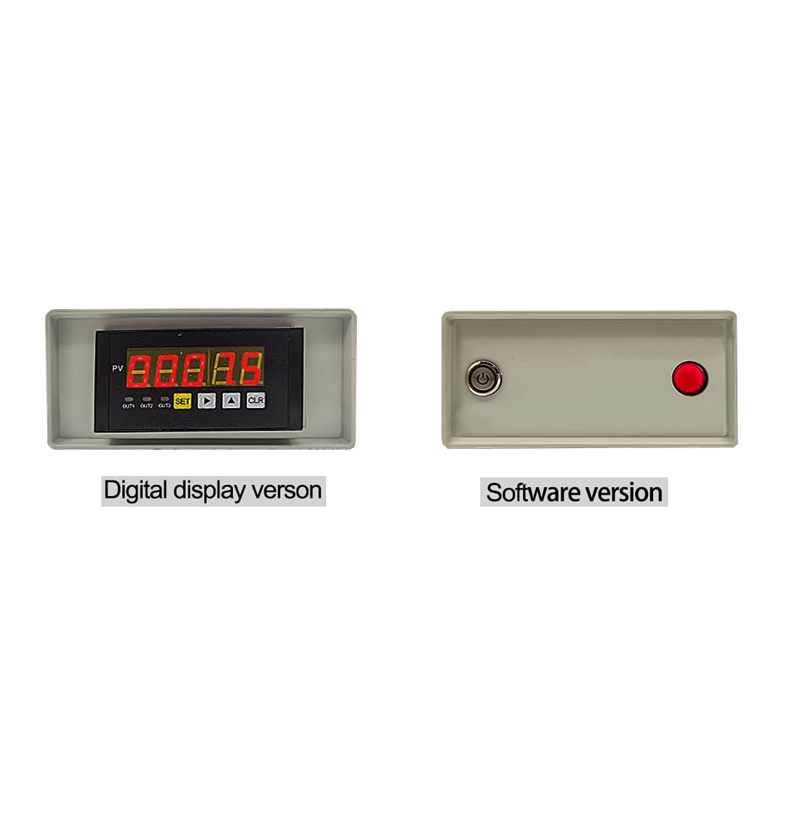
Single-channel pressure sensor system
Digital pressure-readout module for reproducible solid-state pellet work. Four-digit MPa resolution, real-time readout, and data-logging output for programs that need pressure records in their method sections. Connects to the mold via a factory-matched probe — no adapter work, no calibration drift between the mechanical gauge and the electronic record.
Ordering the mold, press, and sensor as a kit unlocks bundled pricing that's lower than three separate product orders. Contact us for bundle quotes on any of the 13 solid-state battery molds plus XNT-12 and YLCS.
06 / CustomizationMaterials, Specifications & Customization
Every Xnergy solid-state battery mold ships customizable. The four most frequently modified parameters:
- Sleeve and inner diameter: Standard options span φ20-50 mm outer sleeve and 4-20 mm inner; non-standard sizes available on request for specialized cell formats.
- Body material: 304 stainless steel (default), PEEK for electrical insulation up to 200°C, zirconia ceramic for aggressive chemical environments, or titanium for high-purity applications.
- Electrode column: Special steel at φ10 mm default; large-quantity orders can specify alternate diameters or materials (titanium, copper-core, gold-coated for reference-electrode work).
- Frame options: Standard fixed frame, raised frame (free on request), or frame-free inner-liner-only for groups supplying their own press frame.
Custom mold orders typically ship in 2-4 weeks from specification confirmation. For programs building a new solid-state research capability from scratch, we offer consultative specification support — tell us your target electrolyte system, cell format, and pressure range, and we'll recommend a base mold plus the customizations worth making at order time versus changes better left to later iteration.
07 / FAQSolid-State Battery Molds: Frequently Asked Questions
What is a solid-state battery mold used for?
A solid-state battery mold is a precision fixture that holds solid electrolyte powder (LLZO, LGPS, Li3PS4, etc.) and presses it into a dense pellet for testing. It provides controlled pressure, sealing against air and moisture, and consistent geometry for electrochemical measurements such as ionic conductivity, EIS, and cycling tests.
What pressure do solid-state battery molds need to handle?
Can Xnergy molds be used inside a glove box?
Yes. All Xnergy solid-state battery molds are sized for glove-box operation and compatible with inert atmospheres. Materials — stainless steel, PEEK, zirconia ceramic, special steel — are moisture-tolerant and safe for extended use with sulfide and oxide electrolytes.
Do you offer customization on solid-state battery molds?
Yes. Every Xnergy mold ships as customizable — you can specify sleeve diameter, inner diameter, height, material (stainless steel, PEEK, ceramic, titanium), and electrode column size. Custom molds typically ship in 2-4 weeks. Customization requests can be made through the product page checkout notes or via our contact form.
Can I order molds, pellet press, and pressure sensor as a kit?
Yes. Xnergy supplies the XNT-12 hydraulic pellet press and YLCS single-channel pressure sensor as matched companions to our solid-state battery mold lineup. The three components fit each other out of the box — no adapters required. Kit orders receive a pricing discount versus buying separately.
What materials are Xnergy solid-state battery molds made of?
Xnergy solid-state battery molds use four main materials:
- 304 stainless steel — frames and plungers
- PEEK (polyetheretherketone) — insulation sleeves up to 200°C
- Zirconia ceramic — electrical isolation rings
- Special steel — high-pressure electrode columns
All materials are selected for solid-state electrolyte compatibility (sulfides, oxides, halides) and glove-box service.
How do I choose the right solid-state battery mold for my research?
Start with pressure requirement:
- ≤500 MPa → GT01 CG, GT01 TC, GT02 CG, or GT02 TC
- 500-800 MPa → GT02 TQ, GT03 CG, or GT18
Then choose by application:
- Standard electrolyte characterization → GT01 / GT02 series
- Three-electrode electrochemistry → GT04 CG
- In-situ Raman → GT06 CG, GT16 CG, GT17 CG
- In-situ X-ray → GT07 CG
- Optical microscopy → GT08 CG
- Sealed long-duration tests → GT14 (borosilicate)
- Inner liner only (own frame) → GT18
Where can I buy Xnergy battery molds online?
All Xnergy battery molds are available for direct online order at the Battery Molds category page. Each mold has its own product page with specifications, pricing, and checkout. Custom configurations can be requested during checkout or via our contact form. We ship worldwide with full hazmat documentation where required.
Thirteen solid-state battery molds. Plus the press and sensor that match.
Browse the full Battery Mold catalog to compare specifications, order direct, or request a custom configuration. In-stock items ship within 1-2 business days.